Albuquerque: Balloon Fiesta, Old Town, Sandia Mountains, Route 66, and the Rio Grande
Albuquerque (elevation 1,524 m, population 565,000) is simultaneously a colonial Spanish city (founded 1706, 320 years of continuous settlement), a Native American cultural capital (adjacent to 19 Pueblos, 600,000 Pueblo people in New Mexico), the hot air balloon capital of the world (the Albuquerque Box meteorological phenomenon makes it the only city on earth with predictable return-flight winds), a major film production center (Breaking Bad, Better Call Saul, USD 1.2B combined economic impact), and the commercial hub of New Mexico. The city occupies the Rio Grande valley between the Sandia Mountains (3,255 m, 15 minutes by tramway from downtown) and the West Mesa volcanic escarpment, with a climate of 300+ days of sunshine per year, 335 mm of annual rainfall, and summer temperatures reaching 35-38C offset by the low humidity of the high desert. The Albuquerque metropolitan area of 920,000 is the 57th-largest metro in the United States, with a GDP of approximately USD 38B and major industries in government (Kirtland Air Force Base, Sandia National Laboratories — one of the two US nuclear weapons design laboratories), healthcare (University of New Mexico Health Sciences Center), and the University of New Mexico (36,000 students, the state flagship university founded 1889).
- 1
Old Town Albuquerque - 300 Years of Continuous History
Old Town Albuquerque (Plaza Don Luis de Alburquerque, 303 Romero Street NW, Albuquerque, New Mexico): the original colonial settlement established by Governor Francisco Cuervo y Valdes on April 23, 1706, when he formally founded the Villa de Alburquerque on behalf of King Philip V of Spain — naming the city for the Duke of Alburquerque, Francisco Fernandez de la Cueva, the 10th Duke and 34th Viceroy of New Spain (the extra 'r' was dropped from the city name by English-speaking settlers and the U.S. Post Office in the 19th century). The San Felipe de Neri Church (at 2005 North Plaza Street, Old Town, completed 1793): the oldest building in Albuquerque still in continuous use, with adobe walls nearly a meter thick, a bell tower added in 1861 by French Franciscan missionaries who could not resist adding Gothic elements to the Spanish colonial structure, and a cemetery containing some of the earliest Anglo and Hispanic settlers. The original 1706 plaza: still the center of Old Town, with a traditional acequia (irrigation ditch) system, a gazebo, and the surrounding plaza buildings housing approximately 150 shops, galleries, and restaurants — Albuquerque's most visited tourist site. The Albuquerque Museum of Art and History (at 2000 Mountain Road NW, Old Town): the largest museum in New Mexico outside Santa Fe, with a 4-century collection of colonial art, New Mexico history, and contemporary southwestern art, including the most complete collection of Spanish colonial armor in the American Southwest. The Indian Pueblo Cultural Center (at 2401 12th Street NW, 2 km north of Old Town): operated by the 19 Pueblos of New Mexico, the most authoritative museum of Pueblo culture in the world, with permanent collections tracing 10,000 years of Pueblo civilization and a rotating gallery of contemporary Pueblo artists.
- 2
Sandia Mountains and Tramway - The 10-Minute Alpine Ascent
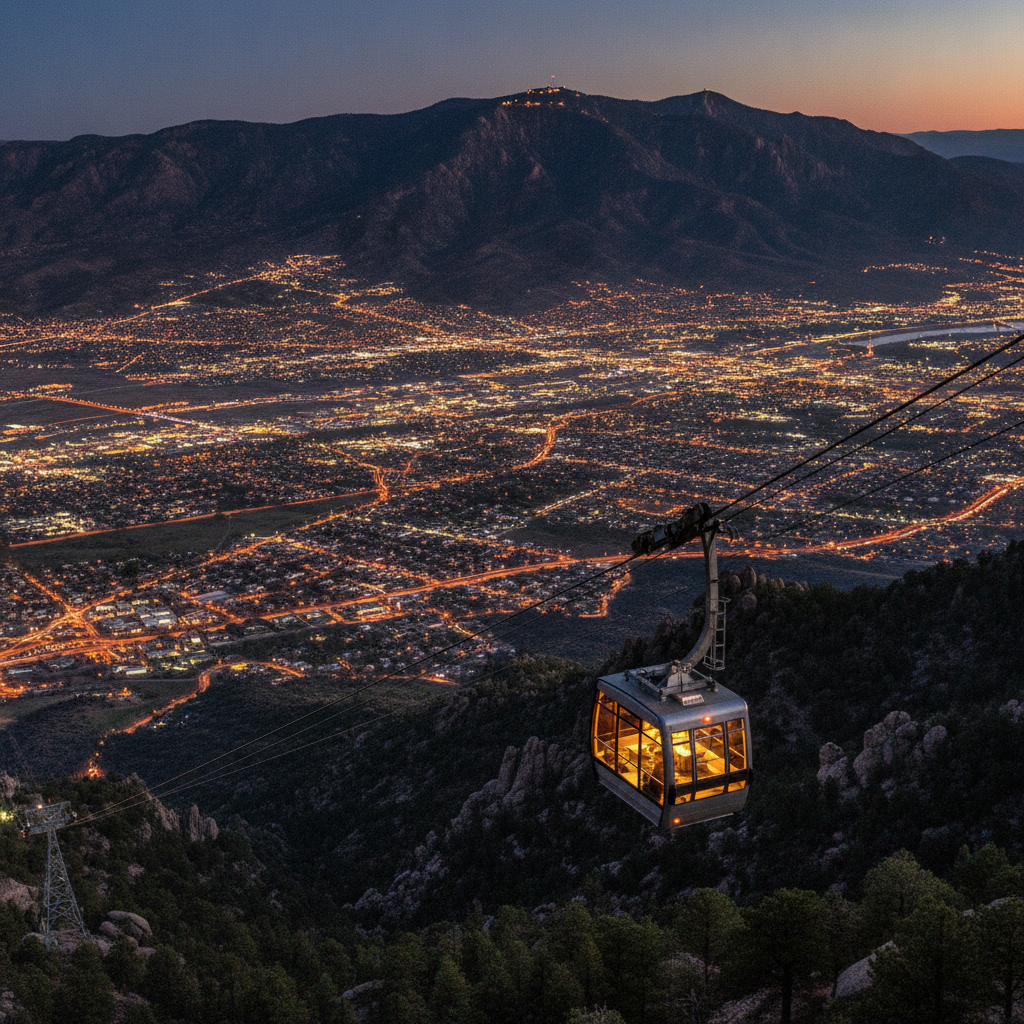
The Sandia Mountains (the mountain range immediately east of Albuquerque, with the Sandia Peak summit at 3,255 m above sea level and the Albuquerque city center at 1,524 m — a vertical rise of 1,731 m over approximately 20 km of horizontal distance): the defining geographical feature of Albuquerque and one of the sharpest elevation transitions of any major American city, creating a city that exists simultaneously in Upper Sonoran desert scrub (4,000 feet) and boreal spruce-fir forest (10,678 feet). The Sandia Peak Tramway (at 30 Tramway Road NE, Albuquerque, operating since May 7, 1966): the longest aerial tramway in the United States at 4.5 km (2.7 miles), climbing from 5,067 feet at the base station to 10,378 feet at the peak station in approximately 15 minutes, passing through five distinct life zones (Lower Sonoran, Upper Sonoran, Transition, Canadian, and Hudsonian) in a single ride that would require a 3-day hike to traverse on foot. The tram carries 50 passengers per car and operates two cars simultaneously (passing in the middle of the run). The winter skiing experience: Sandia Peak Ski Area (at the tramway summit) offers 35 runs with 650 m of vertical drop and a season from approximately mid-December through mid-March — the only ski resort in the United States that is directly accessible by aerial tramway from a major city center. The High Finance Restaurant (at the Sandia Peak summit, elevation 10,378 feet): the highest elevation restaurant in New Mexico, with 360-degree views of the Rio Grande valley, the Jemez Mountains to the west, the Sangre de Cristo Mountains to the north, and on clear days, Mount Taylor (3,445 m) 80 km to the west and the Chuska Mountains on the Navajo Nation. The famous Sandia Mountain sunset: the mountains are named for sandia (the Spanish word for watermelon) because they turn a vivid watermelon pink-red at sunset when the granite face catches the last low-angle light — a phenomenon best viewed from the Albuquerque Rio Grande valley floor.
- 3
Balloon Fiesta Park and the Hot Air Balloon Capital of the World
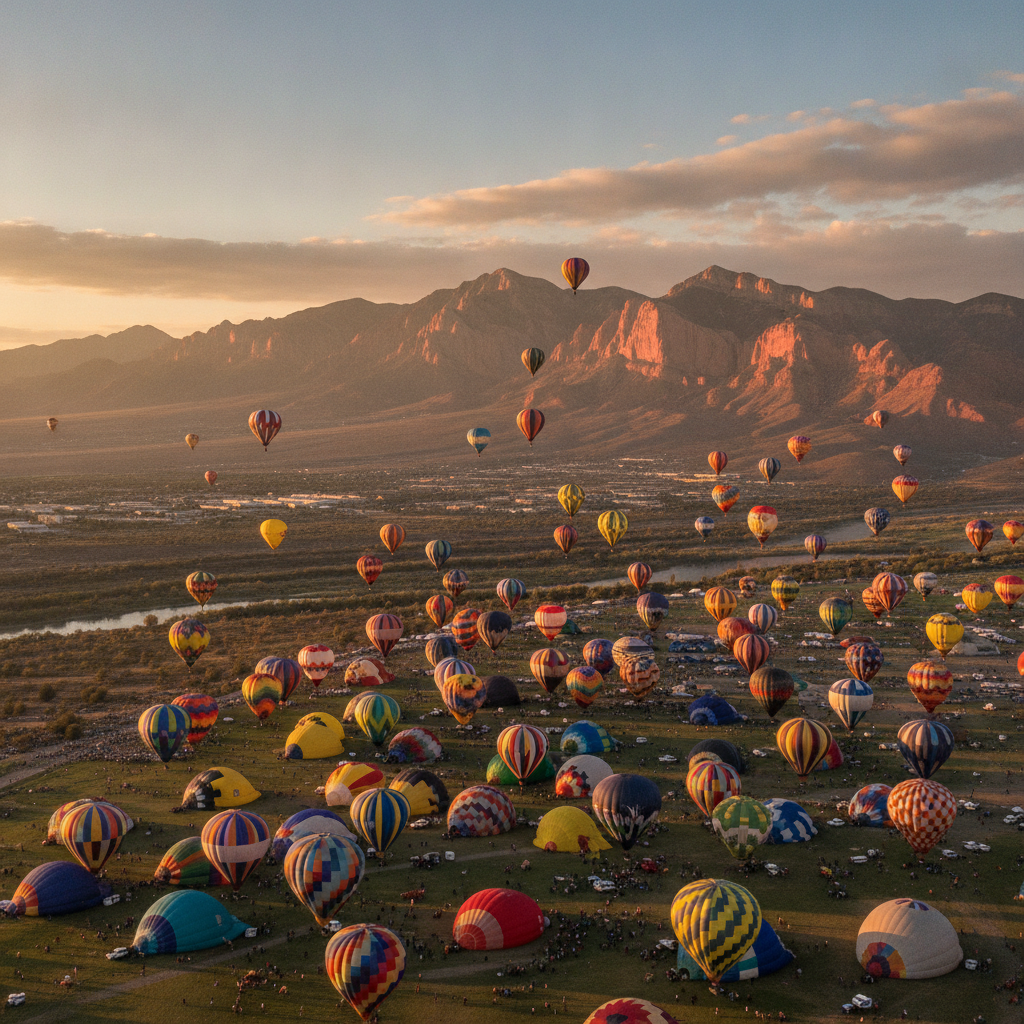
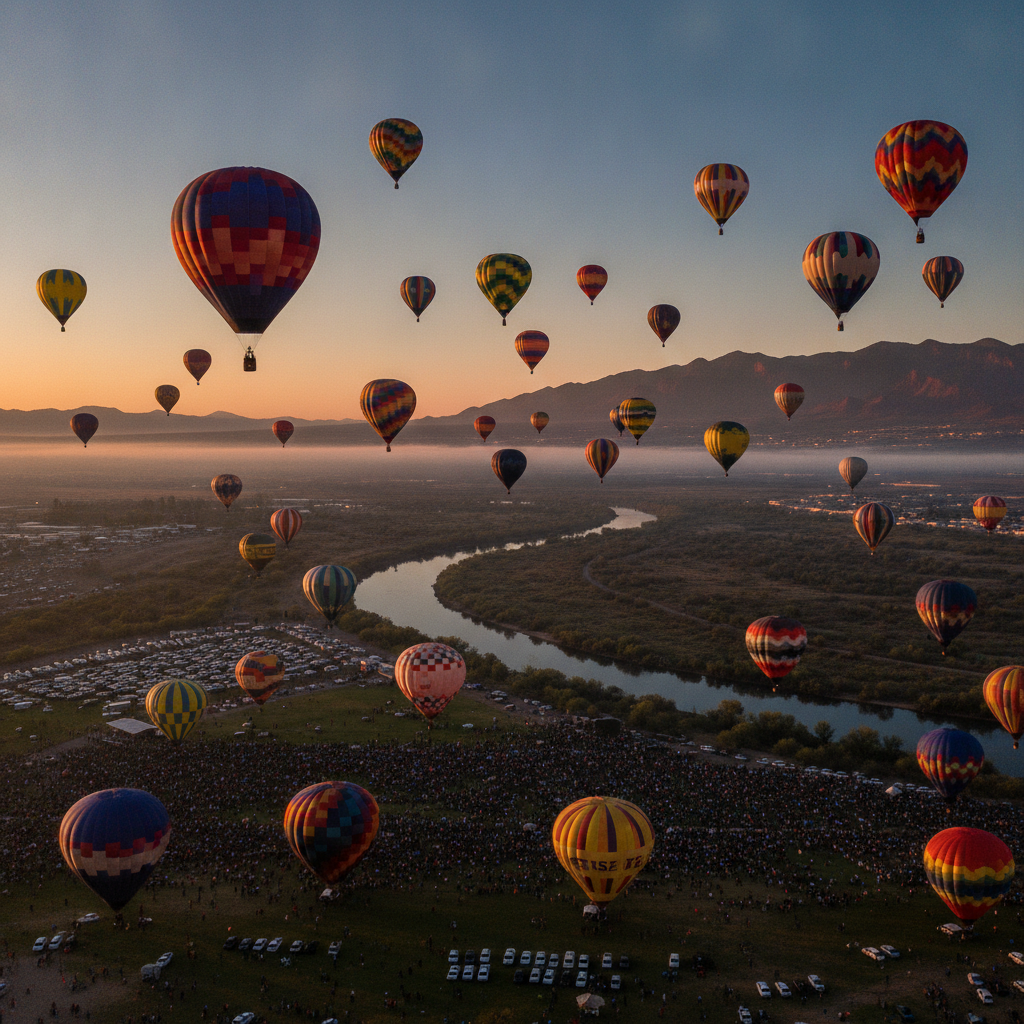
Albuquerque International Balloon Fiesta (at Balloon Fiesta Park, 5000 Balloon Fiesta Parkway NE, Albuquerque): the largest hot air balloon festival in the world, held annually during the first two weeks of October since 1972 (the first Balloon Fiesta in 1972 attracted 13 balloons and 2,000 spectators; by 2024 it attracts approximately 500-600 balloons from 70 nations and 750,000-800,000 spectators over 9 days, making it the most photographed event in the world according to the Fiesta's own data, though this claim is promotional). The Box: the meteorological phenomenon that makes Albuquerque the premier balloon-flight city on earth — the Rio Grande valley creates a consistent two-layer wind system each morning (surface winds blowing south-southwest at low altitude, upper winds blowing north-northeast at 3,000-4,000 feet altitude) that allows balloonists to fly south, climb to catch the upper wind, fly north, and land near their launch point — the only city in the world with this predictable phenomenon, known as the Albuquerque Box. The Dawn Patrol: the opening event of each Balloon Fiesta morning, when 6-8 specially selected balloons launch in complete darkness beginning at 5:30 am, becoming glowing orbs of illuminated silk visible for 80 km in the desert darkness — one of the most photographed recurring events in the American Southwest. The Mass Ascension: 500+ balloons launching simultaneously in two waves (the largest single balloon launch in the world) from Balloon Fiesta Park, filling 9 square km of sky with multicolored envelopes at densities that require precise choreography to prevent collisions. The Anderson-Abruzzo Albuquerque International Balloon Museum (at 9201 Balloon Museum Drive NE): the most complete museum of balloon history in the world, honoring the Double Eagle II transatlantic balloon crossing (Ben Abruzzo, Maxie Anderson, and Larry Newman, from Presque Isle, Maine to Miserey, France, August 11-17, 1978, 137 hours 6 minutes, the first transatlantic balloon crossing) and subsequent record flights.
- 4
Breaking Bad and Pop Culture Albuquerque
Albuquerque as film and television production center: the city and its surrounding desert landscape have been used in more film and television productions than any location outside Los Angeles and New York, with the Albuquerque Studios complex (at 5650 University Boulevard SE, Albuquerque, completed 2007, USD 34M, 350 acres of studio space, the largest studio outside Los Angeles and New York) attracting major Hollywood productions since 2008. Breaking Bad (AMC television series, 5 seasons, 62 episodes, premiered January 20, 2008, finale September 29, 2013, created by Vince Gilligan): the most celebrated television series ever filmed in Albuquerque, with Walter White's Albuquerque home (at 3828 Piermont Drive NE, a private residence where the owners have installed a fence after fans began throwing pizza onto the roof — referencing the Season 3 episode 10 scene where Bryan Cranston's character throws a pizza onto the roof), the Car Wash (at 9516 Snow Heights Circle NE, the Octopus Car Wash used as the exterior), the Twisters fast food restaurant (at 4257 Isleta Boulevard SW, which served as the exterior of the fictional Los Pollos Hermanos chicken restaurant — a real Twisters location still operating and now merchandising the Pollos Hermanos connection), and the Dog House Drive-In (at 1216 Central Avenue SW, still operating). Better Call Saul (AMC, 6 seasons, 2015-2022, the Breaking Bad prequel): filmed extensively in the same Albuquerque locations, with the Mesa Verde Bank and Trust filming locations, Jimmy McGill's office locations, and the courthouse scenes all filmed in the city. The show brought approximately USD 400M in direct production spending and an estimated USD 1.2B in total economic impact to Albuquerque during the combined Breaking Bad and Better Call Saul production periods. The Self-Guided Breaking Bad Experience: RV tours of filming locations are operated by multiple companies, and the Albuquerque Convention and Visitors Bureau publishes the official Filming Locations map.
- 5
Rio Grande and the Middle Rio Grande Bosque
The Rio Grande (the 3,051-km river originating in the San Juan Mountains of southern Colorado at elevation 3,719 m and flowing through Albuquerque at approximately 1,500 m elevation, crossing into Mexico at El Paso/Juarez): the 4th-longest river in the United States and the 20th-longest in North America, the ecological and cultural spine of New Mexico and one of the most ecologically significant rivers in the American Southwest. The Middle Rio Grande Bosque (the 40-km stretch of riparian forest running through Albuquerque along the Rio Grande, approximately 2-4 km wide, one of the largest cottonwood (Populus deltoides wislizeni) bosques in the United States): an ecological island of extraordinary biodiversity in the Chihuahuan Desert, with over 300 species of birds recorded in the bosque. The Bosque Trail: the 40-km paved trail running the length of the Albuquerque bosque along the Rio Grande levee, used by cyclists, joggers, birdwatchers, and equestrians — one of the finest urban nature trails in the American Southwest. The Rio Grande Nature Center State Park (at 2901 Candelaria Road NW, Albuquerque): the most visited nature center in New Mexico, with a large glass observation room overlooking a lagoon and bosque habitat, providing close observation of hundreds of bird species including the Sandhill Cranes that winter in the Rio Grande valley (the Middle Rio Grande valley is one of the principal wintering areas for the Rocky Mountain population of Sandhill Cranes, with the Bosque del Apache National Wildlife Refuge 145 km south of Albuquerque hosting 10,000-15,000 cranes and 50,000 snow geese each winter from November to February). The Corrales acequia system: the historic irrigation network serving the agricultural village of Corrales (north of Albuquerque across the Rio Grande) that has been in continuous operation since the 17th century Spanish colonial period — one of the oldest functioning water systems in the United States.
- 6
Route 66, the Central Avenue Corridor, and Nob Hill
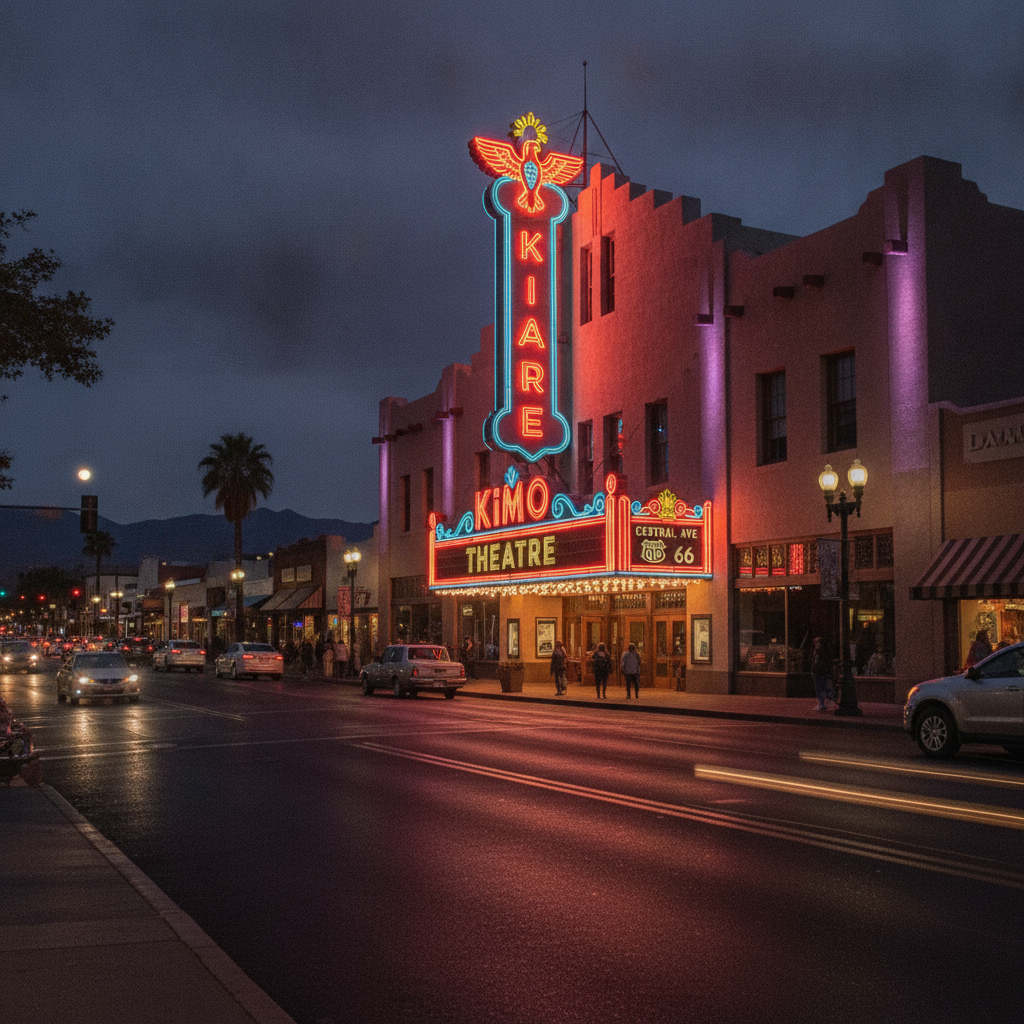
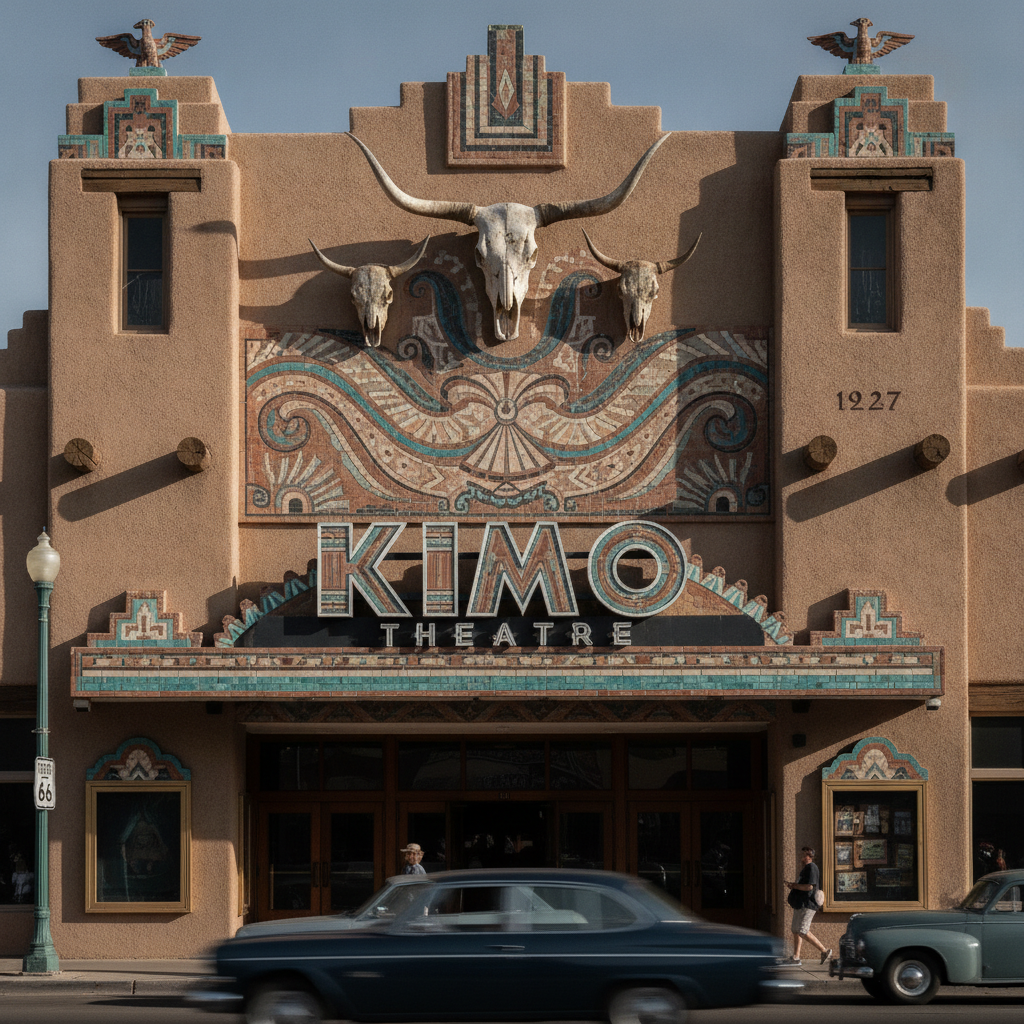
Historic Route 66 in Albuquerque (Central Avenue, the 26-km section of historic U.S. Route 66 passing through Albuquerque from Tijeras at the east to the Rio Grande at the west): the most complete urban section of Route 66 in existence, with more original 1930s-1950s Route 66-era motels, diners, and commercial architecture intact and in use than any other U.S. city on the route — a direct consequence of Albuquerque being bypassed by Interstate 40 (which paralleled but did not replace Central Avenue in the city). The Nob Hill neighborhood (Central Avenue from Girard to Washington, NE Albuquerque): the most commercially vibrant section of Central Avenue, with a concentration of independent restaurants, bars, boutiques, galleries, and music venues centered on the historic Nob Hill Shopping Center (built 1947, the first planned shopping center in New Mexico). The KiMo Theatre (at 423 Central Avenue NW, built 1927, designed by architect Carl Boller): the most distinctive piece of architecture in Albuquerque, built in the Pueblo Deco style — a unique architectural fusion combining Art Deco geometric ornament with Pueblo Revival and Native American iconographic motifs, with longhorn skulls over the entrance, Navajo rug patterns in the tilework, and a pressed tin interior ceiling with kiva fireplace motifs — an architectural style that existed almost exclusively in New Mexico and Arizona in the late 1920s. The Historic Route 66 motels: the Blue Swallow Motel in Tucumcari (160 km east of Albuquerque, at 815 East Route 66, built 1939, continuously operated, the most photographed motel on Route 66 for its intact 1950s neon sign), the El Vado Motel (at 2500 Central Avenue SW, Albuquerque, built 1937, restored 2018, the first motor court designed specifically for Route 66 travelers in Albuquerque), and the Aztec Motel (at 3821 Central Avenue NE, built 1932) are all within Albuquerque or a short day trip.
Walk this route with audio
Stories play automatically as you reach each stop — no tapping needed.
More in albuquerque
Albuquerque: Breaking Bad Country, Sky Tram and the Hispanic Cultural Heart
Albuquerque: Pueblo Nations, Sandia Labs, Turquoise Trail, Arts, Petroglyphs, and New Mexican Food
Albuquerque: Balloon Fiesta, Nuclear Heritage and Green Chile Country
Albuquerque: Music, Native Art, Explora, Wine and Beer, Architecture, and Duke City Identity
Albuquerque: White Sands, Tech Scene, International District, Camino Real, Jemez Mountains, and Practical Info