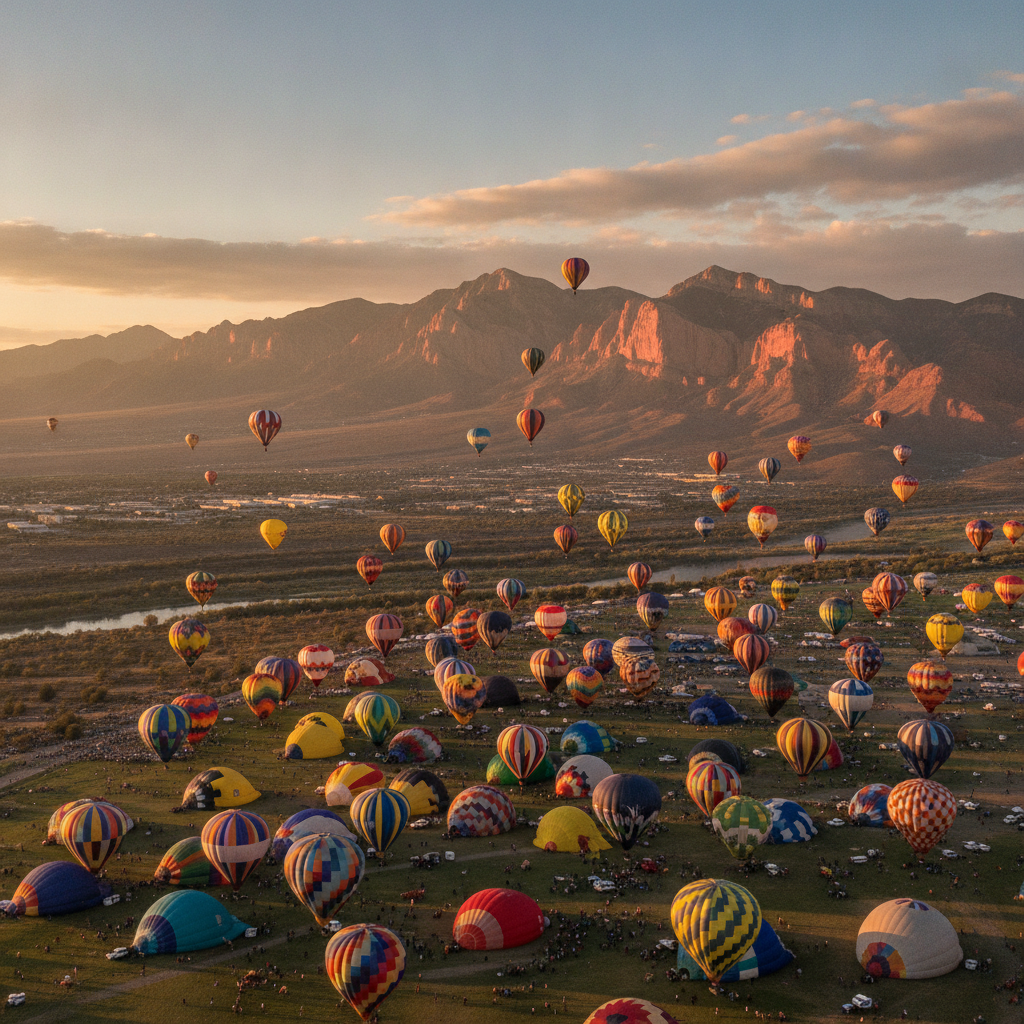
Albuquerque: Neighborhoods, BioPark, O'Keeffe Country, Film Industry, Sports, and New Mexico History
Albuquerque: neighborhoods (Barelas acequia 18th century Spanish Colonial water law Moorish Spain, Barelas Coffee House 1502 4th St 1973 red chile huevos rancheros pozole, South Valley land grants predate 1848 annexation), BioPark (1.5M visitors/year, Zoo 1927 250 species Mexican wolf extinct wild 1980 captive breeding recovery 241 wild animals 2024, Botanic Garden 285,000L shark tank aquarium), Ghost Ranch (O'Keeffe born 1887 died 1986 age 98, Ghost Ranch casita summer 1934-1984, Coelophysis dinosaur quarry 1947 hundreds skeletons 220M years state fossil, O'Keeffe Museum Santa Fe 3,000 works), film (25-35% tax credit largest US, third-largest production center after LA Atlanta, No Country for Old Men 2007 Academy Award, Netflix USD 1B 10-year 2018 42,000 sqm studio, 12,000 jobs USD 800M annual impact 4th-largest sector NM), sports (1524m altitude 300+ days sun, Bosque Trail 160km paved cycling, NM United 2019 largest USL inaugural attendance, Isotopes named Simpsons episode honoring Sandia Labs nuclear research), history (statehood January 6 1912 47th state 64 years territory, Treaty Guadalupe Hidalgo 1848, Navajo Long Walk 1863-1864 8,000-10,000 people 480km forced march Fort Sumner 2,000-3,500 died Treaty 1868 only return to homeland in US history, Trinity Test July 16 1945 5:29am first nuclear detonation 20 kilotons Oppenheimer John Donne Trinity).
- 1
Albuquerque's Neighborhoods - Barelas, Barrio, and the South Valley
Albuquerque's South Valley and Barelas: the oldest continuously occupied neighborhoods in Albuquerque, with Hispanic family settlements dating to the 18th century Spanish Colonial land grants that predate American annexation of New Mexico in 1846-1848. The acequia system: the network of hand-dug irrigation ditches maintained by community majordomo (ditch bosses) under a water-sharing law derived from Moorish Spain via the Spanish Colonial period, still operating in the South Valley and serving agricultural land within the Albuquerque metro boundary — one of the most culturally significant and physically intact examples of Spanish Colonial water law in the United States. Barelas (the neighborhood along 4th Street SW south of downtown, named for the Baca-Barela family who held the colonial land grant): the neighborhood with the highest concentration of authentic New Mexican murals in Albuquerque, and the location of the Barelas Coffee House (at 1502 4th Street SW, Albuquerque, operated since 1973 by the same family, the most institutionally beloved breakfast restaurant in Albuquerque, known for its red chile-smothered huevos rancheros and pozole). The Martineztown neighborhood (northeast of downtown, at Edith and Griegos): one of the last surviving 19th-century Albuquerque residential barrios with original adobe homes, the Martineztown-Santa Barbara Neighborhood Association maintaining the acequia and the historic urban fabric. The North Valley (the residential corridor north of Old Town along the Rio Grande): the most affluent residential area of central Albuquerque, with hacienda-style homes on large lots with irrigation rights, horse properties, and the cottonwood canopy of the bosque forming the western boundary.
- 2
The ABQ BioPark - Zoo, Aquarium, and Botanic Garden
The ABQ BioPark (the integrated natural science and recreation complex operated by the City of Albuquerque, comprising the Albuquerque Aquarium, the Rio Grande Botanic Garden, the Albuquerque Zoo, and Tingley Beach, all connected by the Riverview loop trail along the Rio Grande): the most visited civic cultural complex in New Mexico with approximately 1.5 million visitors per year. The Albuquerque Zoo (at 903 10th Street SW, founded 1927 as a two-animal facility of a bear and a deer, now operating 250 species across 14 hectares): the New Mexico BioPark Zoo, known for its Mexican wolf breeding program (the Mexican gray wolf, Canis lupus baileyi, was declared extinct in the wild in 1980 after predator eradication programs in the 1970s — the Albuquerque Zoo was one of five institutions that maintained the captive breeding population that enabled the Mexican Wolf Recovery Program, which successfully reintroduced Mexican wolves to Arizona and New Mexico beginning in 1998, and by 2024 the wild population has recovered to approximately 241 animals). The Rio Grande Botanic Garden (at 2601 Central Avenue NW, 10 hectares): the botanic garden with major glass conservatories presenting Mediterranean-climate plants and a Spanish Colonial garden, connected by a 1.6-km Rio Grande bosque trail to the main zoo complex. The Albuquerque Aquarium (at 2601 Central Avenue NW, adjoining the Botanic Garden): the inland aquarium presenting the ecological journey of a water drop from the Rockies through the Rio Grande system to the Gulf of Mexico, with a 285,000-liter shark tank as the centerpiece. Tingley Beach (at 1800 Tingley Drive SW): the three ponds on the Rio Grande bosque used for model boat sailing and fishing, with seasonal carp, bass, and catfish.
- 3
Ghost Ranch and Georgia O'Keeffe Country North of Albuquerque
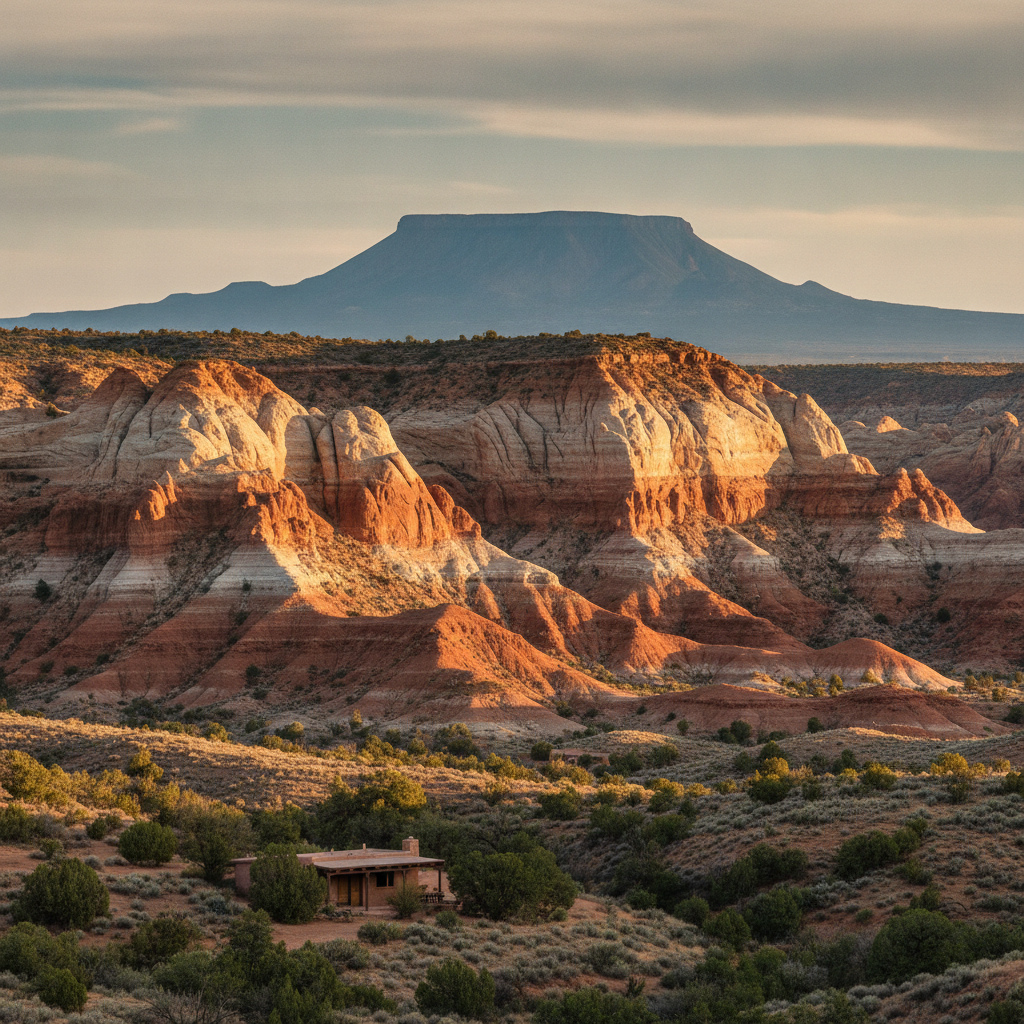
Georgia O'Keeffe (born November 15, 1887, Sun Prairie, Wisconsin; died March 6, 1986, Santa Fe, New Mexico, age 98): the most important American female artist of the 20th century, who discovered northern New Mexico in 1917, moved permanently to Abiquiu in 1949 (following the death of her husband, the photographer Alfred Stieglitz, in 1946), and spent the last 36 years of her life in the Ghost Ranch and Abiquiu area (200 km north of Albuquerque), painting the landscape that made her famous — the white and red sandstone cliffs, the bleached animal bones, the flower close-ups, and the Pedernal Mesa. Ghost Ranch (at US 84, Abiquiu, New Mexico, 220 km north of Albuquerque): the 21,000-acre conference center operated by the Presbyterian Church (USA) on land that was O'Keeffe's summer home from 1934 to 1984, with her casita still on the property. Ghost Ranch is the site of the most complete discovery of Coelophysis dinosaur fossils in the world (the Ghost Ranch Quarry, discovered 1947, yielding hundreds of Coelophysis skeletons in a single mass death assemblage approximately 220 million years old — Coelophysis is the New Mexico state fossil). The Georgia O'Keeffe Museum (at 217 Johnson Street, Santa Fe, New Mexico, 100 km north of Albuquerque): the primary repository of O'Keeffe's work, with 3,000 works in the collection, the largest collection of O'Keeffe paintings in the world. The Abiquiu dam and reservoir: the Army Corps of Engineers dam on the Chama River, with the reservoir reflecting the cliffs that O'Keeffe painted in some of her most famous works.
- 4
The Albuquerque Film and Media Economy
Albuquerque as the third-largest film and television production center in the United States (after Los Angeles and Atlanta): New Mexico offers a 25-35% film production tax credit (the largest in the United States), which has attracted not just Breaking Bad and Better Call Saul but a continuous stream of major productions including Better Call Saul (2015-2022), Better Call Saul prequel-adjacent productions, Longmire (A&E/Netflix, 6 seasons, filmed almost entirely in the Albuquerque area), The Night Shift (NBC, 4 seasons, filmed at Presbyterian Hospital, Albuquerque), Wildlike (2014), No Country for Old Men (2007 Coen Brothers, filmed in New Mexico including Albuquerque-area locations, Academy Award for Best Picture), There Will Be Blood (2007, partially filmed in New Mexico), Terminator Salvation (2009), Thor (2010), The Avengers (2012, production office only, but the Albuquerque Convention Center served as a background location), and hundreds of smaller productions and commercials annually. NBCUniversal made Albuquerque Studios its primary production facility for multiple series in the 2010s, investing USD 500M in infrastructure. Netflix announced a 10-year, USD 1B production deal with New Mexico in 2018, establishing a dedicated production campus (Netflix Albuquerque Studios at 100 1st Street SW, the former Levi Strauss factory, 42,000 square meters). By 2023, the New Mexico film industry employs approximately 12,000 New Mexicans directly, with an annual economic impact of approximately USD 800M — making it the 4th-largest economic sector in the state. The KiMo Theatre (see Route 1) also serves as a filming location.
- 5
Albuquerque Sports and the High Desert Athletic Life
Albuquerque's outdoor sports culture: the combination of 300+ days of sunshine, low humidity, high altitude (1,524 m), and proximity to world-class wilderness areas makes Albuquerque one of the premier cities for outdoor athletics in the United States. The Bosque Trail and road cycling: Albuquerque is consistently ranked among the top 10 cycling cities in the US by Bicycling Magazine, with the 160-km Paseo del Bosque Trail system (the paved trail along the Rio Grande bosque and connecting trails) and a climate that enables year-round outdoor cycling. The high-altitude training advantage: Albuquerque's elevation of 1,524 m (5,000 feet) has made it a preferred training base for endurance athletes, with the US Olympic Training Center using the Albuquerque area for altitude training camps. The New Mexico United (the professional soccer club founded 2019, playing at Rio Grande Credit Union Field at Isotopes Park, 1601 Avenida Cesar Chavez, Albuquerque, USL Championship division, initial season 2019): the fastest-growing sports franchise in New Mexico history, with the largest single-season inaugural attendance in USL Championship history (12,000+ per match average) and a passionate supporters culture built on New Mexican pride. The Albuquerque Isotopes (the Triple-A affiliate of the Colorado Rockies, playing at Isotopes Park, 1601 Avenida Cesar Chavez, Albuquerque, since 2003): named for the episode of The Simpsons where Homer learns his favorite baseball team, the Springfield Isotopes, is moving to Albuquerque — in a case of life imitating art, the real Albuquerque minor league team adopted the name Isotopes (honoring both the Simpsons episode and the actual Sandia National Laboratories nuclear research). The ABQ marathon (the Duke City Marathon in October): the most popular distance running event in New Mexico.
- 6
New Mexico History - The Long Walk, the Atomic Age, and Statehood
New Mexico as the last of the contiguous states: New Mexico achieved statehood on January 6, 1912 — the 47th state to join the Union, admitted only 47 days before Arizona (January 14, 1912) in a joint congressional act that ended 64 years of territorial status since the Treaty of Guadalupe Hidalgo (February 2, 1848) ended the Mexican-American War and transferred New Mexico and California to the United States. The Navajo Long Walk (Hweldi, the Navajo name for the Bosque Redondo internment at Fort Sumner, 300 km east of Albuquerque, 1864-1868): the forced removal of approximately 8,000-10,000 Navajo people from their ancestral lands in present-day Arizona and New Mexico by U.S. Army Colonel Kit Carson (who cut down peach orchards, burned cornfields, and killed sheep to starve the Navajo into surrender) in 1863-1864, and the subsequent 480-km forced march to the Bosque Redondo reservation, where between 2,000 and 3,500 Navajo died of starvation, disease, and exposure in four years of captivity. The Navajo Treaty of 1868 allowed the surviving Navajo to return to their homeland — the only instance in U.S. history where a Native nation was allowed to return to its original territory after forced removal. The Trinity Test (July 16, 1945, 5:29:21 am Mountain War Time, at the Jornada del Muerto desert, now the White Sands Missile Range, 200 km south of Albuquerque): the first detonation of a nuclear weapon in human history, with a yield of approximately 20 kilotons (equivalent to 20,000 tons of TNT), vaporizing the 30-m steel tower, melting the desert sand into a new mineral called trinitite, and producing a mushroom cloud visible 240 km away. J. Robert Oppenheimer (the scientific director of the Manhattan Project) named the test Trinity, citing a poem by John Donne.
Walk this route with audio
Stories play automatically as you reach each stop — no tapping needed.
More in albuquerque
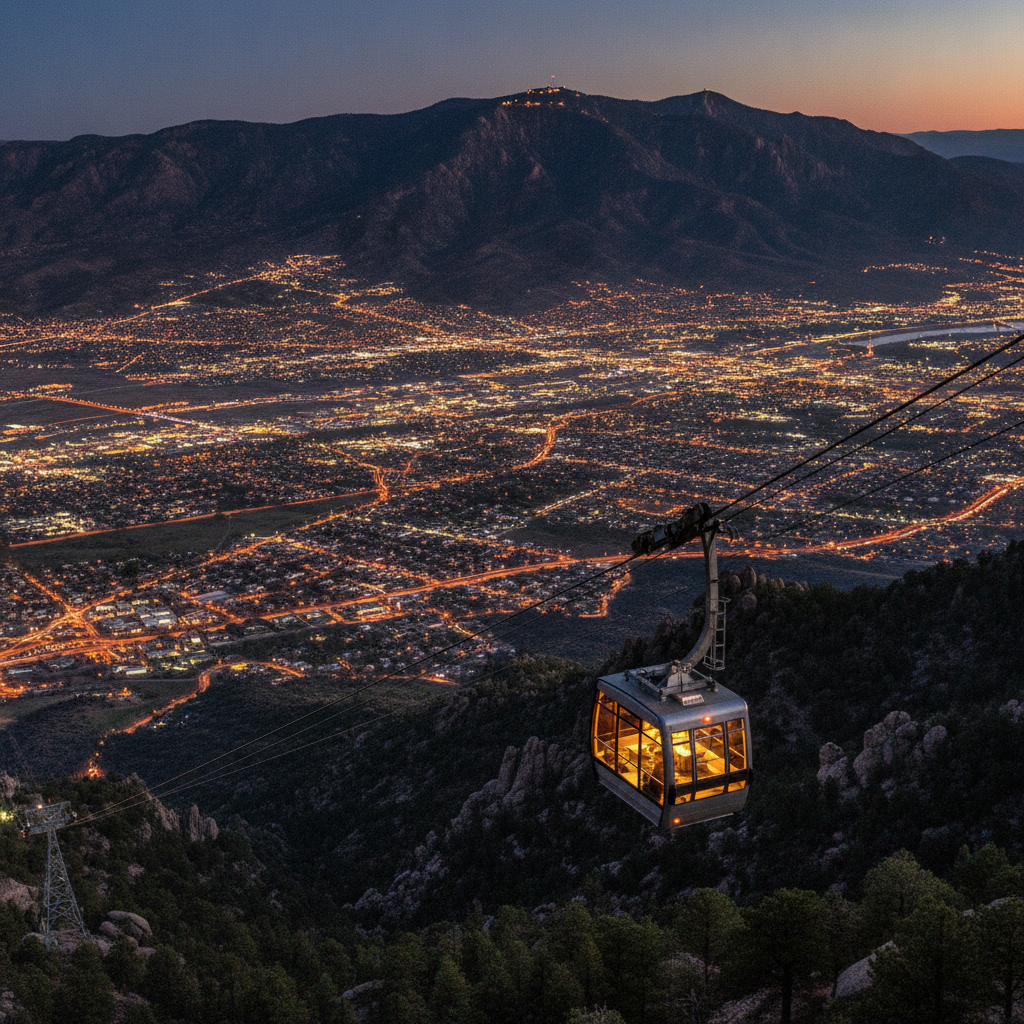
Albuquerque: Breaking Bad Country, Sky Tram and the Hispanic Cultural Heart
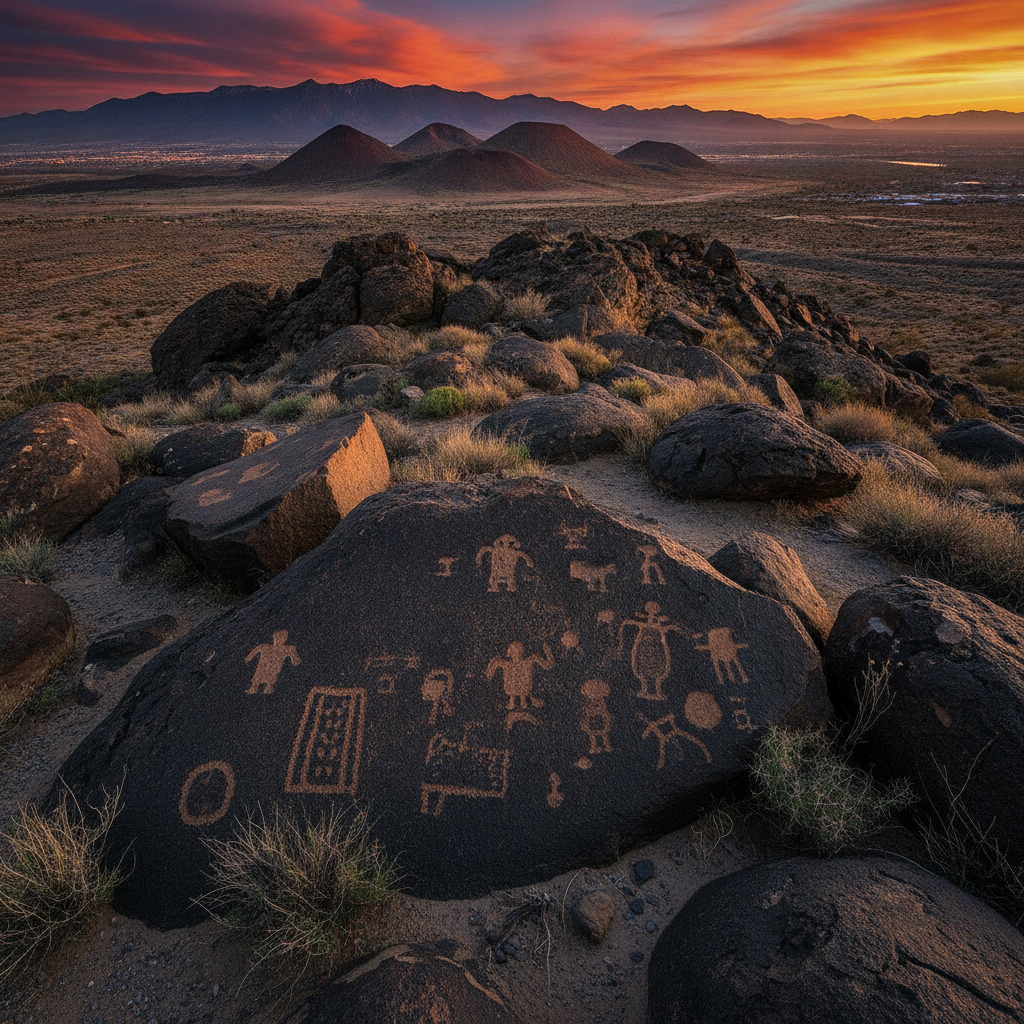
Albuquerque: Pueblo Nations, Sandia Labs, Turquoise Trail, Arts, Petroglyphs, and New Mexican Food
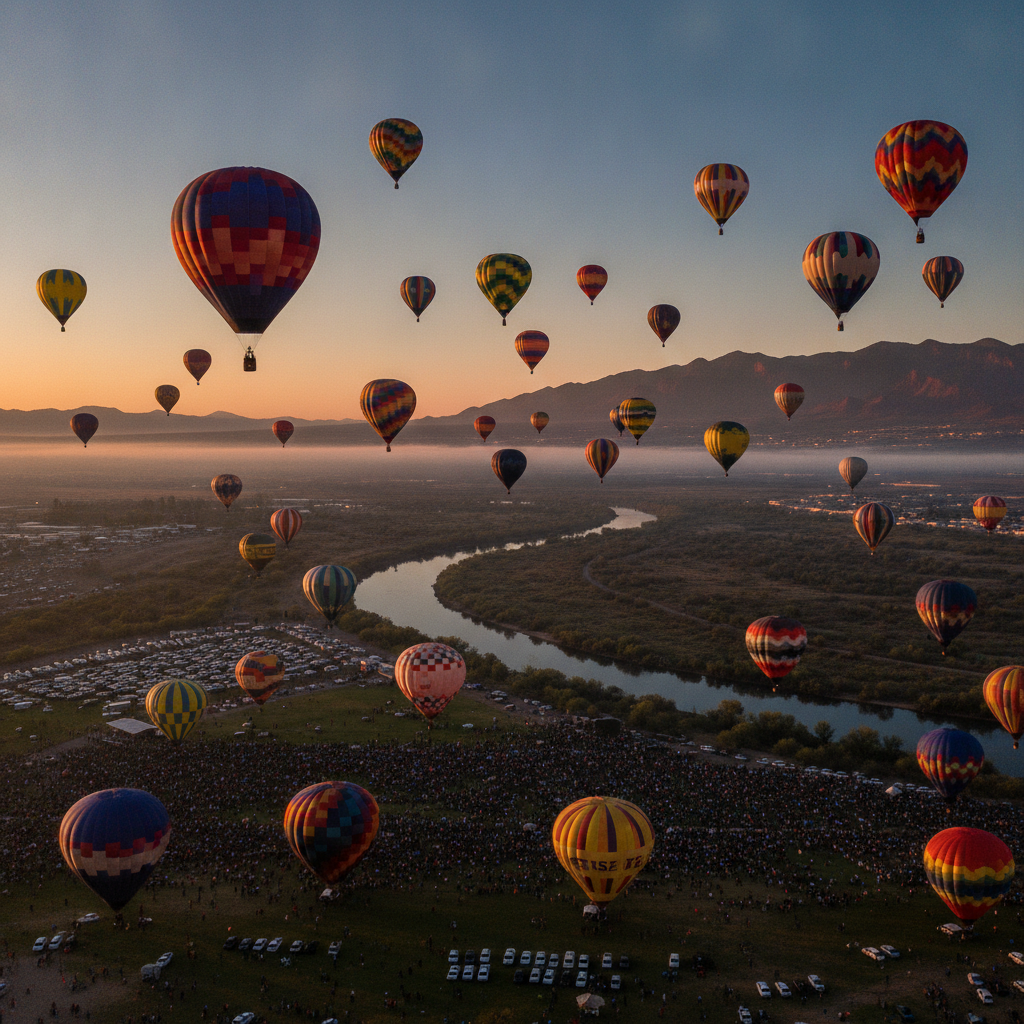
Albuquerque: Balloon Fiesta, Nuclear Heritage and Green Chile Country
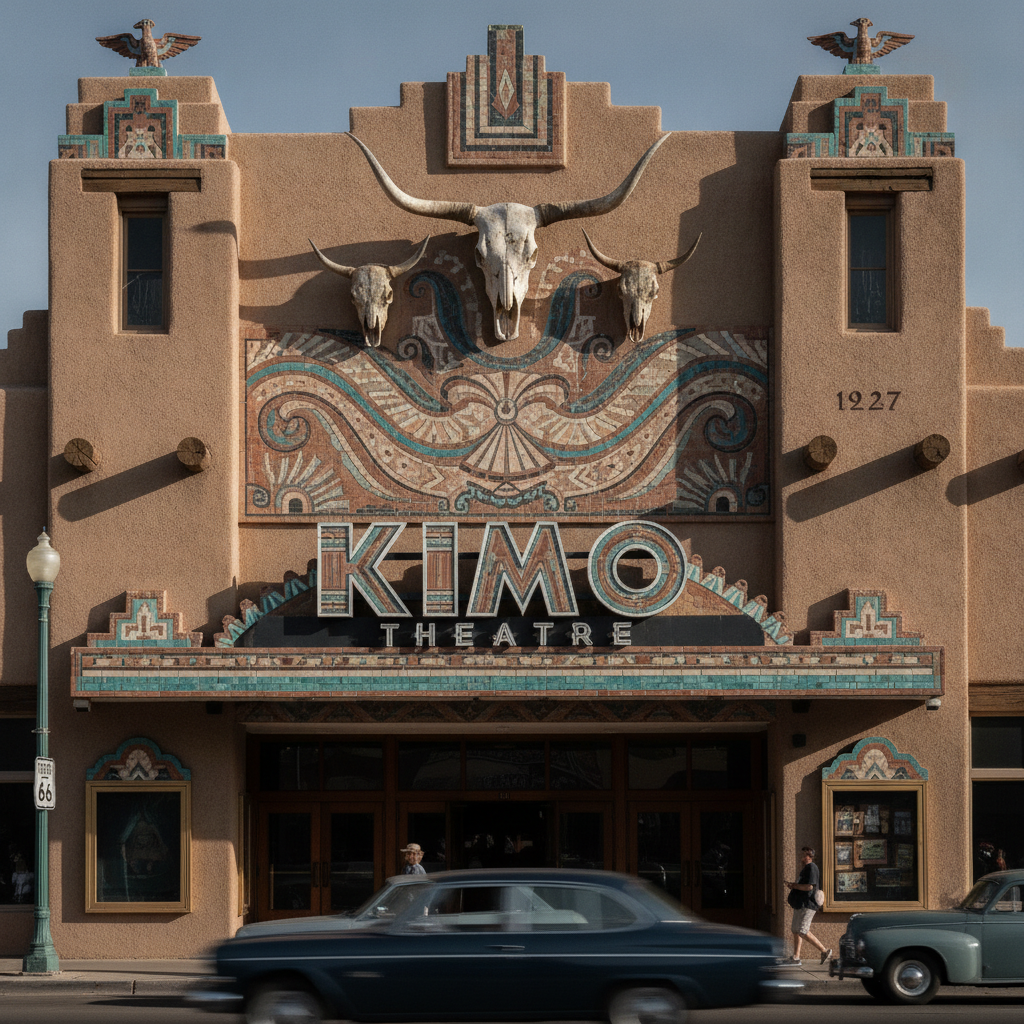
Albuquerque: Music, Native Art, Explora, Wine and Beer, Architecture, and Duke City Identity
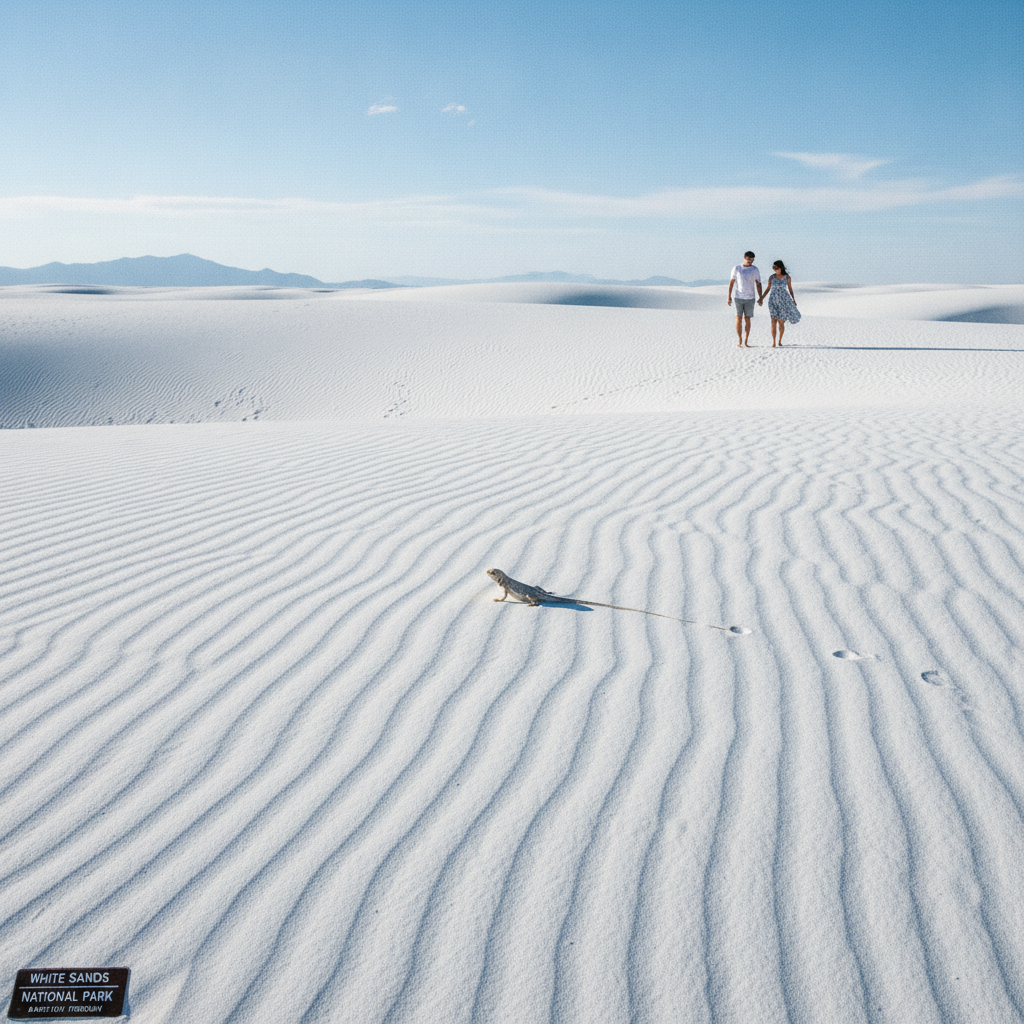
Albuquerque: White Sands, Tech Scene, International District, Camino Real, Jemez Mountains, and Practical Info