Agra Practical: Taj Mahal Sunrise Photography, Conservation Crisis & Getting There in 100 Minutes from Delhi
Master Agra logistics—why the East Gate beats the South Gate at 5:30am, how the Taj's marble has been yellowing since the 1980s and what multani mitti clay paste does about it, the Yamuna river as sewage channel versus its historical role cooling the monument, Nur Jahan issuing imperial decrees and minting coins with her own face while ruling the empire for an opium-addicted emperor, how Marathas stripped Mughal monuments before the British proposed demolishing Agra Fort for building materials, and completing all three UNESCO monuments plus Mehtab Bagh sunset on a ₹2,050 composite ticket arriving from Delhi in 100 minutes on the Gatimaan Express.
- 1
The Taj Mahal at Sunrise – Dawn Photography & Crowds
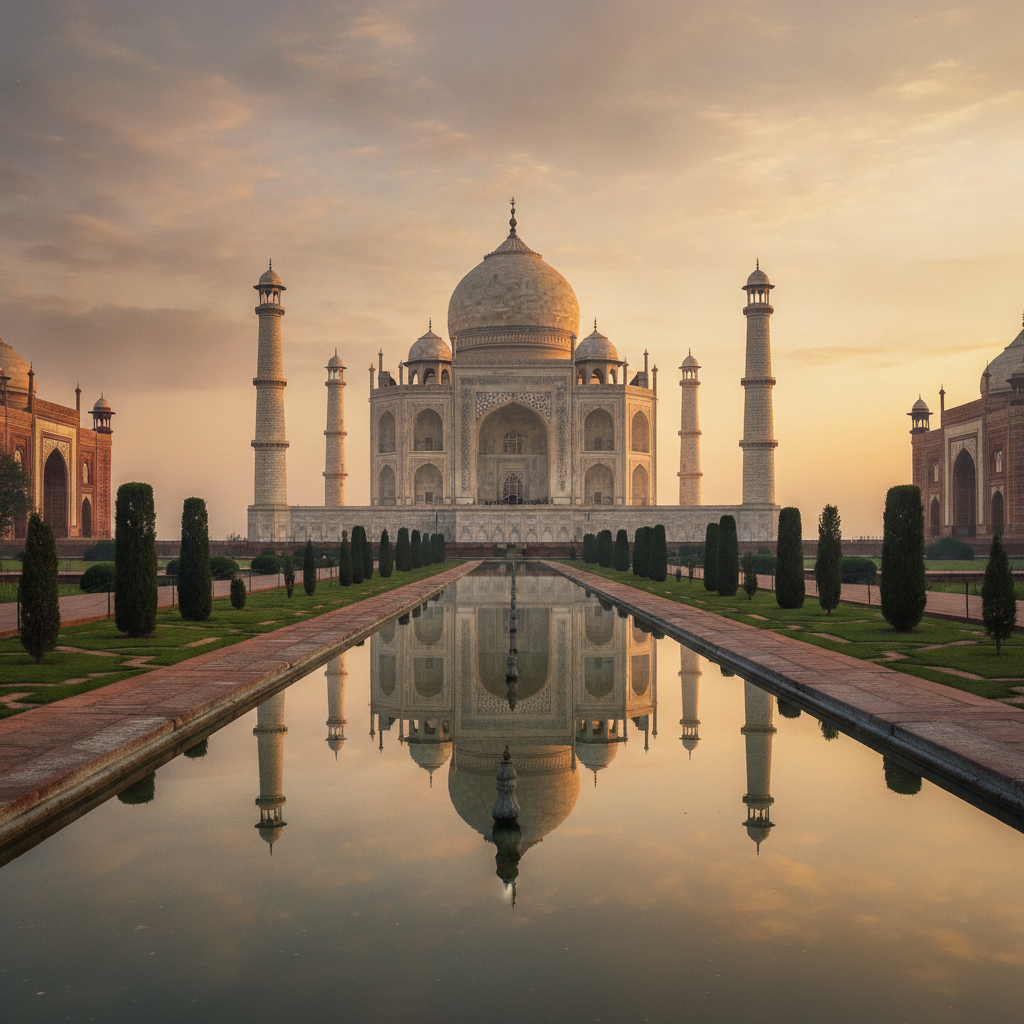
The Taj Mahal at sunrise is the defining Agra experience: the monument's white marble shifts from grey to pale blue to gold as the sun rises, and the long central pool reflects the central dome and minarets with photographic perfection. The East Gate opens at sunrise (30 minutes before sunrise officially); arriving 45 minutes before official opening, joining the queue, and walking through the garden as the sun rises gives approximately 20–30 minutes in relatively low crowd conditions before the main visitor surge at 7–8am. The 'perfect reflection' photograph requires still air (mornings are usually calmer than afternoons). Tripods are not permitted without special advance permission from the Archaeological Survey of India.
- 2
Agra's Tourist Infrastructure – Heritage Hotels & Overcrowding
Agra's tourist infrastructure is paradoxically underdeveloped given its status as India's most visited destination. The Taj Ganj area (immediately south of the Taj) is the backpacker zone, with guesthouses from ₹500/night (€5.50) with Taj rooftop views. The Oberoi Amarvilas—universally considered India's finest hotel (every room faces the Taj, starting from ₹80,000/night, €875)—is the most prestigious address in Agra. The city's infrastructure is strained: roads are poor, pollution in the Taj Trapezium Zone is heavily regulated (diesel vehicles banned; electric vehicles only), and the Archaeological Survey of India has discussed limiting daily visitor numbers (currently no hard cap). The city has few good restaurants and relatively weak nightlife compared to Delhi or Jaipur.
- 3
The Taj Mahal's Colour Mystery & Conservation Challenges
The Taj Mahal's white Makrana marble has been yellowing since the 1980s, attributed variously to air pollution (sulphur dioxide from industrial sources), insect activity (the Yamuna river mudpacks and insect excrement on the surface), and natural oxidation. The Archaeological Survey of India applies a traditional clay and rosewater paste (multani mitti) to the marble surfaces periodically to draw out impurities and restore whiteness. The Yamuna river—which historically reflected and cooled the monument—is now largely a sewage channel through Agra; restoration of Yamuna water levels is a key conservation demand. A 2018 UNESCO report expressed 'serious concern' about the monument's deteriorating condition, though no danger-listing has occurred.
- 4
Nur Jahan – The Most Powerful Woman in Mughal History
Nur Jahan ('Light of the World'), born Mehr-un-Nissa in 1577, married Emperor Jahangir in 1611 at age 34—an extraordinary circumstance, as she was a widow and much older than typical imperial brides. She became the most powerful woman in Mughal history: she issued imperial farmans (decrees) in her own name, had coins struck with her image (unprecedented), and effectively ruled the empire when Jahangir was incapacitated by addiction to alcohol and opium. She designed her own father's tomb (Itimad-ud-Daulah) and her mother's tomb, and supervised her parents' tomb construction—establishing the pietra dura marble inlay technique that influenced the Taj Mahal. Her own tomb in Lahore, which she designed, is among the most delicate Mughal structures; she survived Jahangir by 18 years, dying in 1645.
- 5
Agra & the Mughal Empire's Decline
The Mughal Empire's decline from the late 17th century onwards has been attributed to Aurangzeb's reversal of Akbar's tolerant policies (reimposing the jizya, destroying thousands of Hindu temples, imprisoning his father Shah Jahan), the ruinous cost of his 27-year Deccan wars (1680–1707), and the rise of the Maratha Confederacy. Agra was sacked by Marathas in 1761 (they stripped gold and jewels from many Mughal monuments, though the Taj escaped significant damage), then passed to the Jat rulers of Bharatpur, then the Scindia Maratha dynasty, and finally to the British East India Company in 1803. The British preserved the Taj Mahal from Lord Curzon's 1905 restoration onwards; earlier British administrators had proposed demolishing parts of Agra Fort for building materials.
- 6
Practical Agra – Getting There, Getting Around & Day-Trip Logistics
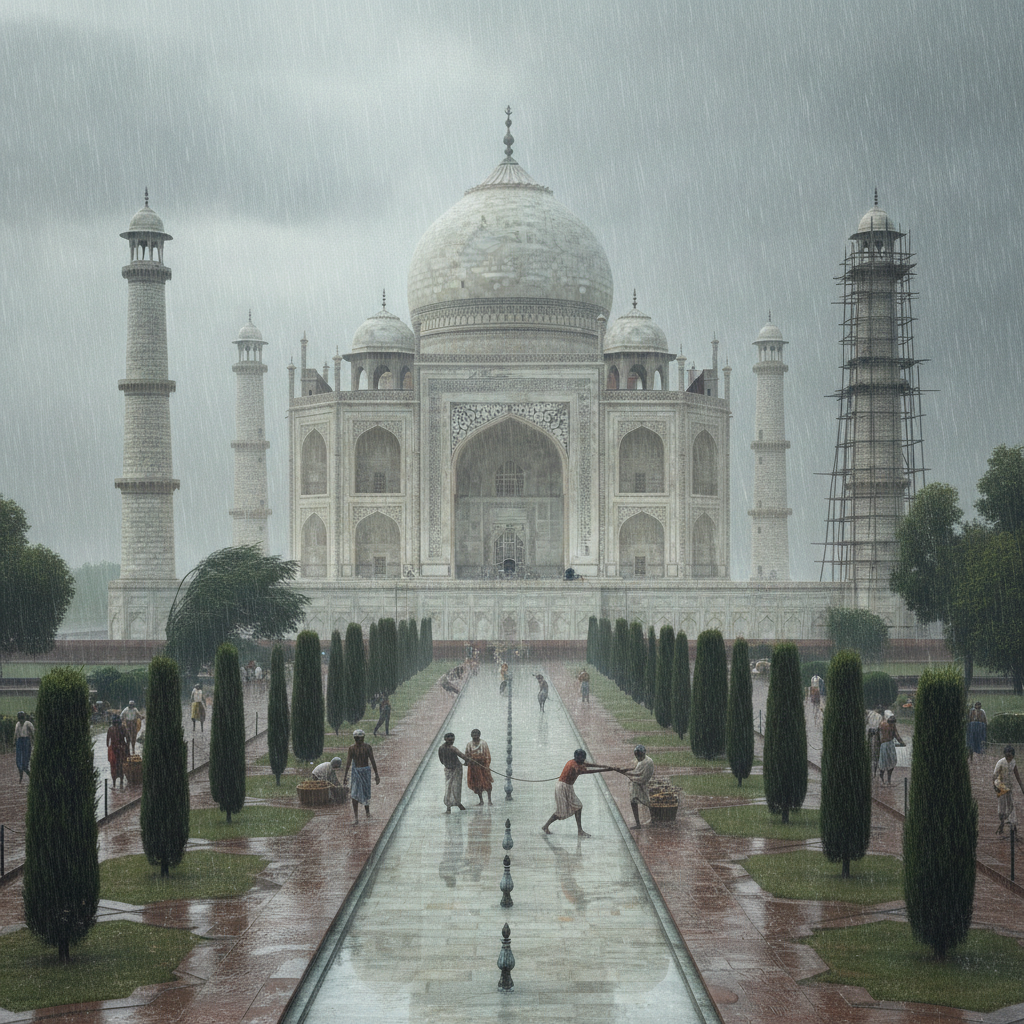
Agra is 200 km from Delhi (Gatimaan Express train: 100 minutes, ₹755/€8.30 for chair car—the fastest and best option), 240 km from Jaipur (4 hours by road or 3.5 hours by train). There is no major airport; the nearest is Delhi (DEL, 200 km). The Taj Mahal, Agra Fort, and Itimad-ud-Daulah are the three UNESCO monuments; all three can be visited in a single day (sunrise Taj → Agra Fort → Itimad-ud-Daulah in the afternoon) plus Mehtab Bagh at sunset. The Agra Development Authority 'Composite Ticket' (₹2,050/€22.50) covers all three monuments. Electric cycle-rickshaws (₹100–200/€1.10–2.20) are the main short-distance transport in the Taj Trapezium Zone; auto-rickshaws (₹150–300/€1.65–3.30) for longer distances. The best season is October–March; avoid June (45°C) and monsoon July–August (visibility poor, but the Taj in rain is beautiful).
Walk this route with audio
Stories play automatically as you reach each stop — no tapping needed.
More in Agra
Building the Taj: Afghan Lapis, a 15km Construction Ramp, Lord Curzon's Lamp & the Day-Trip Mathematics
Agra's Mughal World: the Peacock Throne Worth Twice the Taj, the Yamuna's Environmental Collapse & the Myths
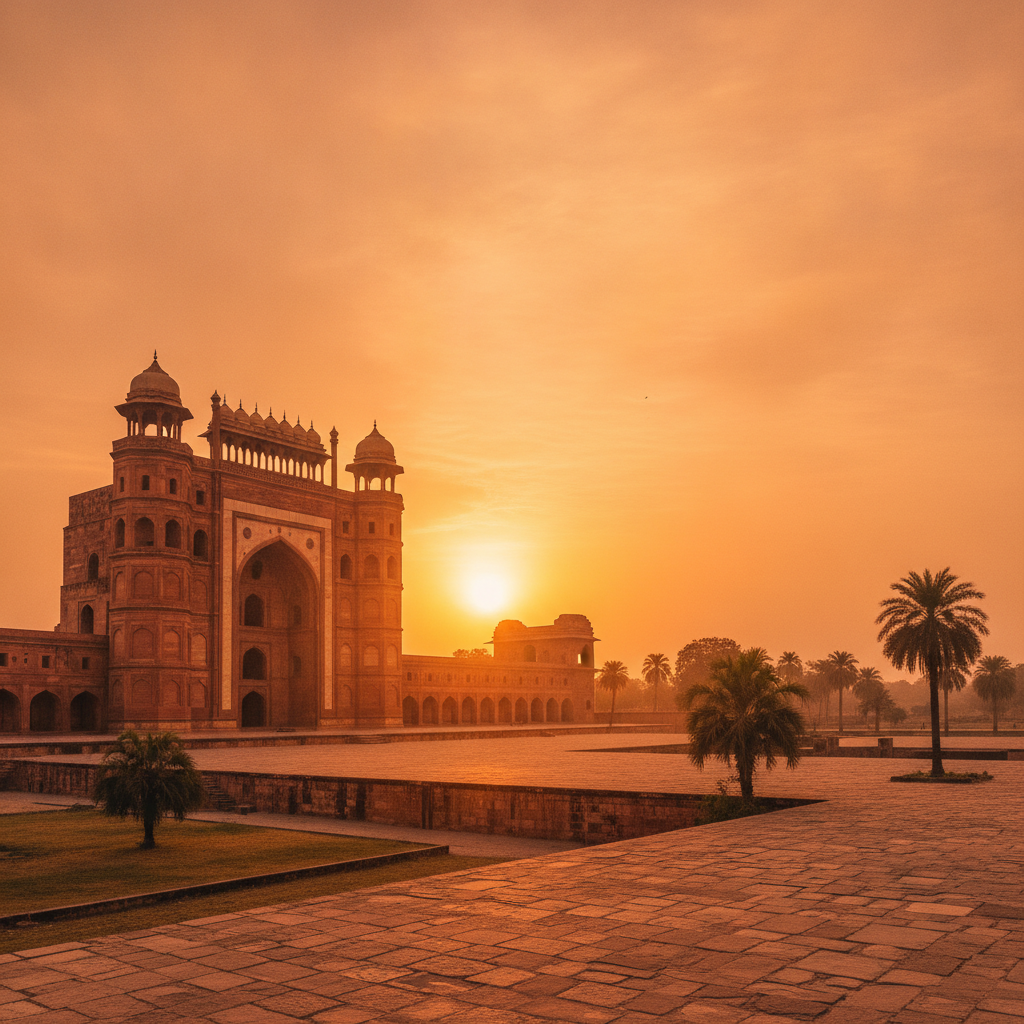
Beyond the Taj: Akbar's Abandoned Red Capital, Krishna's Birthplace & Agra's Marble Inlay Workshops
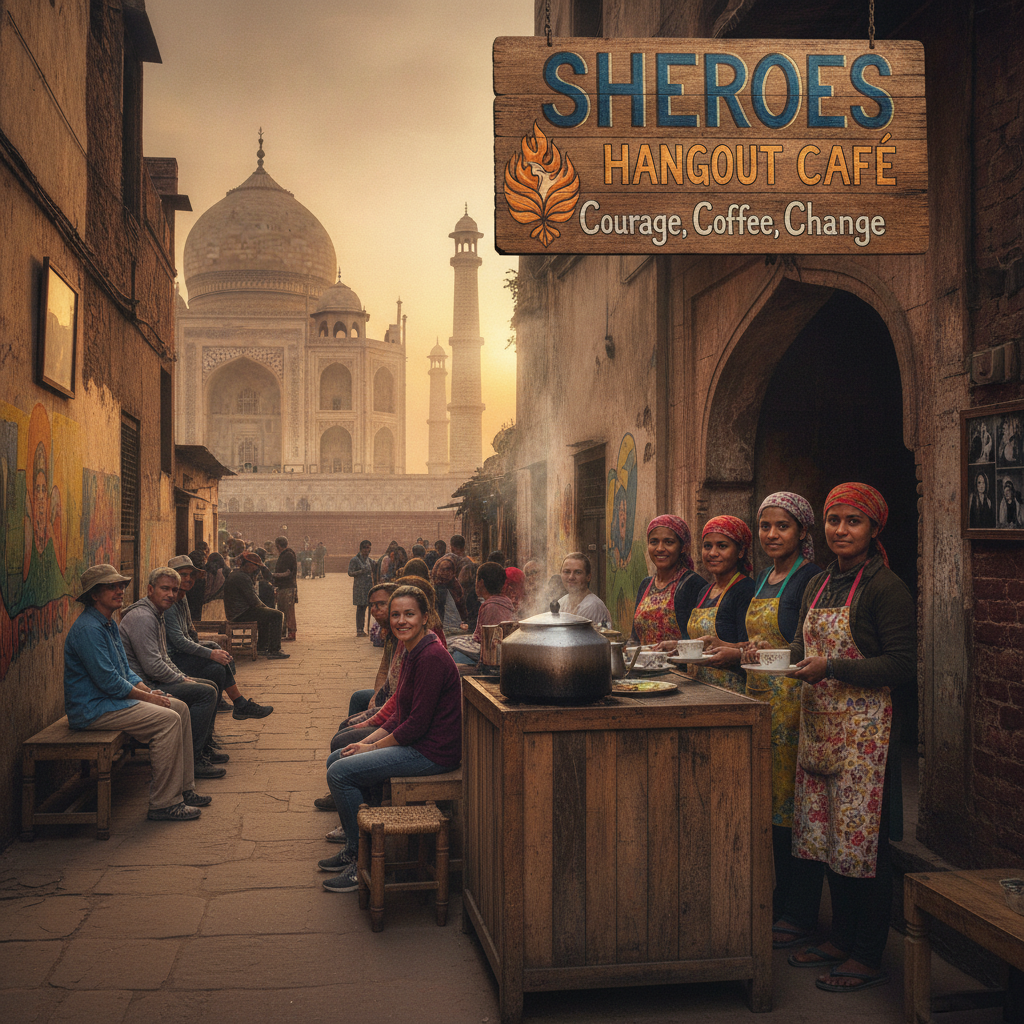
Agra Beyond the Marble: Zardozi Gold Embroidery, Mughlai Dum Cooking, the Koh-i-Noor's Journey & Sheroes Café