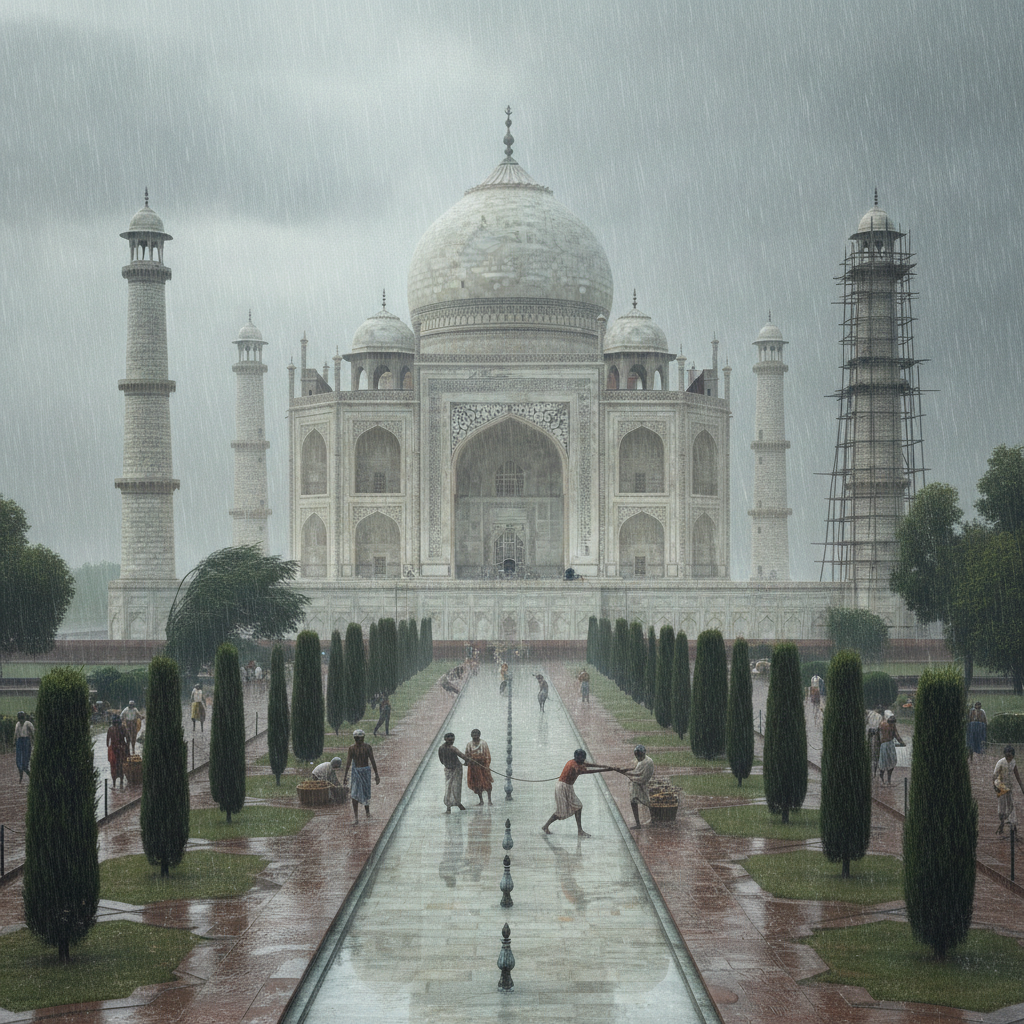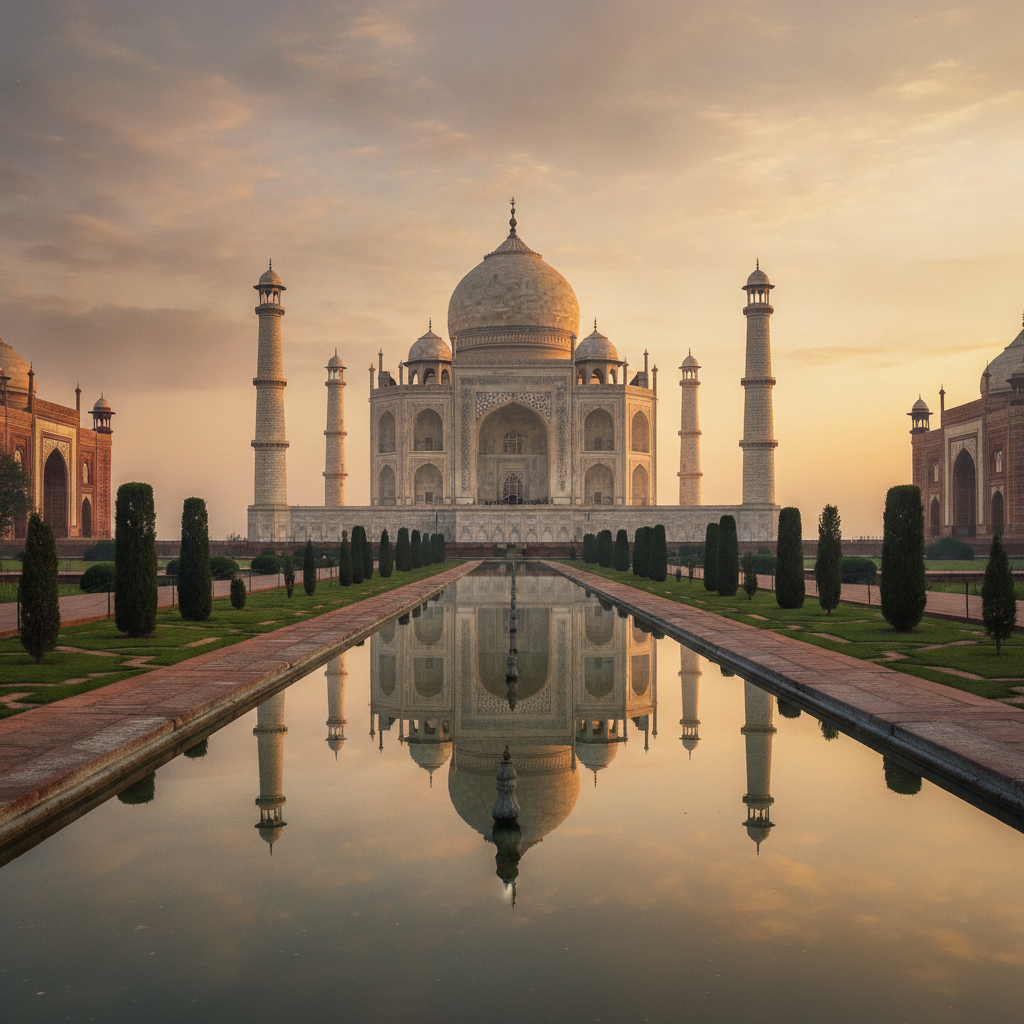
Agra Essentials: Taj Mahal at Dawn, Shah Jahan's Prison Window & the Baby Taj Across the Yamuna
Encounter the world's greatest monument to love—21 years and 20,000 workers to build a perfect white marble tomb for a wife who died bearing her 14th child, the Taj's colour shifting from pale blue at dawn to golden-pink at sunset, Shah Jahan imprisoned by his own son in Agra Fort with a window directly facing his wife's tomb across the river, the exquisite smaller 'Baby Taj' built by the most powerful woman in Mughal history using the same pietra dura technique that inspired the Taj, and the Moonlight Garden where the Taj is reflected in the Yamuna without a single other tourist.
- 1
The Taj Mahal – Perfection in White Marble
The Taj Mahal—completed in 1653 by Mughal Emperor Shah Jahan as a mausoleum for his wife Mumtaz Mahal, who died in childbirth in 1631—is the most visited monument in India (7–8 million visitors annually) and the defining image of Mughal architecture. The main mausoleum is built of pure white Makrana marble from Rajasthan, inlaid with 28 types of semi-precious stones (lapis lazuli, turquoise, jade, crystal, carnelian, coral) in pietra dura floral patterns. The four minarets lean slightly outward so that in the event of an earthquake they fall away from rather than onto the central dome. The monument's colour changes through the day: pale blue at dawn, white at noon, golden-pink at sunset, luminous grey in moonlight.
- 2
The Taj Mahal Entry & Logistics
The Taj Mahal is open Tuesday–Sunday (closed Friday for midday prayers, open for afternoon prayer visitors) from 30 minutes before sunrise to 30 minutes before sunset; on full moon nights (and 2 days before/after), night viewing (10pm–midnight) is offered in batches. Entry fees: ₹1,100 (€12) for foreign tourists; ₹200 (€2.20) for Indian nationals—the price differential is among the largest at any world heritage site. Photography of the main mausoleum interior is not permitted. The Taj Trapezium Zone (TTZ) restricts vehicle access within 500 metres; entry is by electric bus or on foot from the parking areas. The East Gate has shorter queues than the more popular South Gate; early morning arrival (6–8am) avoids the worst crowds.
- 3
Agra Fort – The Red Sandstone Citadel on the Yamuna
Agra Fort—2.5 km northwest of the Taj Mahal, on the Yamuna river bank—is a UNESCO World Heritage Site (1983) and was the primary residence of the Mughal emperors from Akbar (who began construction in 1565) through Aurangzeb. The fort contains palaces, mosques, audience halls, and towers built in three distinct phases—the red sandstone of Akbar's time, the white marble of Shah Jahan's additions, and the later Mughal-Maratha contested constructions. Shah Jahan was imprisoned here from 1658 until his death in 1666 by his own son Aurangzeb; his cell window (the Musamman Burj tower) provides a direct view of the Taj Mahal—it is said he died gazing at his wife's tomb.
- 4
Mumtaz Mahal & Shah Jahan – The Love Story
Arjumand Banu Begum—later titled Mumtaz Mahal ('Jewel of the Palace')—was the third wife of Prince Khurram (later Shah Jahan), whom he married in 1612 after a five-year betrothal. She died in 1631 during the birth of their 14th child in Burhanpur; Shah Jahan was present at her deathbed. The emperor reportedly went into mourning for two years; he stopped wearing ornamental clothes and court music was banned. Construction of the Taj Mahal began within a year of her death; 20,000 workers and 1,000 elephants transported materials from across Asia and as far as Baghdad, China, and Sri Lanka. The construction took 21 years (1632–1653) at a cost in 1650 money equivalent to approximately $1 billion today.
- 5
Itimad-ud-Daulah – The Baby Taj
Itimad-ud-Daulah ('Pillar of the State')—on the east bank of the Yamuna, 3 km north of the Taj Mahal—is the tomb of Mirza Ghiyas Beg, chief minister to Emperor Jahangir, built by his daughter Nur Jahan (Jahangir's powerful empress, the most influential woman in Mughal history) between 1622 and 1628. It is the first Mughal tomb built entirely in marble (rather than sandstone) and the first to use pietra dura inlay work extensively—establishing the technique that would later be used at the Taj Mahal. The smaller scale, the delicate marble screens (jali), and the absence of crowds make Itimad-ud-Daulah—often called the 'Baby Taj'—a more contemplative experience than the Taj itself.
- 6
Mehtab Bagh – The Moonlight Garden Across the Yamuna
Mehtab Bagh ('Moonlight Garden')—on the north bank of the Yamuna directly opposite the Taj Mahal—was one of the 11 Mughal gardens built opposite the Taj, designed to be viewed from the fort and to complete the symmetrical composition of the river and monument. Archaeological Survey of India excavations in 1994 found the outline of an octagonal pool (now restored), confirming the garden's role in the Taj Mahal's original design. At sunset, Mehtab Bagh gives the finest view of the Taj—the monument's white dome reflected in the Yamuna, with none of the crowds of the main complex. An 18th-century theory proposed that Shah Jahan intended to build a 'Black Taj' (a twin of the Taj in black marble) here for his own tomb; later archaeological work found no evidence for this.
Walk this route with audio
Stories play automatically as you reach each stop — no tapping needed.
More in Agra
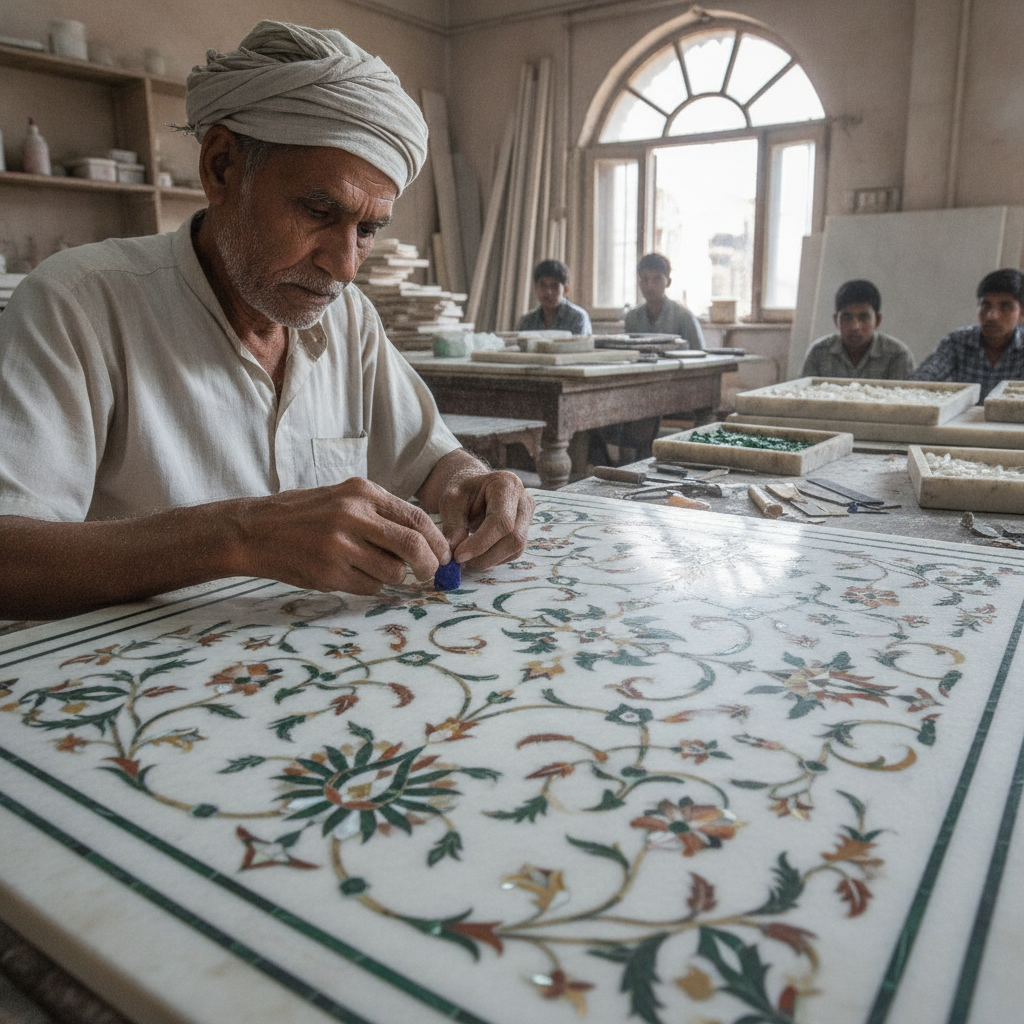
Building the Taj: Afghan Lapis, a 15km Construction Ramp, Lord Curzon's Lamp & the Day-Trip Mathematics
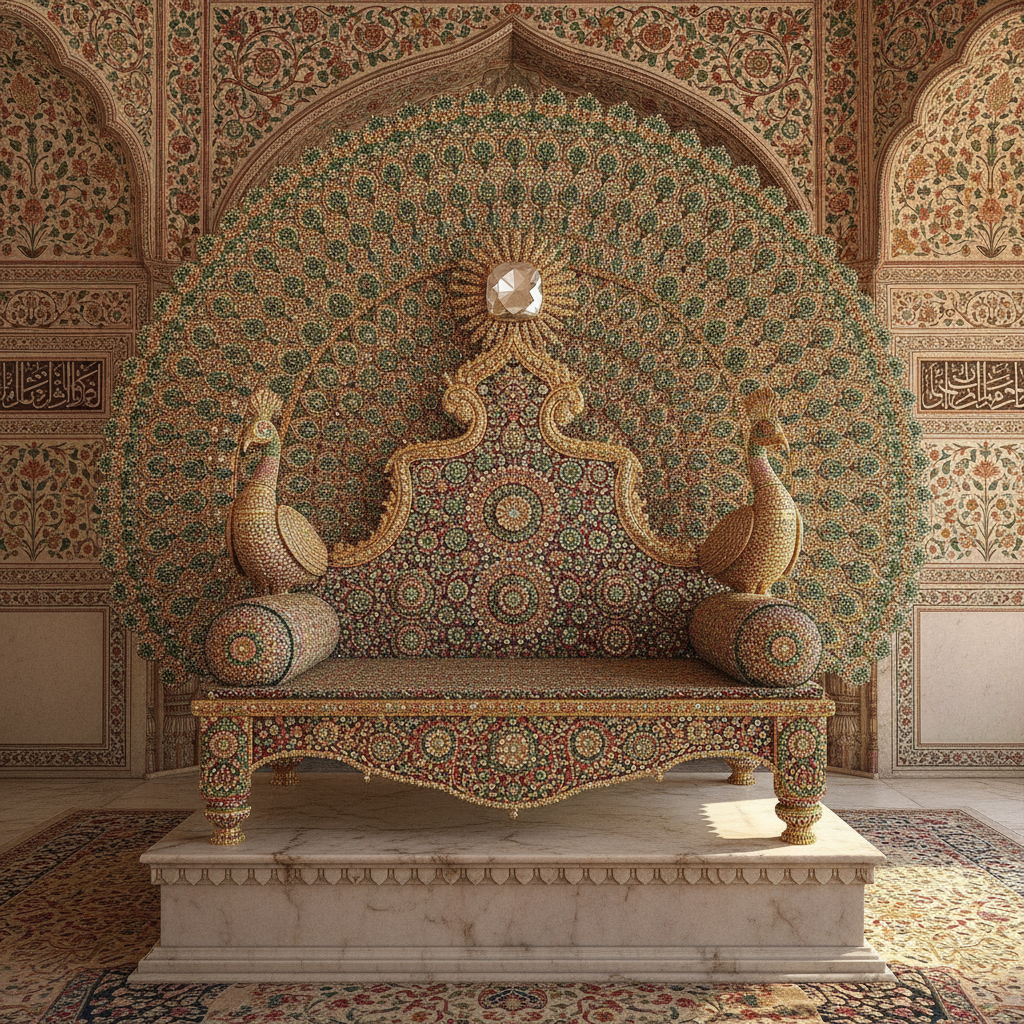
Agra's Mughal World: the Peacock Throne Worth Twice the Taj, the Yamuna's Environmental Collapse & the Myths
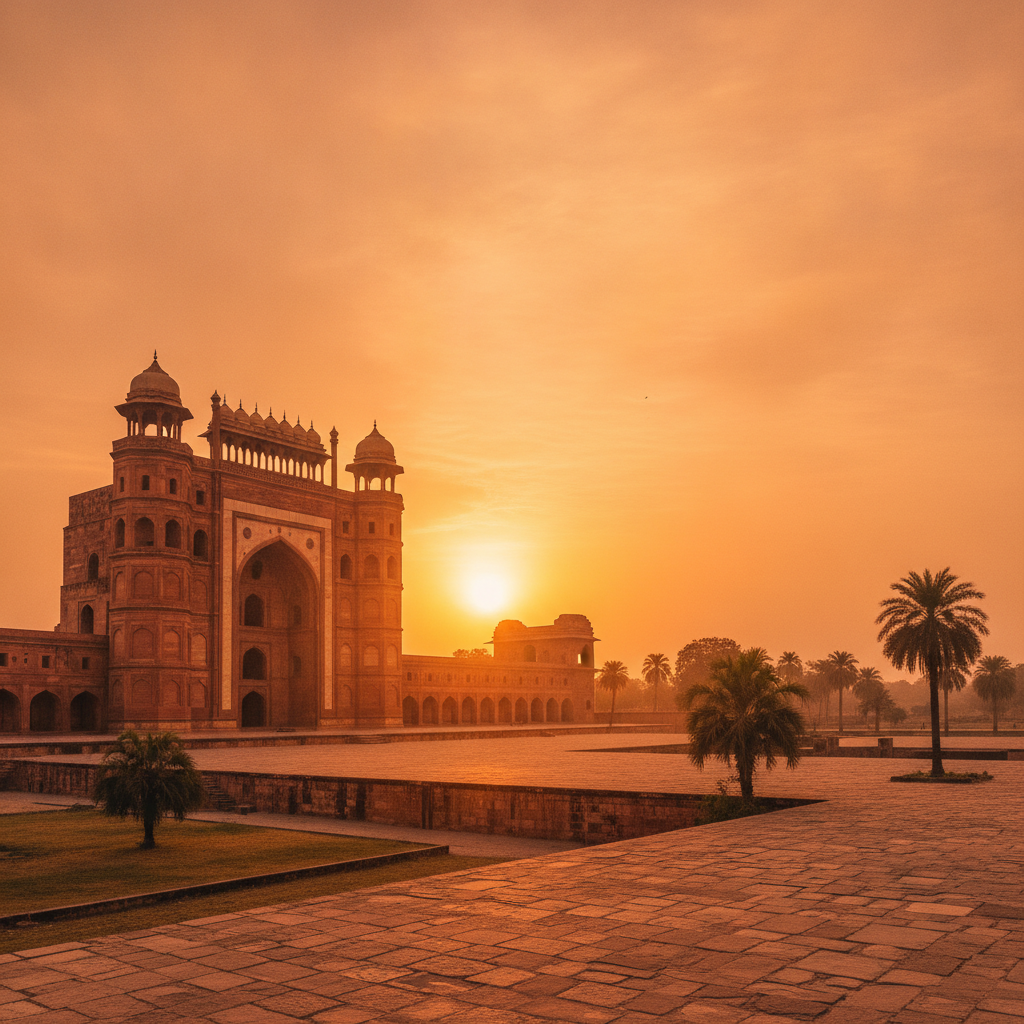
Beyond the Taj: Akbar's Abandoned Red Capital, Krishna's Birthplace & Agra's Marble Inlay Workshops
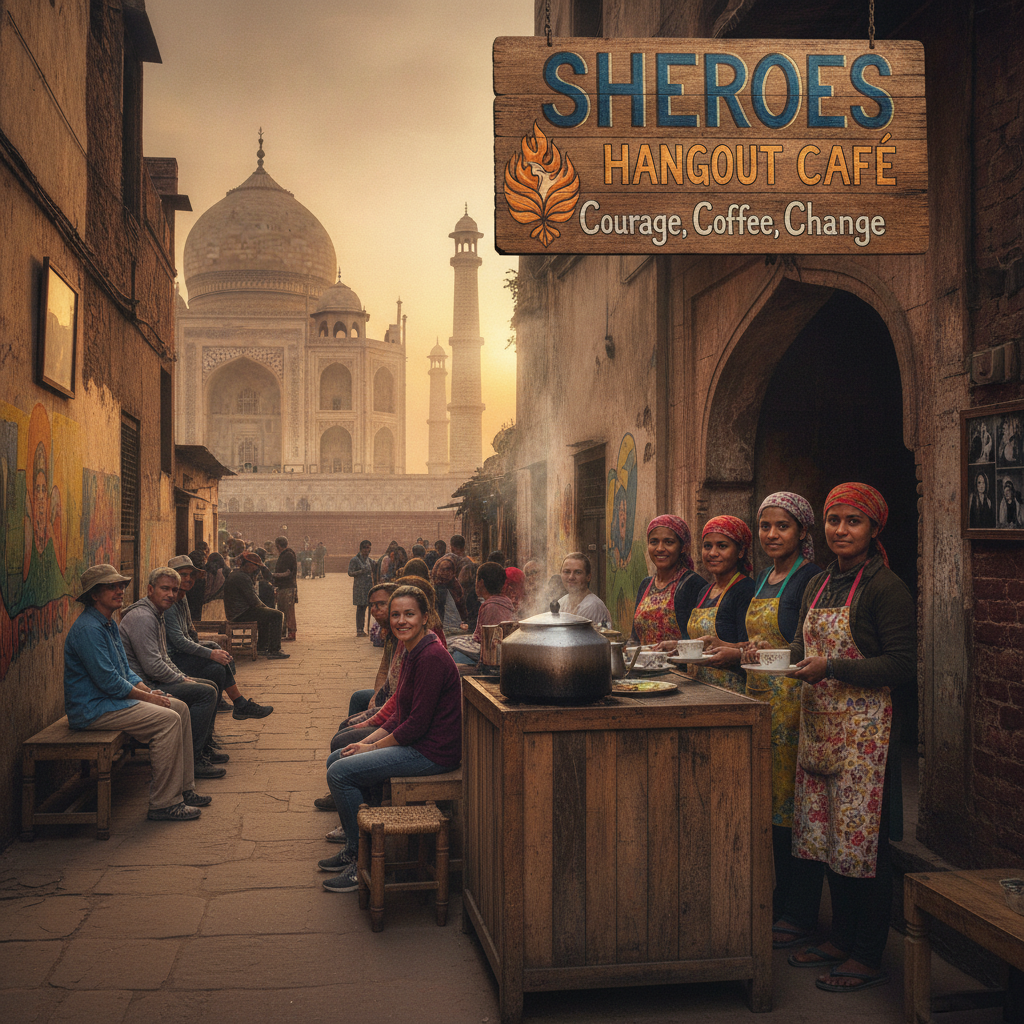
Agra Beyond the Marble: Zardozi Gold Embroidery, Mughlai Dum Cooking, the Koh-i-Noor's Journey & Sheroes Café