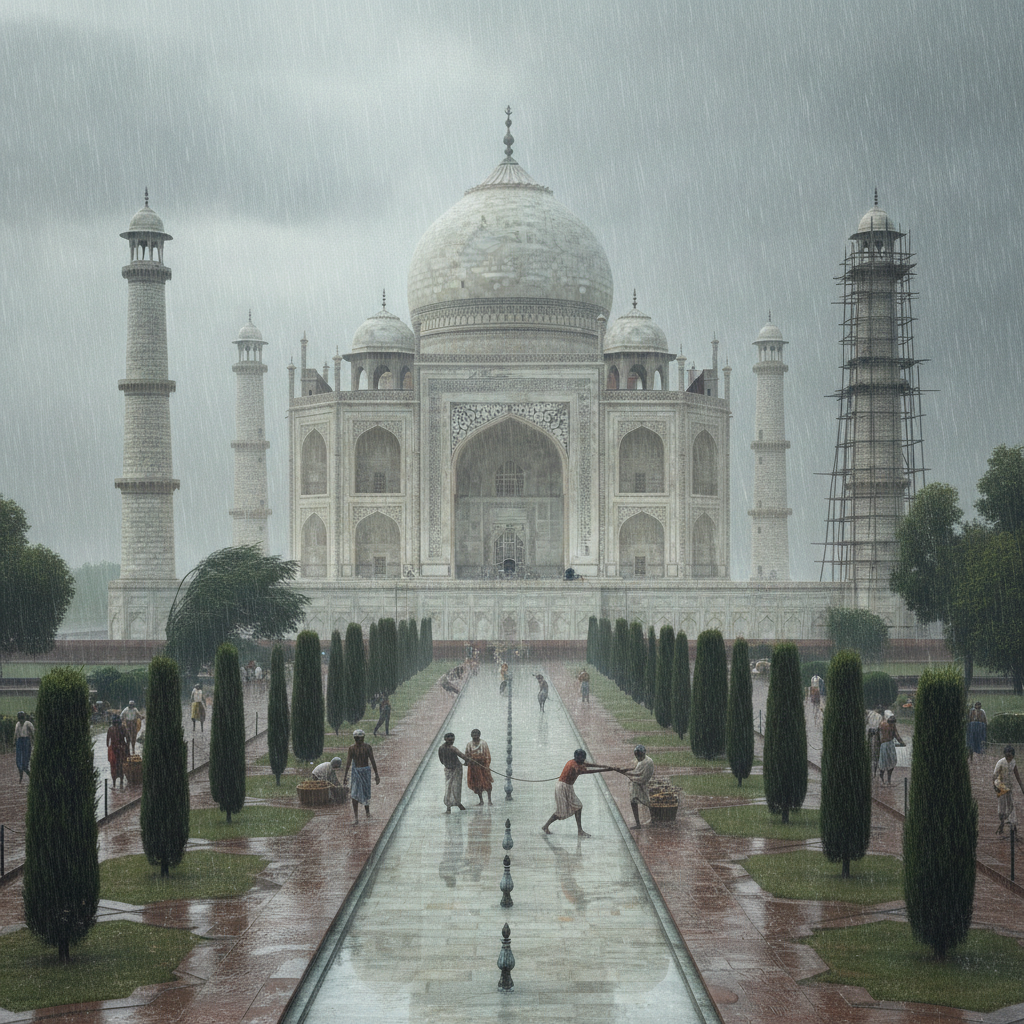
Agra Beyond the Marble: Zardozi Gold Embroidery, Mughlai Dum Cooking, the Koh-i-Noor's Journey & Sheroes Café
Discover the living city behind the monument—zardozi gold-thread embroidery in workshop clusters where Muslim families have practiced the Mughal court craft for generations, the dum and korma cooking methods that define North Indian restaurant food worldwide, the Koh-i-Noor diamond's journey from a Deccan mine to Shah Jahan's Peacock Throne to Nadir Shah's sack of Delhi to Queen Victoria's recut to the Tower of London (with four countries still claiming ownership), St+art India's murals in Taj Ganj lanes, and the Sheroes Hangout Café where acid attack survivors serve chai to tourists and tell their own stories 500 metres from the world's most beautiful building.
- 1
Agra's Neighbourhoods – Beyond the Tourist Zone
Most tourists experience only the narrow tourist corridor between the Taj Mahal, Agra Fort, and the Taj Ganj guesthouses. The old city of Agra (the Kinari Bazaar, Johri Bazaar, and Loha Mandi areas) is a dense commercial neighbourhood selling marble goods, leather, zardozi embroidery (gold and silver thread embroidery on silk—a Mughal court craft still practiced in Agra), and local food. The Sadar Bazaar and MG Road areas constitute modern Agra. The Civil Lines neighbourhood (colonial-era bungalows, the British cantonment) contains the best hotels outside the palace-conversion category. Agra's population of 1.8 million is majority Muslim (40%+) in several central neighbourhoods—the legacy of Mughal-era settlement patterns.
- 2
Zardozi Embroidery – Mughal Court Craft Surviving in Agra
Zardozi ('gold work' in Persian)—embroidery using gold and silver wire, metallic threads, and sequins on silk, velvet, or satin grounds—was the prestige craft of the Mughal court, used for royal garments, elephant trappings, tent linings, and decorative objects. The craft was nearly extinct by the early 20th century (the decline of court patronage under British rule) before revival through government craft schemes. Agra (alongside Lucknow and Delhi) is one of the three main zardozi centres; workshop clusters in the old city near the Kinari Bazaar employ thousands of artisans, predominantly Muslim men who learned the craft from their fathers. A fine zardozi dupatta (scarf) takes 2–3 weeks of work; prices range from ₹2,000–50,000 (€22–545) depending on thread quality and complexity.
- 3
Agra's Mughal Legacy in Food – Mughlai Cuisine
Mughlai cuisine—the cooking tradition developed in the Mughal imperial courts of Agra and Delhi—is the basis of North Indian restaurant cooking worldwide. Key techniques: the dum method (slow-cooking in a sealed pot over low heat, originally using live charcoal), the korma (braising meat in yoghurt and cream with ground spices), the biryani (layered rice and meat cooked dum-style, Mughal adaptation of Persian polo), and the use of saffron, rose water, kewra water, and ground nuts as flavouring and thickening agents. In Agra, the Pinch of Spice restaurant on MG Road is the most reliable for traditional Mughlai cooking; the Peshawri restaurant at the ITC Mughal Hotel (15 km from the Taj) offers frontier Mughal cooking in opulent surroundings.
- 4
The Koh-i-Noor Diamond – From Agra to the British Crown
The Koh-i-Noor ('Mountain of Light')—a 105.6-carat colourless diamond, one of the largest cut diamonds in the world—was mined at the Kollur Mine in the Deccan (present-day Andhra Pradesh) c. 1655 and was part of the Mughal imperial treasury, set in Shah Jahan's Peacock Throne. It passed from the Mughals to the Persian Nadir Shah (who sacked Delhi in 1739 and took it with the Peacock Throne), then to Afghan rulers, then to the Sikh Kingdom of Punjab, and was surrendered to the British East India Company in 1849 at the Treaty of Lahore following the Second Anglo-Sikh War. It was presented to Queen Victoria in 1850, recut by Prince Albert's instruction (reducing it from 186 to 105.6 carats), and is currently set in the Crown of Queen Elizabeth The Queen Mother, on display in the Tower of London. India, Pakistan, Afghanistan, and Iran have all claimed ownership.
- 5
Agra's Street Art & Contemporary Scene
Since the mid-2010s, Agra has developed a small but notable street art scene concentrated in the lanes of Taj Ganj and the area around Shaheed Nagar. The St+art India Foundation (which has created large-scale murals in Delhi, Mumbai, Hyderabad, and Chennai) commissioned a series of murals in Agra depicting the city's Mughal heritage alongside contemporary social themes—women's empowerment, anti-pollution, education. The contrast between 17th-century marble perfection and contemporary spray-painted concrete walls is visually striking in the narrow lanes south of the Taj. Several Agra-based contemporary artists work at the intersection of Mughal miniature tradition and modern media; the Kalakriti Art Gallery near the Taj runs changing exhibitions.
- 6
Agra After the Taj – What Else is the City?
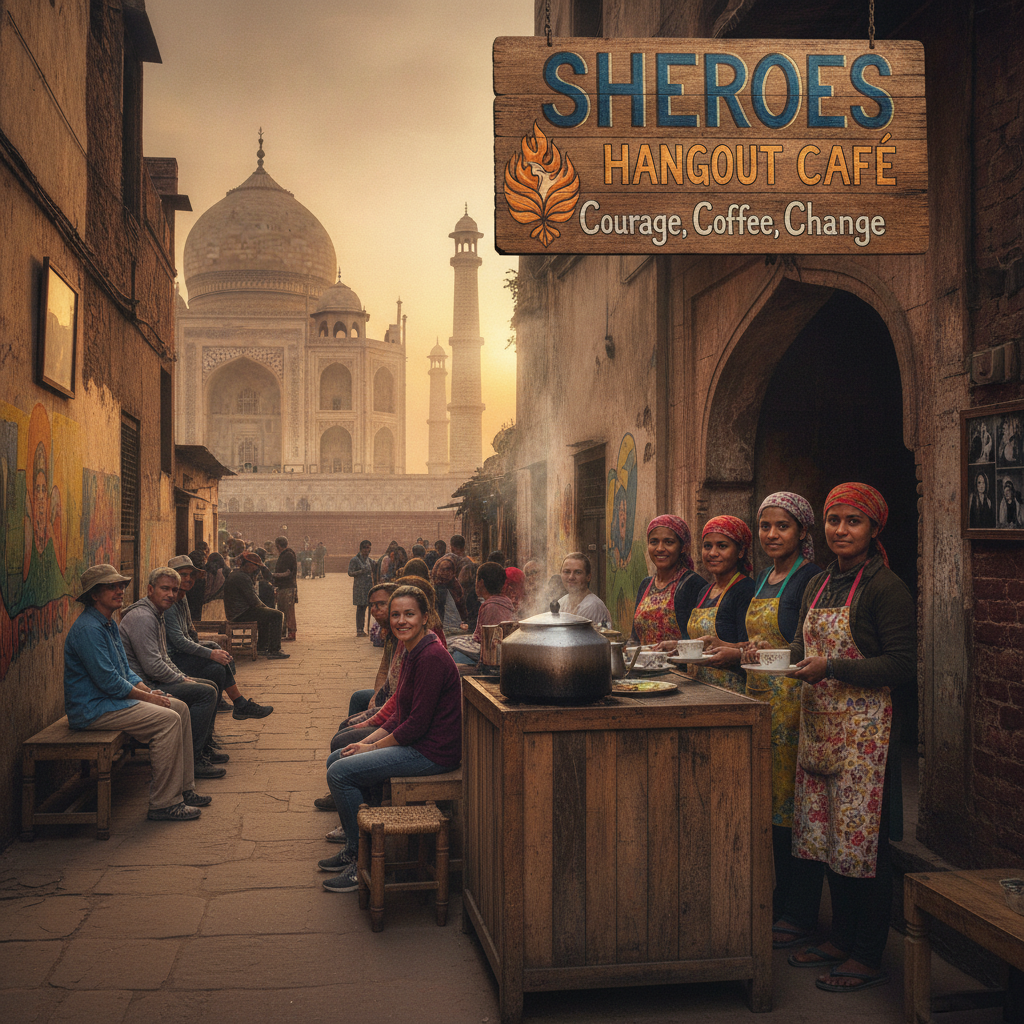
Agra beyond its monuments is a city of contradictions: extreme poverty in the shadow of the world's most visited building, a leather industry that destroyed groundwater while building export earnings, a Mughal artistic tradition (marble inlay, zardozi, miniature painting) still practiced by craftspeople who earn a fraction of what tour operators charge tourists for their products. The Sheroes Hangout Café—run by acid attack survivors, located in Taj Ganj—is one of India's most powerful responsible-tourism experiences: the women who work there discuss their experiences with visitors, the café is entirely women-run, and profits fund the Chhanv Foundation's support for acid attack survivors. Acid attacks (primarily against women who refused marriage proposals or romantic advances) remain a significant problem in Uttar Pradesh; approximately 250–300 attacks are reported annually in India, with Uttar Pradesh accounting for the majority.
Walk this route with audio
Stories play automatically as you reach each stop — no tapping needed.
More in Agra
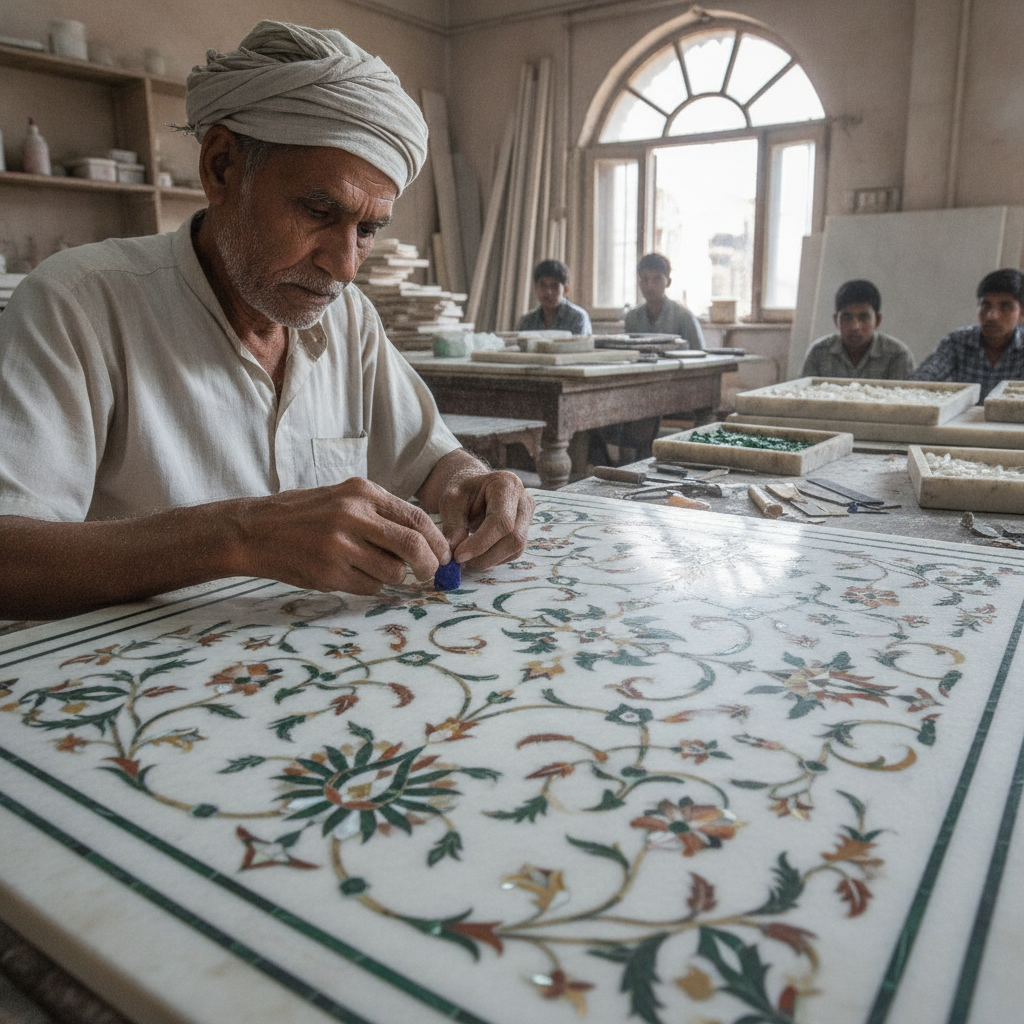
Building the Taj: Afghan Lapis, a 15km Construction Ramp, Lord Curzon's Lamp & the Day-Trip Mathematics
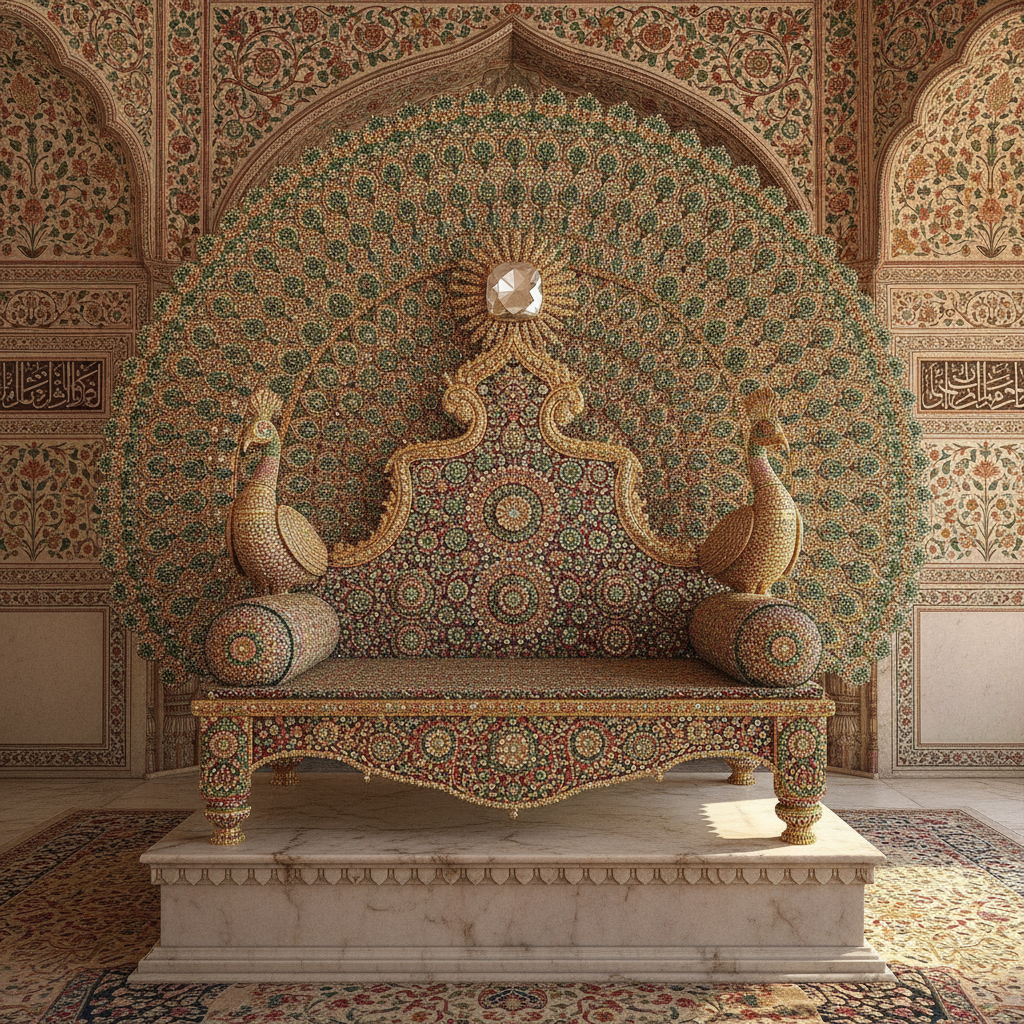
Agra's Mughal World: the Peacock Throne Worth Twice the Taj, the Yamuna's Environmental Collapse & the Myths
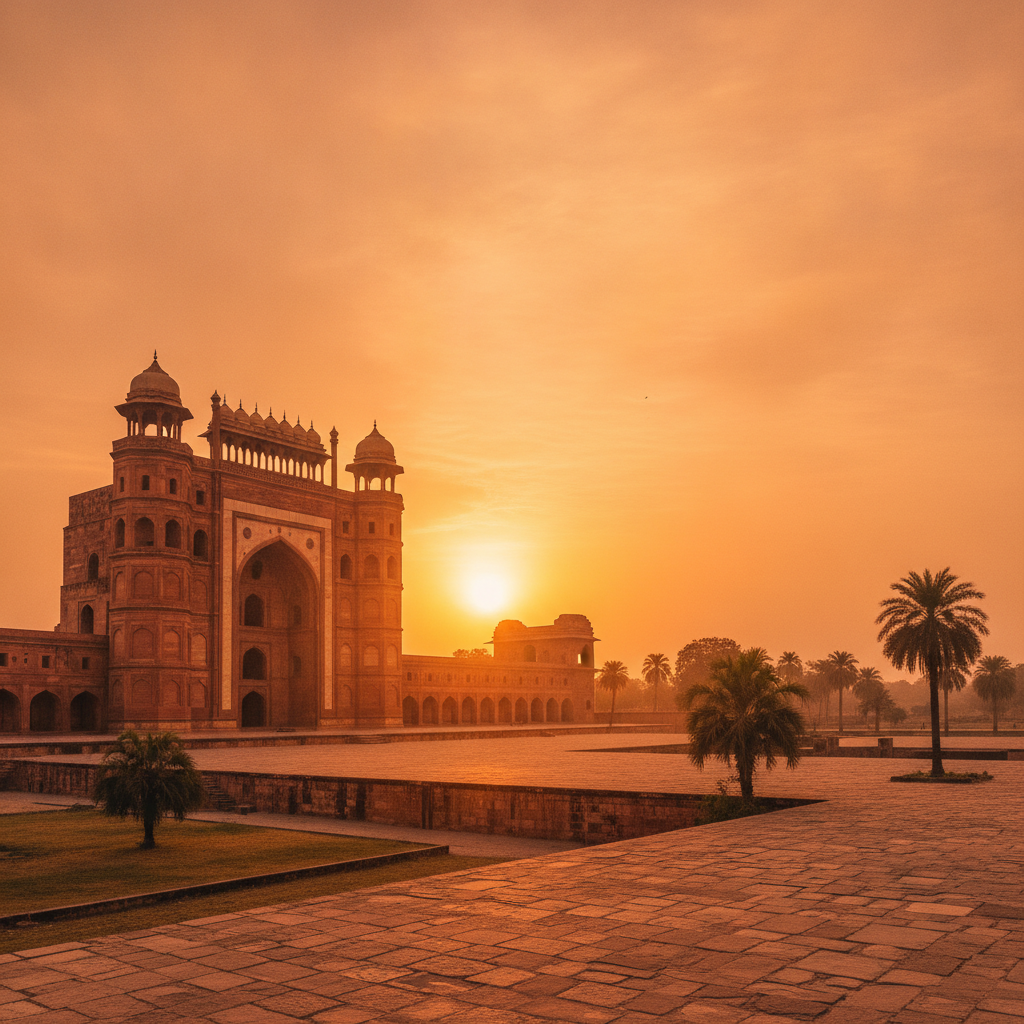
Beyond the Taj: Akbar's Abandoned Red Capital, Krishna's Birthplace & Agra's Marble Inlay Workshops
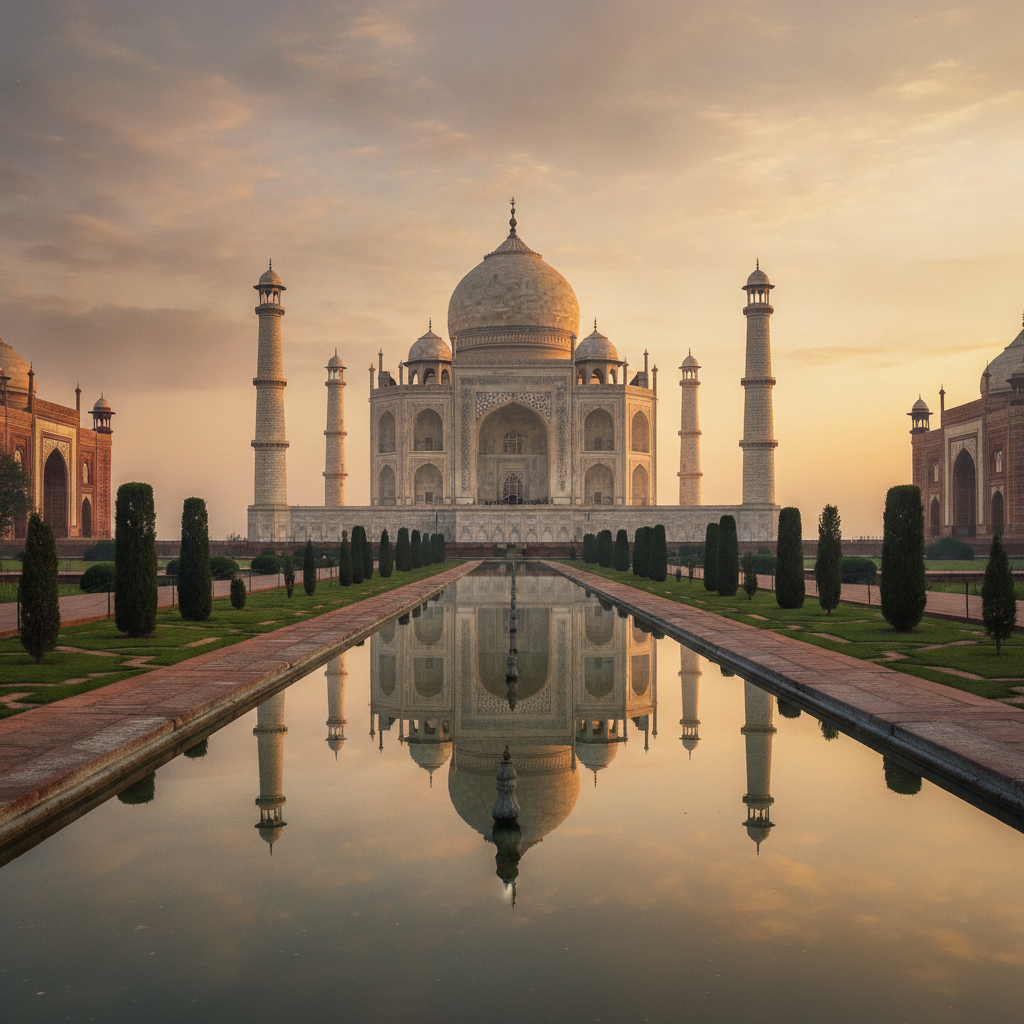
Agra Essentials: Taj Mahal at Dawn, Shah Jahan's Prison Window & the Baby Taj Across the Yamuna