Agra's Mughal World: the Peacock Throne Worth Twice the Taj, the Yamuna's Environmental Collapse & the Myths
Go deeper into the Mughal story—how the pointed arch, onion dome, and pietra dura inlay evolved from Humayun's Tomb to the Taj over 80 years, the Yamuna river's transformation from sacred paradise-garden backdrop to open sewage channel despite ₹17,000 crore of cleanup spending, the Chamar tannery workers whose chromium effluents were destroying the Taj's marble until the Supreme Court intervened, Shah Jahan's jewel-encrusted Peacock Throne (twice the cost of the Taj, looted by Nadir Shah and smashed for its gems), and why the Black Taj and Tejo Mahalaya theories have been archaeologically refuted but keep returning.
- 1
Mughal Architecture – The Grammar of Domes, Arches & Gardens
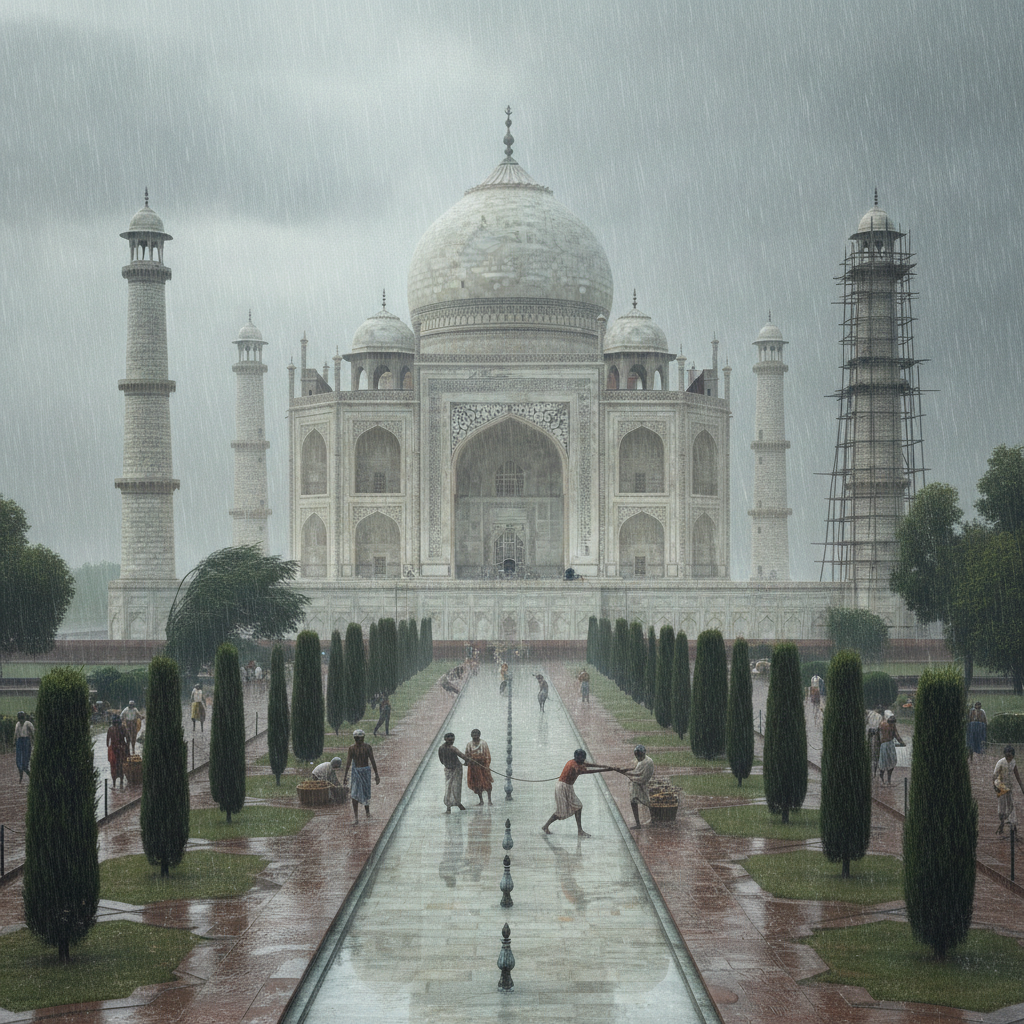
Mughal architecture synthesised Persian, Central Asian (Timurid), and indigenous Indian (Hindu, Jain) architectural traditions into one of the world's great building styles. The key elements: the bulbous onion dome (borrowed from Persia, perfected at the Taj), the pointed arch (iwan), the chahar bagh (four-quadrant garden with water channels symbolising the four rivers of paradise), the pietra dura marble inlay, the jali (carved stone or marble lattice screen), and the chhatri (Hindu umbrella dome used as a decorative turret). The Mughal building sequence from Humayun's Tomb (Delhi, 1572, first great Mughal tomb) through Akbar's Fatehpur Sikri → the Taj Mahal shows a progressive refinement across 80 years, each building learning from the last.
- 2
The Yamuna River – Sacred Waters & Environmental Crisis
The Yamuna—the river that flows past the Taj Mahal—is among the most sacred rivers in Hinduism (the daughter of the sun god Surya, twin sister of Yama the god of death) and simultaneously one of the world's most polluted. The 22-km stretch through Delhi receives 58% of the city's sewage (3,500 million litres per day); by the time the river reaches Agra (200 km downstream), it carries industrial effluents from the Mathura oil refinery and agricultural runoff. The Yamuna Action Plan (three phases from 1993–2015, total investment ₹17,000 crore/€1.85 billion) achieved minimal improvement. The dried-out appearance of the Yamuna behind the Taj—the river that was meant to frame the monument—is one of India's most visible environmental failures.
- 3
Agra's Leather Industry – Economic Reality Beyond Tourism
Agra is one of India's largest leather goods manufacturing centres, second only to Kanpur in the Uttar Pradesh leather belt. The city's 6,000+ tanneries and leather goods factories produce shoes, belts, bags, and garments primarily for export to Europe and North America. The leather industry—employing approximately 600,000 workers in the Agra-Kanpur region—has historically employed the Chamar caste (one of the 'Untouchable' or Dalit castes whose traditional occupation was working with animal hides). The industry's environmental legacy is severe: tannery effluents from chromium, arsenic, and sulphuric acid have contaminated groundwater around Agra, and tanneries in the Taj Trapezium Zone were relocated by Supreme Court order in 1996 specifically to protect the Taj Mahal's marble from acid pollution.
- 4
Shah Jahan's Court – Art, Jewels & the Peacock Throne
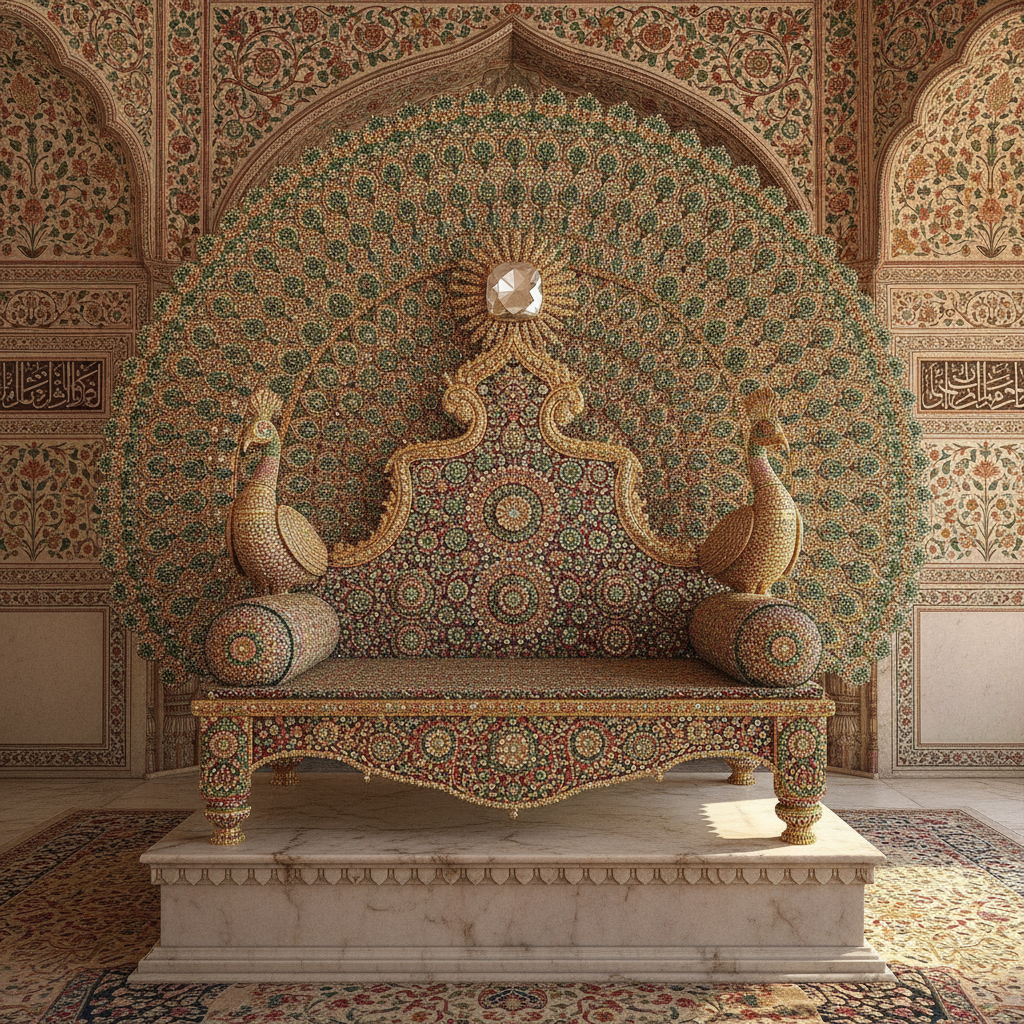
Shah Jahan's court (r. 1628–1658) represented the cultural apex of the Mughal Empire. The Peacock Throne—Shah Jahan's ceremonial throne, built between 1628 and 1635 at a cost equivalent to twice the Taj Mahal—was the most expensive piece of furniture ever constructed: two peacocks standing behind the throne with spread tails inlaid in jewels, a canopy of enamelled gold supported by 12 emerald pillars, and the Koh-i-Noor diamond (now in the British Crown Jewels) set in the throne's framework. The throne was looted by the Persian Nadir Shah in 1739 during his sack of Delhi; it was broken up for its gems and gold after his assassination. Shah Jahan's reign also produced the finest Mughal miniature paintings and the perfection of Mughal garden design.
- 5
Taj Mahal Myths & Controversies
The Taj Mahal has attracted persistent myths and controversies. The 'Black Taj' theory (Shah Jahan intended to build an identical mausoleum in black marble for himself across the river) was disproven by Archaeological Survey excavations in 1994. The theory that the Taj was built on the site of a Hindu temple (Tejo Mahalaya) has been repeatedly dismissed by archaeologists but continues to circulate in Hindu nationalist political discourse; an Allahabad High Court case to open sealed rooms in the Taj for investigation was rejected in 2022. The 'amputated thumbs' myth (that Shah Jahan cut off the chief architect's thumbs to prevent replication) has no historical basis. The architect of the Taj remains uncertain: Ustad Ahmad Lahori is the most cited name, but primary sources are ambiguous about the role of individual architects in Mughal construction.
- 6
Agra's Decline & the Shift to Delhi
Agra was Mughal India's capital for most of the 16th and 17th centuries (with interruptions at Fatehpur Sikri and Lahore). Shah Jahan moved the imperial capital to Delhi (Shahjahanabad, the walled city built 1638–1648, now called Old Delhi) in 1648, beginning Agra's decline from political capital to provincial city. The British made Agra the capital of the Northwest Provinces (later Agra Province) until 1862, when Allahabad was chosen as the provincial capital. Today Agra (population 1.8 million) is an industrial and commercial city where tourism is the dominant formal-sector employer; the city has high levels of poverty alongside its world-famous monument. Lucknow, not Agra, is the capital of Uttar Pradesh (India's most populous state, 240 million people); Agra is 363 km from Lucknow.
Walk this route with audio
Stories play automatically as you reach each stop — no tapping needed.
More in Agra
Building the Taj: Afghan Lapis, a 15km Construction Ramp, Lord Curzon's Lamp & the Day-Trip Mathematics
Beyond the Taj: Akbar's Abandoned Red Capital, Krishna's Birthplace & Agra's Marble Inlay Workshops
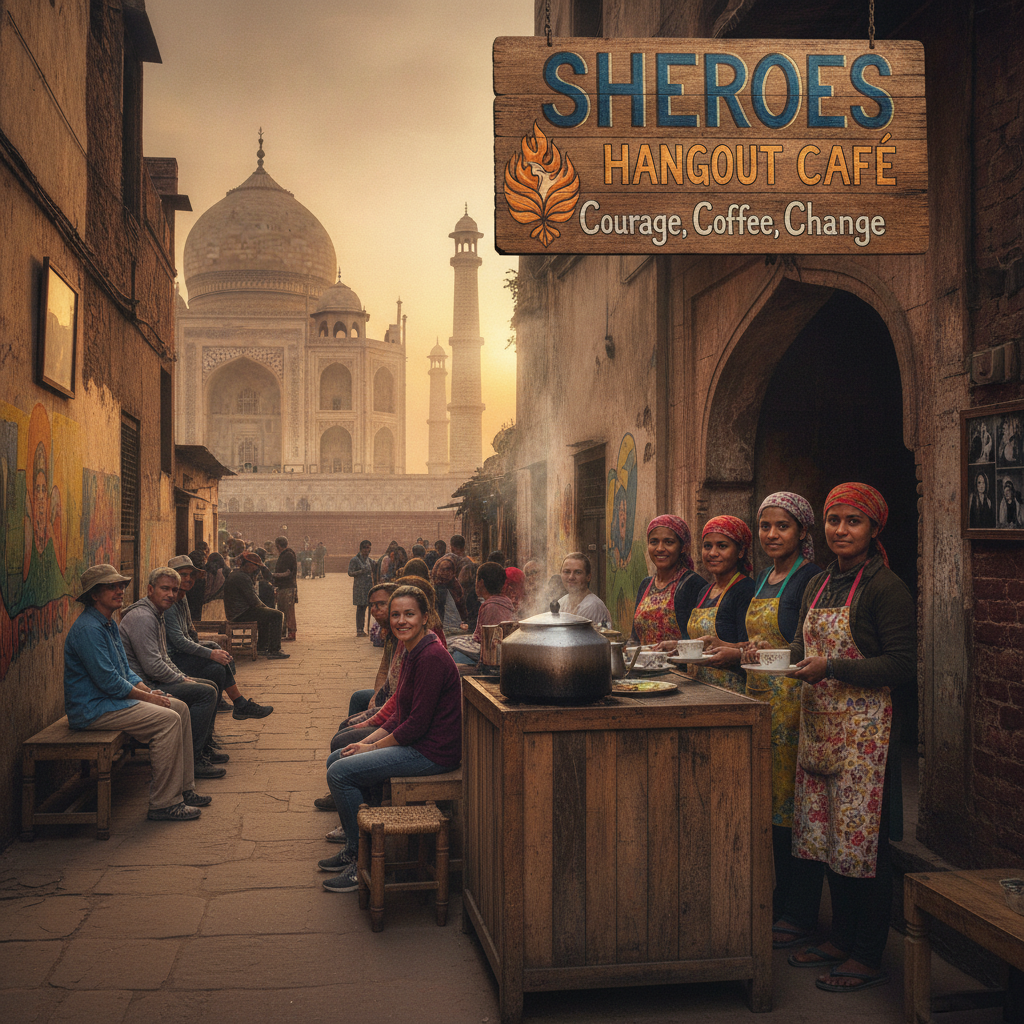
Agra Beyond the Marble: Zardozi Gold Embroidery, Mughlai Dum Cooking, the Koh-i-Noor's Journey & Sheroes Café
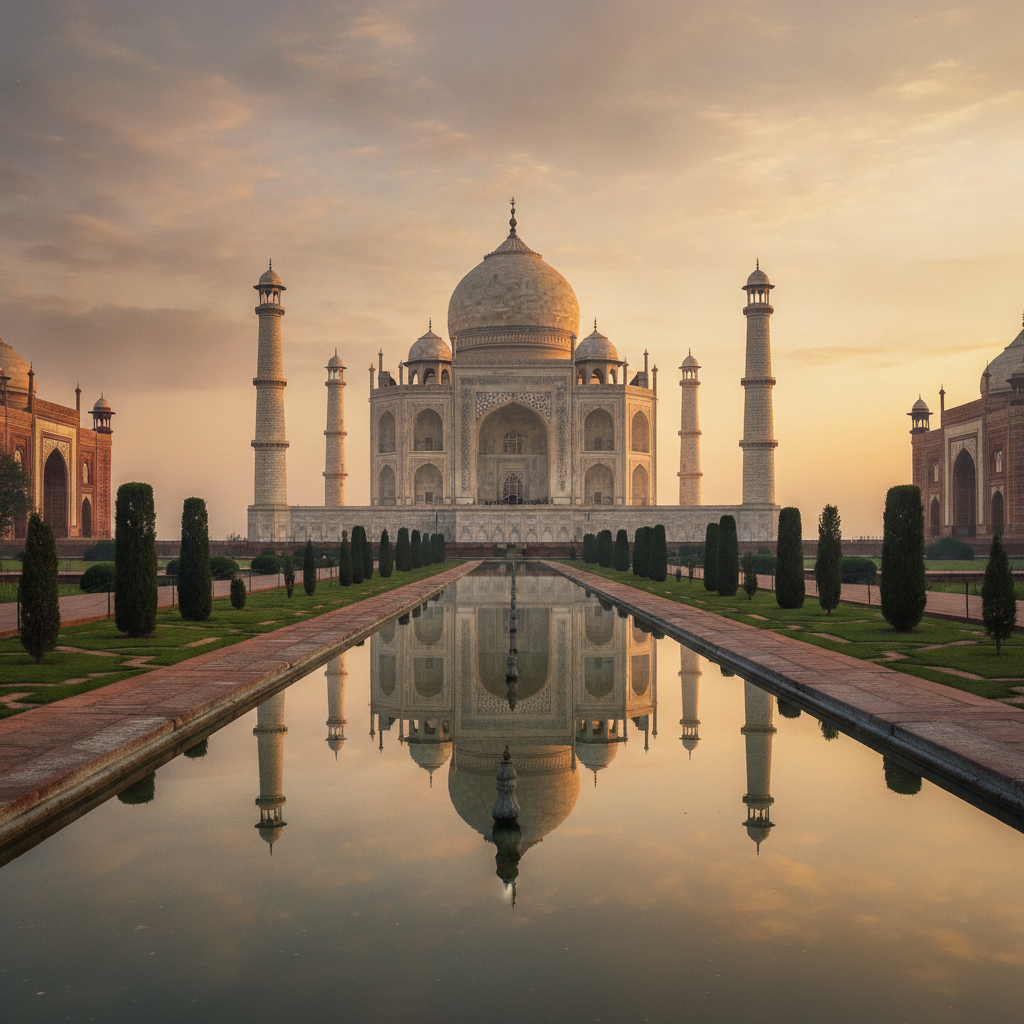
Agra Essentials: Taj Mahal at Dawn, Shah Jahan's Prison Window & the Baby Taj Across the Yamuna