Building the Taj: Afghan Lapis, a 15km Construction Ramp, Lord Curzon's Lamp & the Day-Trip Mathematics
Understand how the Taj was built—lapis lazuli from Afghanistan, turquoise from Iran, jade from China, and coral from Arabia assembled into 28 stone types by craftsmen from Delhi, Multan, Persia, and Samarkand using a 15-km construction ramp to raise marble onto a dome, Lord Curzon's 1905 restoration that installed the hanging lamp still glowing in the interior today, the 28 Quranic paradise verses chosen by a calligrapher who signed his own name in the inscription panels, and the Gatimaan Express that puts the Taj Mahal 100 minutes from Delhi Hazrat Nizamuddin station at 8:10am—and why you should stay the night for the full moon viewing limited to 400 people.
- 1
Taj Mahal's 28 Semi-Precious Stones – A Global Supply Chain
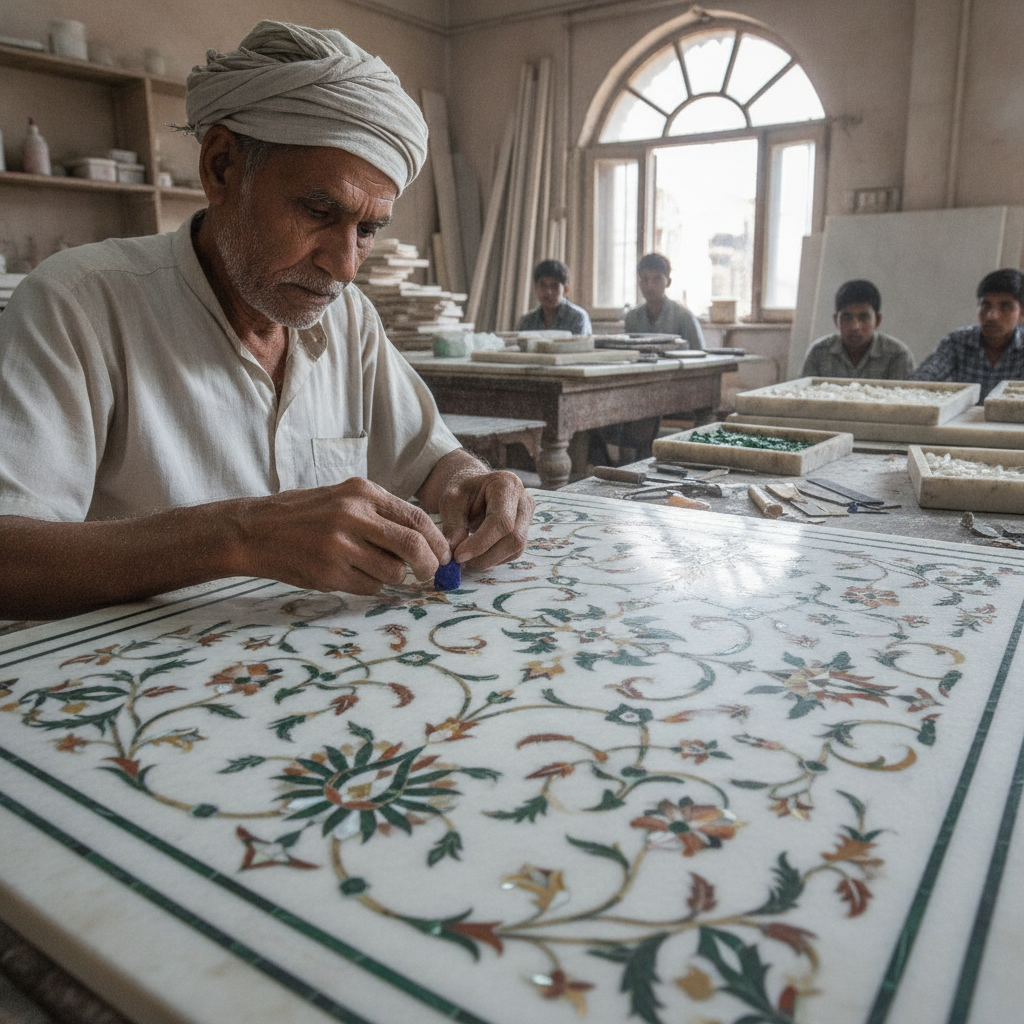
The Taj Mahal's pietra dura inlay work used 28 types of semi-precious stones sourced from across Asia and Europe. Lapis lazuli came from Badakhshan (northeastern Afghanistan—still the world's primary source); turquoise from Khorasan (Iran); jade and crystal from China; jasper from Punjab; carnelian from Arabia and Gujarat; coral from Arabia; mother of pearl from the Indian Ocean; onyx from Persia. The supply chain for a single building encompassed the entire known world of 1630s trade routes. Today, the same stones—lapis lazuli, carnelian, malachite, onyx—are used in Agra's marble inlay workshops; the craft tradition is unbroken, though most workshop production serves the tourist market rather than royal commissions.
- 2
Ustad Ahmad Lahori & Mughal Construction Methods
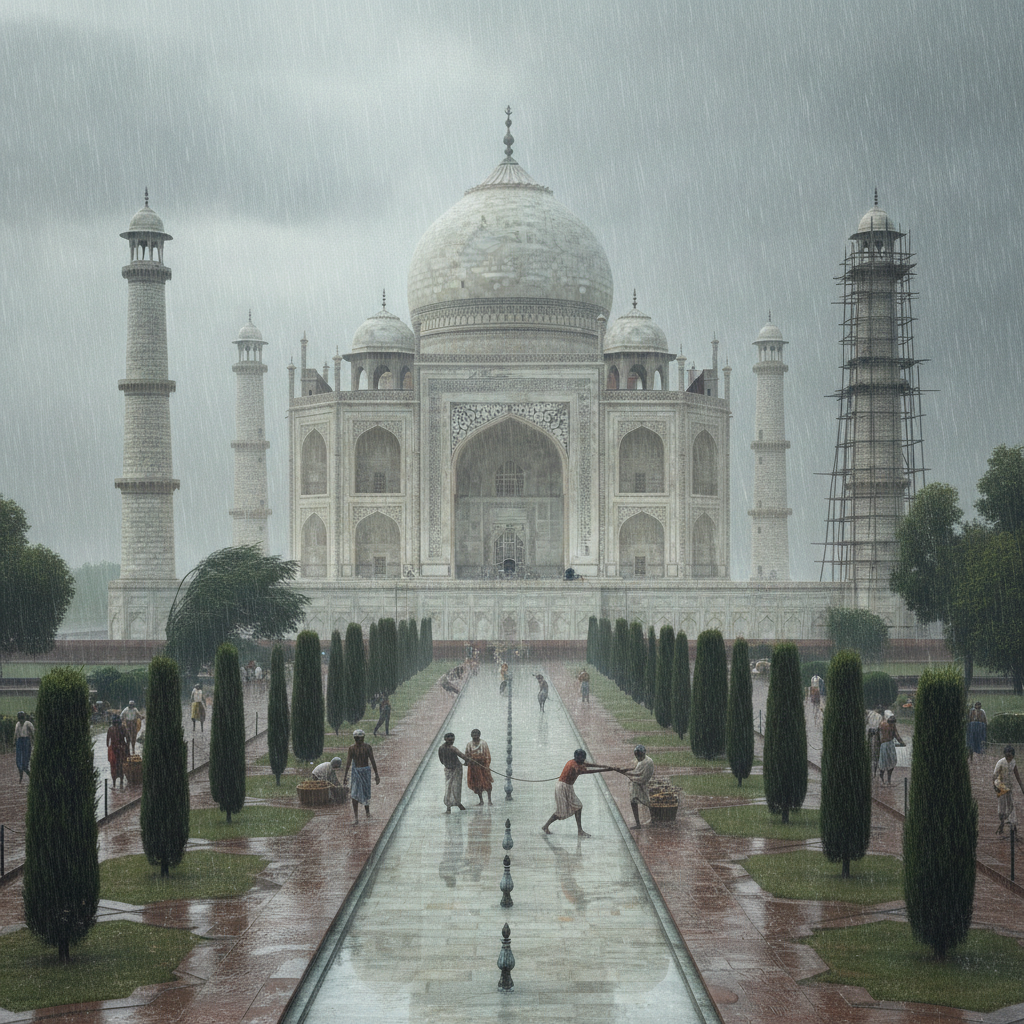
Mughal construction methods were extraordinary in scale and precision before modern surveying equipment. The Taj Mahal's perfect symmetry (the four minarets are mathematically identical in height and lean; the central dome is geometrically pure) was achieved using water levels, plumb lines, and geometric calculation. The construction ramp—used to raise materials to the upper levels of the dome—is estimated to have been 15 km long (approaching the construction site from the northeast). 20,000 workers included highly skilled stone-carvers from Delhi and Multan, mosaic workers from Persia, calligraphers from Shiraz, and dome builders from Samarkand. 1,000 elephants transported marble from Makrana (400 km) and red sandstone from Fatehpur Sikri (40 km).
- 3
Agra's Surviving Mughal Gardens
The original Mughal garden complex around the Taj Mahal was far more extensive than what survives today. The Mehtab Bagh (Moonlight Garden) across the river was one of 11 planned gardens; only fragments of the broader landscape vision remain. Within the Taj complex, the original chahar bagh (four-quadrant garden with water channels) survives largely intact, with cypress trees (symbolising death and eternity in Persian tradition) and flowering trees (once including roses, narcissus, and bougainvillea) in the garden quadrants. The Ram Bagh (4 km north of the Taj)—laid out by Babur (the founder of the Mughal dynasty) in 1528, the earliest surviving Mughal garden in India—contains a raised terrace overlooking the Yamuna, partially restored by the Archaeological Survey of India.
- 4
Agra & the British Raj – Lord Curzon's Restoration
The British relationship with the Taj Mahal evolved from neglect and exploitation to conservation and reverence. In the early colonial period (1803–1850s), Agra Fort's state rooms were used as barracks and the garden was used for picnics; proposals existed to demolish some structures for materials. Lord Curzon—Viceroy of India 1899–1905, Britain's most aesthetically literate colonial administrator—oversaw the first serious restoration of the Taj Mahal: re-laying the garden to its original design, restoring the water channels, replanting the cypress trees, and installing the hanging lamp in the mausoleum's interior (a gift from Curzon, based on a lamp from a Cairo mosque). Curzon famously said: 'If I had never done anything else in India, I have written my name here.' The lamp still hangs in the Taj today.
- 5
Agra's Dargah Connections – Sufism in the Mughal World
The Mughal dynasty's relationship with Sufism shaped the Taj Mahal itself: Shah Jahan was devoted to the Chishti Sufi order (the same order whose founder's shrine is at Fatehpur Sikri), and the Taj's spiritual dimensions include Quranic calligraphy chosen specifically for its themes of paradise and judgment. The Chishti Sufi tradition (founded in Ajmer by Moinuddin Chishti, 12th century) was the primary Islamic spiritual authority in Mughal India; Akbar's construction of Fatehpur Sikri was a direct expression of devotion to the Chishti sheikh Salim Chishti. The Taj's interior calligraphy—28 Quranic verses selected and written by Amanat Khan Shirazi, whose name appears in the calligraphic panels—constitutes one of the largest programmes of religious inscription in Islamic architecture.
- 6
Agra as a Day Trip from Delhi – Tour Groups & Independent Travel
The majority of Agra's 7–8 million annual visitors arrive as day-trippers from Delhi, spending 4–6 hours at the Taj before returning. The Gatimaan Express (Delhi Hazrat Nizamuddin to Agra Cantt, 100 minutes, departs 8:10am, returns 6:20pm, ₹755/€8.30 chair car) is the ideal day-trip vehicle. Tour group dynamics shape the Taj experience significantly: organised groups from China, Southeast Asia, and Europe typically arrive at the South Gate between 9am and noon, creating the peak crowd period. Independent travellers who arrive at East Gate at 6am have a fundamentally different experience. Overnight stays are worthwhile for: Mehtab Bagh sunset, Taj Mahal full moon night viewing (advance booking required, 400 visitor limit per session), and day trips to Fatehpur Sikri and Mathura that cannot fit into a day-trip itinerary.
Walk this route with audio
Stories play automatically as you reach each stop — no tapping needed.
More in Agra
Agra's Mughal World: the Peacock Throne Worth Twice the Taj, the Yamuna's Environmental Collapse & the Myths
Beyond the Taj: Akbar's Abandoned Red Capital, Krishna's Birthplace & Agra's Marble Inlay Workshops
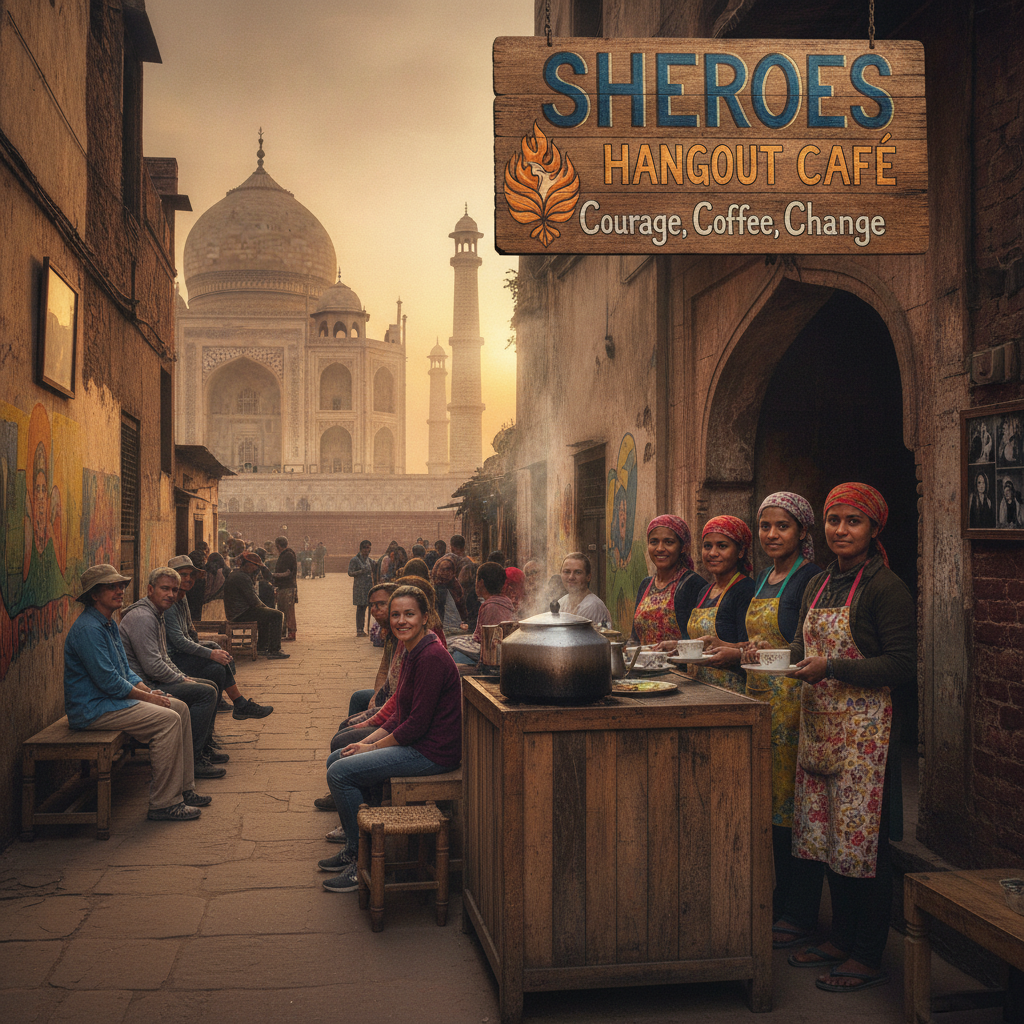
Agra Beyond the Marble: Zardozi Gold Embroidery, Mughlai Dum Cooking, the Koh-i-Noor's Journey & Sheroes Café
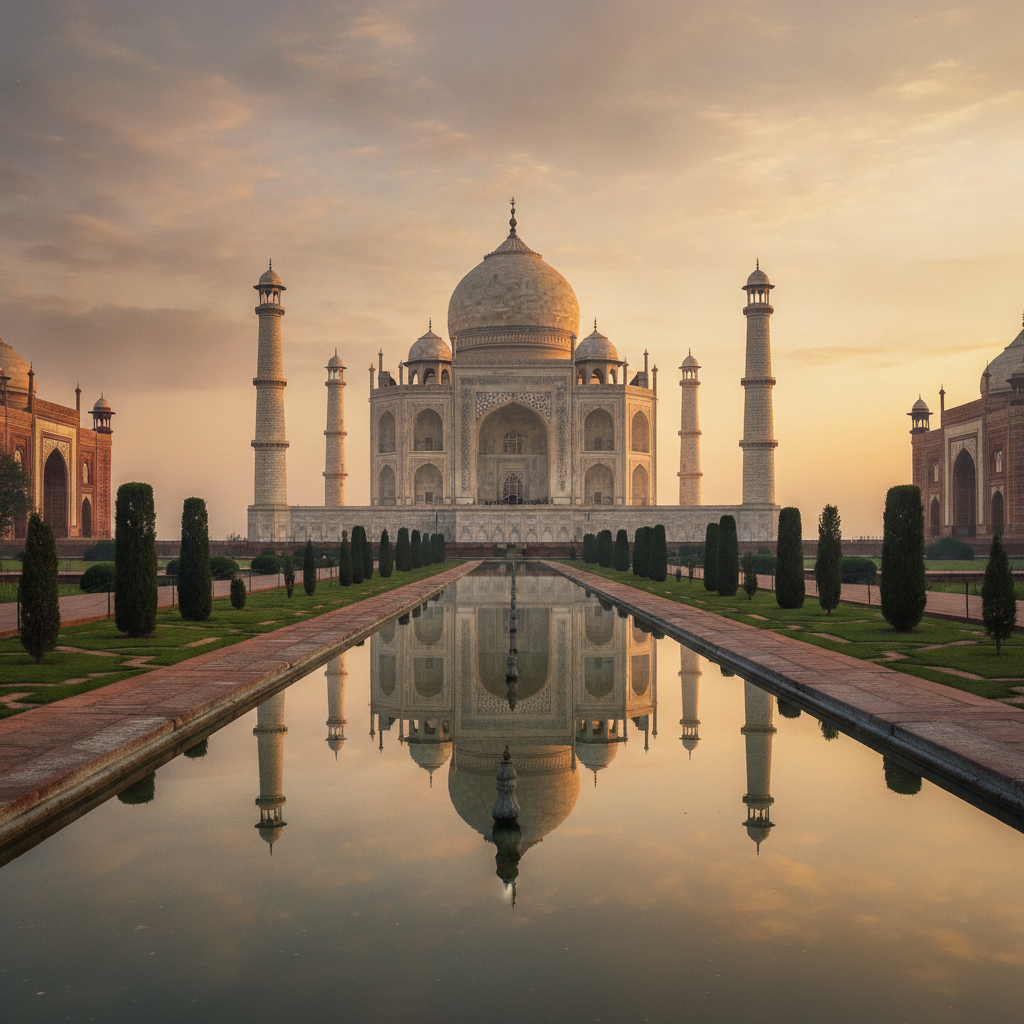
Agra Essentials: Taj Mahal at Dawn, Shah Jahan's Prison Window & the Baby Taj Across the Yamuna