Addis Ababa Extended: Omo Valley Tribes, the Derg Regime, Bale Mountains, Addis vs Nairobi, and Final Legacy
Ethiopia in depth: the Omo Valley indigenous peoples and the last tribal cultures of Africa; the Derg Marxist military regime and the Red Terror; the Bale Mountains and the Ethiopian wolf; Addis Ababa versus Nairobi and Dar es Salaam; the teff grain and Ethiopian food sovereignty; and the complete Ethiopia legacy.
- 1
The Omo Valley - The Last Place on Earth Where Ancient Tribal Cultures Survive
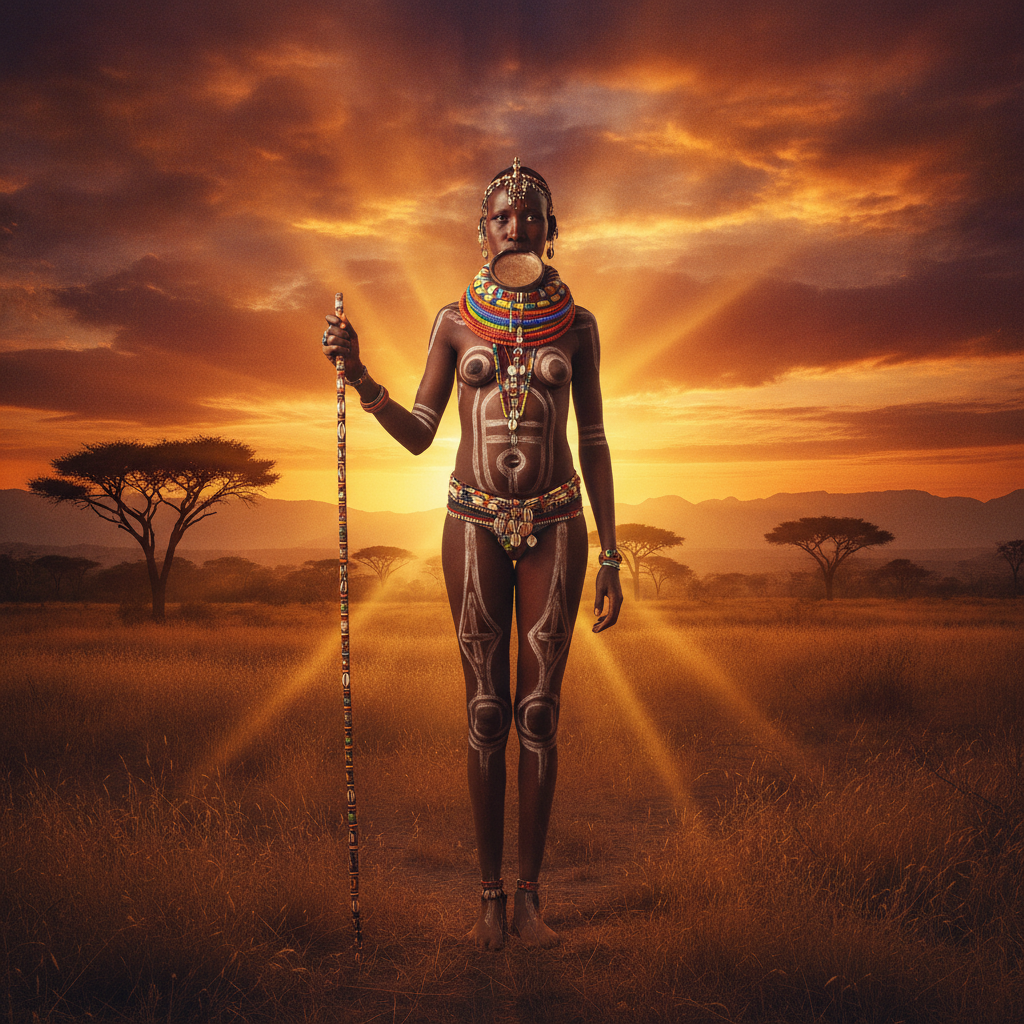
The Omo Valley of southwestern Ethiopia: the most culturally diverse small area in the world, where approximately 16 distinct indigenous peoples continue to practice traditional lifestyles in a rapidly changing world. The valley (the Omo Valley: the Lower Omo River valley in the SNNPR (Southern Nations, Nationalities, and Peoples Region) of southwestern Ethiopia: the river flows approximately 760 km from the Ethiopian highlands to Lake Turkana on the Ethiopia-Kenya border: the landscape (the lower Omo Valley is a semi-arid savanna with the river providing the primary water source for multiple agropastoralist peoples)). The peoples (the Mursi (the Mursi people: the most internationally recognized Omo Valley people (primarily due to the lip plate tradition (the Mursi women traditionally wear clay discs (dhebi a tugoin) in a cut lower lip: the disc is worn from approximately age 16 until old age): population approximately 7,500: cattle herders and farmers: the Mursi traditional territory is between the Omo River and the Mago National Park): the Hamer (the most populous Omo Valley people: approximately 50,000: cattle herders: the bull jumping ceremony (the ukuli bula: the primary male initiation ritual of the Hamer: the initiate must run across the backs of a row of castrated cattle without falling to prove his readiness for adulthood)): the Karo (the smallest Omo Valley group: approximately 1,000-3,000: known for their elaborate body painting: the Karo decorate their bodies with chalk and other natural pigments before ceremonies): the Dassanech (the Dassanech (also known as the Merille or Galeb): the largest Omo Valley ethnic group: approximately 60,000-100,000: inhabit the southernmost part of the Omo Valley near Lake Turkana)). The tourism controversy (the Omo Valley is one of the most ethically complex tourism destinations in Africa: the primary debate (the human zoo criticism: the practice of visiting the Mursi village specifically to photograph the lip plates raises serious questions about the commodification of indigenous culture and bodily practice): the economic reality (the Mursi charge for photography (approximately USD 1-2 per photograph): tourism provides income for communities with very few alternative income sources): the development pressure (the Gibe III hydroelectric dam (completed 2015: the dam has significantly reduced the annual flooding of the Omo River which traditionally fertilized the agricultural land of the Omo Valley communities and is considered to have had a major negative impact on the food security of the Omo Valley peoples)).
- 2
The Derg Regime and the Red Terror - Ethiopia Darkest Period
The Derg (the Coordinating Committee of the Armed Forces, Police, and Territorial Army): the Marxist military junta that ruled Ethiopia from 1974 to 1991, one of the most brutal regimes in African history. The coup (September 12, 1974: the Derg deposed Emperor Haile Selassie in a bloodless coup: the Derg initially presented itself as a pro-people reform movement (Ethiopia Tikdem: Ethiopia First)). Mengistu Haile Mariam (Mengistu Haile Mariam: the chairman of the Derg from 1977 to 1991: a low-born army officer who outmaneuvered rivals (he had approximately 7 Derg members killed in February 1977 in a Derg meeting to consolidate his power)). The Red Terror (the Qey Shibir: the Red Terror campaign (1977-1978): the Derg campaign to eliminate the Ethiopian People Revolutionary Party (EPRP) and the All-Ethiopia Socialist Movement (MEISON): the campaign killed approximately 50,000 people (some estimates go much higher (500,000 is cited by some sources though this is disputed)): the methods (public executions: the bodies of victims were displayed in the streets of Addis Ababa with signs reading Red Terror: the families of victims were required to pay for the bullets used to kill their relatives). The famine (the 1983-1985 Ethiopia famine: one of the most devastating famines of the 20th century: approximately 400,000-1,000,000 people died: the famine was worsened by the Derg agricultural policies (the forced collectivization of agriculture and the forced resettlement program (Operation Sunrise: the forced movement of approximately 600,000 people from the affected northern regions to the south)): the international response (the Band Aid / Live Aid response (Band Aid (1984): the charity single Do They Know It Christmas organized by Bob Geldof: raised approximately 8 million pounds: the subsequent Live Aid concert (July 13, 1985) raised approximately 150 million USD for famine relief)). The fall (the EPRDF (the Ethiopian Peoples Revolutionary Democratic Front) coalition of rebel movements (primarily the TPLF (Tigray Peoples Liberation Front)) defeated the Derg army and captured Addis Ababa in May 1991: Mengistu fled to Zimbabwe where he was granted asylum by Robert Mugabe and lives there to this day).
- 3
The Bale Mountains and the Ethiopian Wolf
The Bale Mountains National Park in southeastern Ethiopia: the primary habitat of the Ethiopian wolf and the most important highland ecosystem in Africa for endemic species. The park (the Bale Mountains National Park: in the Oromia Region of southeastern Ethiopia: the park encompasses the Sanetti Plateau (the largest area above 4,000 meters in Africa outside the Rwenzori: approximately 2,500 square km of high-altitude moorland and alpine desert): the highest point (Mount Tullu Dimtu: 4,377m: the second highest peak in Ethiopia after Ras Dashen): the park is one of the most important biodiversity hotspots in Africa (the high-altitude Afroalpine ecosystem is found only in isolated patches on East African mountains and is home to a high proportion of endemic species)). The Ethiopian wolf (Canis simensis: see the Simien Mountains entry for the full description: approximately 300 Ethiopian wolves live in the Bale Mountains (the primary population of the species: the Sanetti Plateau): the Bale Ethiopian wolf habitat (the Sanetti Plateau mole rats (the giant mole rat (Tachyoryctes macrocephalus): the primary prey of the Ethiopian wolf in Bale: the mole rat reaches 1.2 kg and lives in burrows in the Sanetti Plateau): the wolf hunting technique (the Ethiopian wolf hunts mole rats by ambushing them near their burrow openings in a method unlike that of any other wolf species)). The Harenna Forest (the montane forest on the southern escarpment of the Bale Mountains (the Harenna Forest: one of the largest remaining montane forests in Ethiopia: the forest is used as a roaming area by lions (the Harenna Forest lion is one of the few forest-dwelling lion populations in the world): the forest also has wild coffee plants (Coffea arabica) growing in their natural habitat (the forest is one of the original forests where wild coffee grows)). The access (Bale Mountains is accessible from Addis Ababa (approximately 6-7 hours by road or by flight to Robe airport (the nearest town)).
- 4
Addis Ababa vs Nairobi vs Dar es Salaam - The East African Capital Triangle
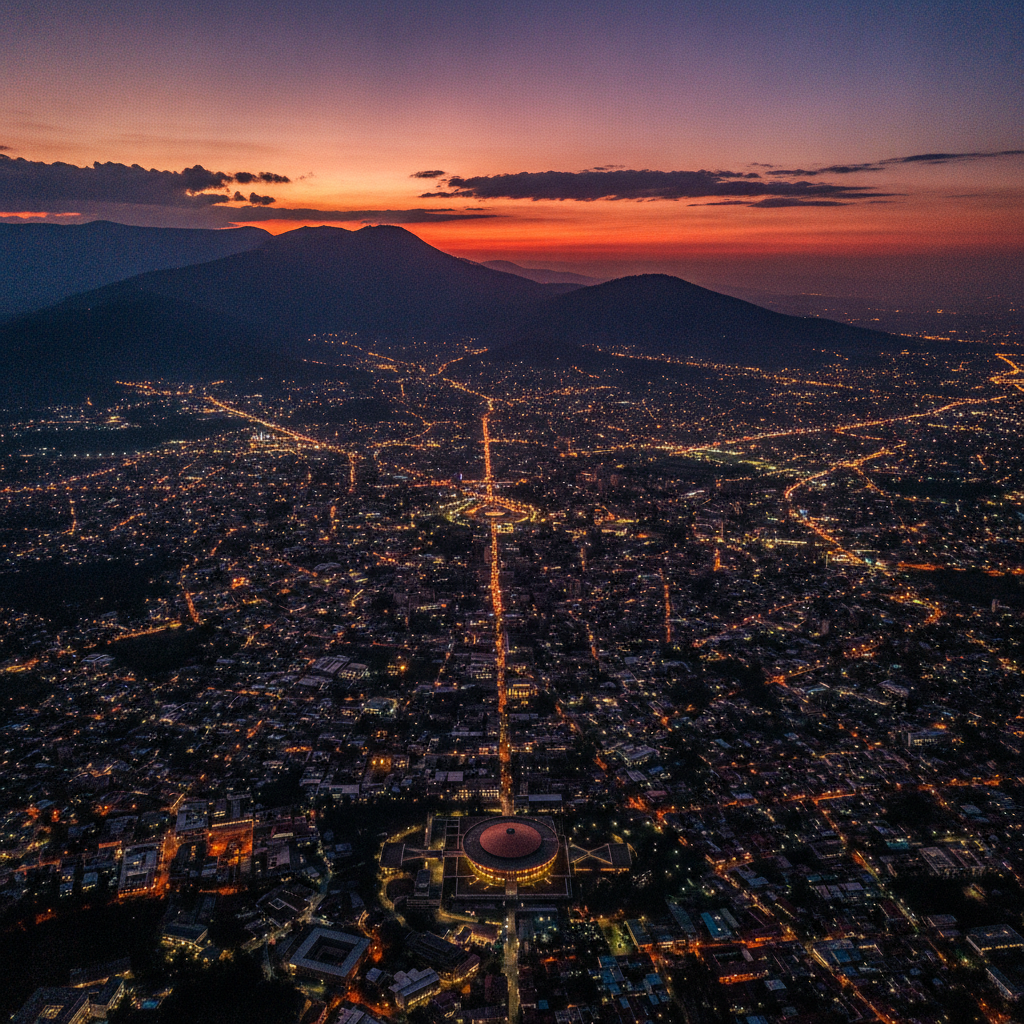
Addis Ababa compared with Nairobi and Dar es Salaam: the three primary capital cities of East Africa, their different roles in the continental system, and what distinguishes each as an urban experience. The comparison (the three cities in the East African system: Addis Ababa (the diplomatic capital: the African Union headquarters: the Ethiopian Airlines hub: the only East African capital that is also a global aviation hub in its own right: population approximately 5-6 million: altitude 2,355m (pleasantly cool): the city of the Never Colonized narrative and the ancient civilization): Nairobi (the financial and corporate headquarters of East Africa: the Silicon Savannah tech hub: the UNEP and UN-Habitat headquarters: population approximately 5-6 million: altitude 1,650-1,800m: the city with a national park and direct safari access: the most international and cosmopolitan East African city): Dar es Salaam (the primary port of East Africa: the commercial capital of Tanzania: the Bongo Flava music capital: population approximately 7-8 million: at sea level (hot and humid): the city with the Zanzibar ferry and the most authentic Swahili urban culture)). The aviation comparison (Ethiopian Airlines (Addis Ababa): the most profitable African airline: the most pan-African route network (more African city connections than any other carrier): the Addis hub has become the primary transit point for flights between Europe and sub-Saharan Africa: Kenya Airways (Nairobi): the second most important East African carrier: significantly smaller route network than Ethiopian: the Nairobi hub (Jomo Kenyatta International Airport) handles more total traffic than Addis but Ethiopian Airlines dominates long-haul connections). The cultural comparison (Ethiopian food culture (injera, coffee ceremony, fasting food tradition: one of the most developed food cultures in sub-Saharan Africa): Kenyan food culture (nyama choma, ugali, the Nairobi restaurant scene): Tanzanian food culture (chips mayai, Swahili coast cuisine, the Dar street food): the music (Addis Ababa (traditional Ethiopian music, jazz (Addis Ababa had a vibrant jazz scene in the 1960s-1970s known as Ethio-Jazz): Nairobi (Bongo Flava, Gengetone, Benga): Dar es Salaam (Bongo Flava, taarab, Congolese soukous influence))).
- 5
Teff and Ethiopian Food Sovereignty - The Ancient Grain That Feeds a Nation
Teff (Eragrostis tef): the ancient Ethiopian grain that is the foundation of injera and Ethiopian cuisine, one of the most nutritious grains in the world, and the subject of one of the most important African intellectual property debates in modern agricultural history. The grain (teff (Eragrostis tef): a tiny grain (approximately 1mm in diameter: one of the smallest grains in the world): the grain originated in Ethiopia (Ethiopia is the center of origin and diversity of teff: the grain has been cultivated in Ethiopia for approximately 3,000-6,000 years): the growing conditions (teff is adapted to the Ethiopian highlands (altitude 1,800-2,200 meters): tolerant of drought, waterlogging, and acidic soils: it can grow in conditions that would kill most other crops): the nutrition (teff is highly nutritious (high protein content (approximately 11-13% protein): high iron content: high calcium content: high fiber content: naturally gluten-free): teff is increasingly popular in the global specialty food market as a gluten-free grain). The production (Ethiopia produces approximately 90% of the world teff supply: the primary producing regions (Oromia and Amhara regions): the grain is processed into injera batter by fermentation (the fermentation enhances the nutritional profile and produces the distinctive sour flavor)). The intellectual property case (the Holland attempt to patent teff (the Dutch company Health and Performance Food International attempted to patent teff varieties and processing methods in the European Union in 2003-2005: Ethiopia contested the patents as biopiracy (the appropriation of traditional Ethiopian agricultural knowledge without compensation to Ethiopia or Ethiopian farmers): the patents were eventually rejected or not granted: the case became a landmark in the debate about biopiracy and the intellectual property rights of developing countries over their indigenous crop varieties)). The export ban (Ethiopia banned teff grain export for several years (2006-2015) to ensure domestic food security: the ban was controversial (Ethiopian farmers and the export industry wanted the ability to export the increasingly valuable grain to the international specialty food market)).
- 6
Addis Ababa Complete Legacy - Ethiopia and the Pan-African Idea
Addis Ababa final legacy: Ethiopia as the source of the Pan-African idea, the African Union, and the continent oldest civilization, and the complete Ethiopia visitor reference. The Pan-African significance (Ethiopia as the symbol of Pan-Africanism: the only sub-Saharan African state never colonized (with the brief exception of Italian occupation 1936-1941): the Battle of Adwa (the 1896 Ethiopian victory over the Italian army that became the defining moment of African resistance to European colonialism): the influence (the Battle of Adwa inspired pan-African thinkers throughout the diaspora (the African American community in the United States, the Caribbean communities, and later the African nationalist movements of the 20th century): Marcus Garvey (the Jamaican pan-African activist) cited Ethiopia as the symbol of African dignity and potential: the Rastafari movement made Haile Selassie a god-figure partly because Ethiopia embodied uncolonized African sovereignty)). The African Union (the AU headquarters in Addis Ababa (the Nelson Mandela Hall conference complex: donated by China in 2012): the AU summit (twice yearly in Addis Ababa): the AU as the institutional embodiment of the Pan-African idea: the OAU (Organization of African Unity) founded in 1963 in Addis Ababa (the founding charter (the Addis Ababa charter of the OAU (the primary founding document of African institutional cooperation))). The civilization (Ethiopia has one of the oldest continuous written literary traditions in the world (the Ge ez language (Classical Ethiopic): the liturgical language of the Ethiopian Orthodox Church: written in the Ge ez script (the primary alphabet used in Ethiopia and Eritrea): the Ge ez script is one of the oldest writing systems in the world still in continuous use): the Ethiopian manuscript tradition (the Ethiopian Orthodox Church has preserved tens of thousands of illuminated manuscripts in the monastery libraries of Ethiopia)). The complete Ethiopia reference (the Ethiopia visitor needs approximately 14 days for the full northern circuit (Addis-Lalibela-Simien-Gondar-Axum): the Omo Valley requires an additional 4-5 days from Addis: the Danakil Depression requires 4 days from Mekele: Ethiopia is one of the most rewarding African travel destinations for the visitor prepared for the distances, the altitude, and the complexity).
Walk this route with audio
Stories play automatically as you reach each stop — no tapping needed.
More in addis-ababa
Addis Ababa vs Africa Cities: Coffee Culture, Ethiopian Food, and the Visitor Practical Guide

Addis Ababa: Never Colonized, Lucy the Fossil, Ethiopian Cuisine, Lalibela Rock Churches, Simien Mountains, and Complete Ethiopia Guide
Addis Ababa Music and Culture: Ethio-Jazz, Azmari Music, the Piazza, and the City Nightlife
Addis Ababa History: Haile Selassie, Rastafari, and the Ancient Kingdom of Axum