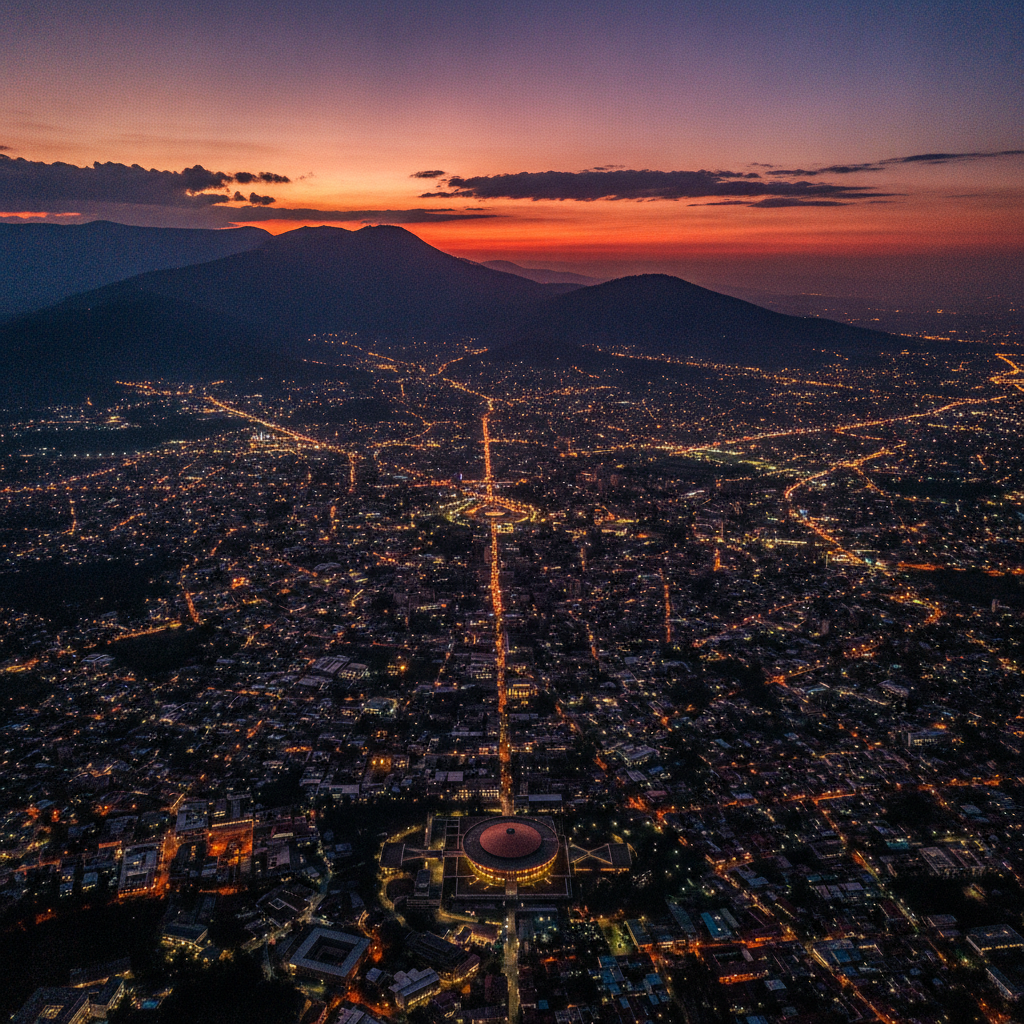
Addis Ababa: Never Colonized, Lucy the Fossil, Ethiopian Cuisine, Lalibela Rock Churches, Simien Mountains, and Complete Ethiopia Guide
Addis Ababa and Ethiopia as one of Africa most extraordinary stories: the only sub-Saharan African country never colonized; Lucy the 3.2-million-year-old fossil at the National Museum; Ethiopian injera cuisine and the coffee ceremony; Lalibela rock-hewn churches (the Jerusalem of Africa); the Simien Mountains and gelada baboons; and the complete Ethiopia practical reference.
- 1
Addis Ababa - The African Capital That Was Never Colonized
Addis Ababa: the capital of Ethiopia, the headquarters of the African Union, and the capital of the only sub-Saharan African country never to have been colonized by a European power (with the brief exception of Italian occupation 1936-1941). The city (Addis Ababa (Amharic: New Flower): the capital and largest city of Ethiopia: population approximately 5-6 million (2024): located on the central Ethiopian plateau at an altitude of approximately 2,355 meters above sea level (the third highest capital city in the world after La Paz and Quito): the altitude produces a pleasant temperate climate year-round (average temperature approximately 16-20 degrees C)). The founding (Addis Ababa was founded by Emperor Menelik II in 1886: the city was established on the plateau near the Entoto Mountains: the previous capital Entoto was at higher altitude (approximately 3,000m) and was too cold for comfortable habitation: Menelik II established Addis Ababa on the more temperate plateau below Entoto: the eucalyptus tree (the Addis Ababa eucalyptus: the eucalyptus trees were introduced to Ethiopia in the late 19th century (from Australia via Europe): the trees grew rapidly and provided firewood, building material, and shade for the new capital: the eucalyptus forests on the Entoto Mountains above Addis Ababa are one of the defining features of the city landscape). The significance (Addis Ababa is the diplomatic capital of Africa: the headquarters of the African Union (the AU: the pan-African political organization: the Addis Ababa-based African Union replaced the Organization of African Unity (OAU) in 2002): the United Nations Economic Commission for Africa (UNECA): also headquartered in Addis Ababa: the city hosts more embassies than any other African city: the Ethiopian Airlines hub (Addis Ababa Bole International Airport is the primary hub of Ethiopian Airlines: the most profitable and most pan-African airline on the continent)). The never-colonized status (Ethiopia is one of only two African countries never colonized by a European power (the other is Liberia): the Battle of Adwa (March 1, 1896): the Ethiopian army under Emperor Menelik II decisively defeated the Italian invading force: the first major African victory over a European colonial army: the impact on African consciousness (the Battle of Adwa became a symbol of African resistance to colonialism throughout the continent and a source of Ethiopian national identity).
- 2
The National Museum and Lucy - Ethiopia as the Cradle of Humanity
The Ethiopian National Museum in Addis Ababa: the home of Lucy (Australopithecus afarensis), the most famous hominin fossil in the world, and the site that established Ethiopia as one of the most important locations for understanding human origins. The museum (the Ethiopian National Museum on King George VI Street in the Piazza district of Addis Ababa: the primary natural history and cultural history museum of Ethiopia: the most important museum in East Africa for human evolution and ancient Ethiopian history). Lucy (Australopithecus afarensis (AL 288-1): discovered by Donald Johanson and Tom Gray in the Hadar region of the Afar Triangle (northeastern Ethiopia) on November 24, 1974: the name Lucy (the fossil was nicknamed Lucy after the Beatles song Lucy in the Sky with Diamonds which was playing in the camp on the evening of the discovery): the age (approximately 3.2 million years old: one of the oldest and most complete australopithecine skeletons ever found at the time of discovery (approximately 40% of the skeleton was recovered)): the significance (Lucy provided definitive evidence that bipedal walking (walking upright on two legs) evolved in hominins before the expansion of the brain: the pelvis and leg bones of Lucy show unambiguous bipedal anatomy while the skull shows a brain size (approximately 375-500cc) not significantly larger than a modern chimpanzee): the cast (a full-scale cast of Lucy skeleton is displayed at the National Museum: the actual fossils are too fragile for permanent display but are occasionally exhibited)). The Ardi (Ardipithecus ramidus (ARA-VP-6/500: nicknamed Ardi): discovered in the Middle Awash valley of Ethiopia in 1994 by a team led by Tim White: age approximately 4.4 million years old (approximately 1.2 million years older than Lucy): even more complete than Lucy: Ardi is the most complete skeleton of an early hominin older than the australopithecines: Ardi walked upright but retained tree-climbing features: evidence that the common ancestor of humans and chimpanzees may have been more similar to the orangutan than to the modern chimpanzee). The Selam (Australopithecus afarensis (DIK-1-1): a 3-year-old girl (nicknamed Selam (the Amharic word for peace): discovered in Dikika, Ethiopia in 2000: age approximately 3.3 million years old: the most complete fossil of a hominin child ever found: the hyoid bone (the only hominin hyoid bone preserved from this period: provides evidence about the speech capacity of Australopithecus): on display at the National Museum).
- 3
Ethiopian Cuisine - Injera, Tej, and the Coffee Ceremony
Ethiopian cuisine: the injera flatbread, the rich stews, the traditional mead (tej), and the world-famous Ethiopian coffee ceremony, one of the most distinctive and complete food cultures in sub-Saharan Africa. The injera (injera: the giant spongy sourdough flatbread that serves simultaneously as plate, utensil, and staple in Ethiopian cuisine: made from teff flour (Eragrostis tef: the grain endemic to Ethiopia: a tiny grain with a high protein and mineral content: gluten-free: teff is grown primarily in the Ethiopian highlands at altitudes of 1,800-2,200 meters: Ethiopia produces approximately 90% of the world teff supply): the fermentation (injera batter is fermented for 2-3 days before cooking: the fermentation produces the characteristic sour flavor and the bubbly spongy texture): the cooking (injera is cooked on a clay griddle (the mitad) over an open fire: a single large injera is 50-60 cm in diameter)). The stews (the Ethiopian stews (wat) served on the injera: doro wat (chicken stew: the most important Ethiopian feast dish: the chicken is cooked for many hours in berbere spice paste (the primary Ethiopian spice blend: a complex mixture of chili, black cumin, coriander, fenugreek, ginger, and other spices) and niter kibbeh (the spiced clarified butter that is the primary cooking fat of Ethiopian cuisine): a hard-boiled egg is served whole in the stew): tibs (sauteed meat (beef, lamb, or goat): the primary everyday restaurant meat dish): shiro (a stew made from powdered chickpeas or broad beans: the most important vegetarian and fasting dish of Ethiopia)). The coffee ceremony (the Ethiopian coffee ceremony (the buna ceremony): one of the most important social rituals of Ethiopian culture: the ceremony (green coffee beans are roasted in a flat pan over charcoal (the aroma of the roasting beans fills the room): the beans are ground in a wooden mortar: the ground coffee is brewed in a clay coffee pot (the jebena) by boiling: the coffee is served in small handle-less cups (the sini) without milk: served three times (the three rounds of the ceremony have different names and the coffee weakens with each round): frankincense is burned during the ceremony).
- 4
Lalibela and the Rock-Hewn Churches - The Jerusalem of Africa
Lalibela: the medieval rock-hewn church complex carved from volcanic rock in the Ethiopian highlands, one of the most extraordinary architectural achievements in the world and the spiritual center of Ethiopian Orthodox Christianity. The complex (Lalibela: a small highland town in the Amhara Region of Ethiopia at an altitude of approximately 2,630 meters: the rock-hewn churches (11 monolithic churches carved from the volcanic rock of the Lalibela plateau by King Lalibela of the Zagwe Dynasty (approximately 12th-13th century CE): the churches are carved downward into the rock (the rock was excavated from above to create freestanding church buildings surrounded by rock-cut trenches): UNESCO World Heritage Site (1978)). The churches (the primary churches: Bete Medhane Alem (House of Savior of the World): the largest rock-hewn church in the world (33.7 meters long, 23.7 meters wide, 11.5 meters tall): 72 external and 36 internal columns: the most important church at Lalibela: Bete Giyorgis (House of Saint George): the most perfectly preserved and most photographed of the Lalibela churches: a monolithic cube (12 meters deep, 12 meters wide, 12 meters tall) carved downward into the rock: the cross-patterned roof (a series of recessed crosses carved on the flat top of the church): the most iconic image of Lalibela: Bete Maryam (House of Mary): believed to be the oldest of the Lalibela churches)). The pilgrimage (Lalibela is the primary pilgrimage destination of Ethiopian Orthodox Christians: the Timkat festival (Ethiopian Christmas and Epiphany: January 7 (Ethiopian calendar) and January 19 (Ethiopian calendar): the primary festival at Lalibela: thousands of white-robed pilgrims converge on Lalibela for Timkat: one of the most spectacular religious festivals in the world).
- 5
The Simien Mountains and Ethiopian Wildlife - Gelada Baboons and the Ethiopian Wolf
The Simien Mountains National Park: the UNESCO World Heritage highland landscape of northern Ethiopia, home to the endemic gelada baboon, the Ethiopian wolf, and the Walia ibex. The park (the Simien Mountains National Park: UNESCO World Heritage Site (1978): located in the Amhara Region of northern Ethiopia: altitude 1,900-4,550 meters above sea level: the park landscape (the Simien plateau is deeply eroded by ancient river systems: the result is a dramatic landscape of escarpments (dropping 1,500 meters to the lowlands below), pinnacles, and flat-topped mountains (ambas): the highest point is Ras Dashen (4,550m: the highest peak in Ethiopia and the fourth highest in Africa)). The gelada baboon (the gelada (Theropithecus gelada): the only surviving species in the genus Theropithecus (the most abundant large primate on Earth during the Pleistocene): endemic to the Ethiopian highlands: population approximately 200,000-700,000 (the most abundant large endemic mammal in Ethiopia): the gelada is the only grass-eating primate (the gelada feeds almost exclusively on grass (leaves, seeds, roots) and digs for underground bulbs: the distinctive feeding posture (sitting upright and pulling grass with rapid hand movements)): the heart-shaped bare skin patch on the chest (the chest patch: the primary signal of social status in gelada society: the patch becomes more brightly colored in dominant males)). The Ethiopian wolf (Canis simensis): the rarest canid in the world: endemic to the Ethiopian highlands: population approximately 450-500 individuals (2021 estimate): the world rarest wild dog (rarer than the African wild dog): the primary population in the Bale Mountains National Park (southeastern Ethiopia: approximately 300 Ethiopian wolves): smaller populations in the Simien Mountains and other Ethiopian highlands).
- 6
Addis Ababa Practical Guide - African Union, Ethiopian Airlines Hub, and Complete Ethiopia Reference
The complete Addis Ababa and Ethiopia practical reference: the African Union and the diplomatic community, Ethiopian Airlines hub, the best Addis restaurants, visa and health information, and the optimal Ethiopia travel circuit. The African Union (the AU headquarters compound in the Bole area of Addis Ababa (the Nelson Mandela Conference Hall (the large conference hall of the AU compound donated by China in 2012): the AU Commission Headquarters building): the AU Summit (the African Union Summit is held in Addis Ababa twice a year: January-February and June-July: the summits bring all African heads of state to Addis Ababa). Ethiopian Airlines (the most important airline in Africa: the most profitable and the largest by international route network: Ethiopian Airlines operates direct flights to more African cities than any other airline: the Addis Ababa hub (Bole International Airport (ADD): the primary African transit hub for connections between Europe, Asia, and sub-Saharan Africa): the Addis stopover (many travelers use the Addis connection to visit Ethiopia briefly between connecting flights)). The Addis restaurant scene (the injera restaurants of Addis Ababa (the Yod Abyssinia Cultural Restaurant (the primary traditional Ethiopian dining experience in Addis: injera with traditional stews, traditional music, and traditional dance): the Kategna (the modern upscale Ethiopian restaurant in Bole): the Habesha 2000 (the tourist-oriented traditional restaurant): the international scene (the Addis Ababa restaurant scene includes excellent Lebanese, Italian, Indian, and Chinese restaurants catering to the large diplomatic and NGO community)). The practical (the visa (Ethiopians e-visa (apply online at etourist.gov.et): most nationalities are eligible for an e-visa: USD 52 for 30 days single entry): health (yellow fever vaccination required: malaria prophylaxis recommended for lower-altitude areas (the Ethiopian highlands including Addis Ababa are malaria-free at altitude but Lalibela and the Omo Valley have malaria risk)). The Ethiopia circuit (the optimal Ethiopia circuit: Days 1-2: Addis Ababa (National Museum and Lucy, Merkato market, Ethiopian coffee ceremony): Day 3: Lalibela (fly 1 hour: the rock-hewn churches): Days 4-5: Lalibela (morning church visits): Day 6: Simien Mountains (fly from Lalibela to Gondar (30 min) then drive to Simien (3 hours)): Days 7-8: Simien trekking and gelada baboons: Day 9: Axum (fly from Gondar: the ancient kingdom and obelisks): Day 10: return to Addis).
Walk this route with audio
Stories play automatically as you reach each stop — no tapping needed.
More in addis-ababa
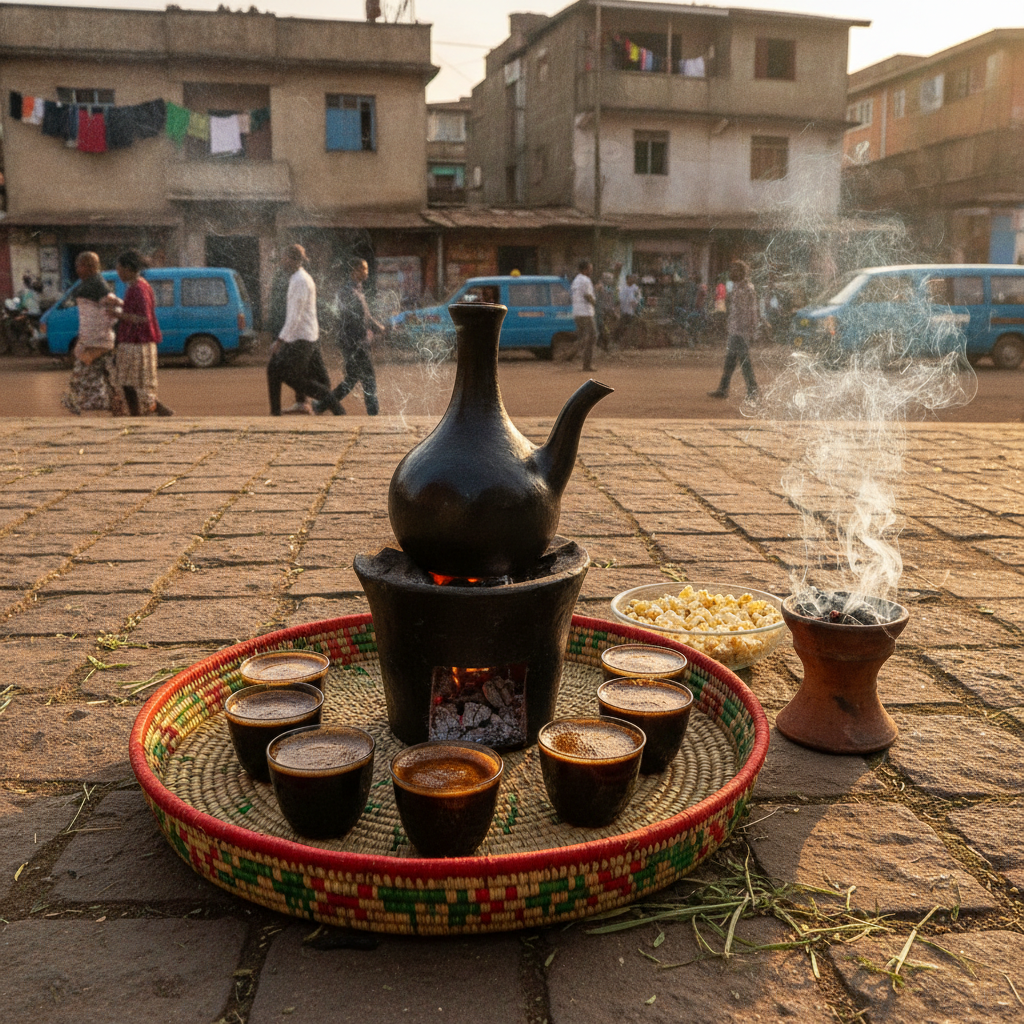
Addis Ababa vs Africa Cities: Coffee Culture, Ethiopian Food, and the Visitor Practical Guide
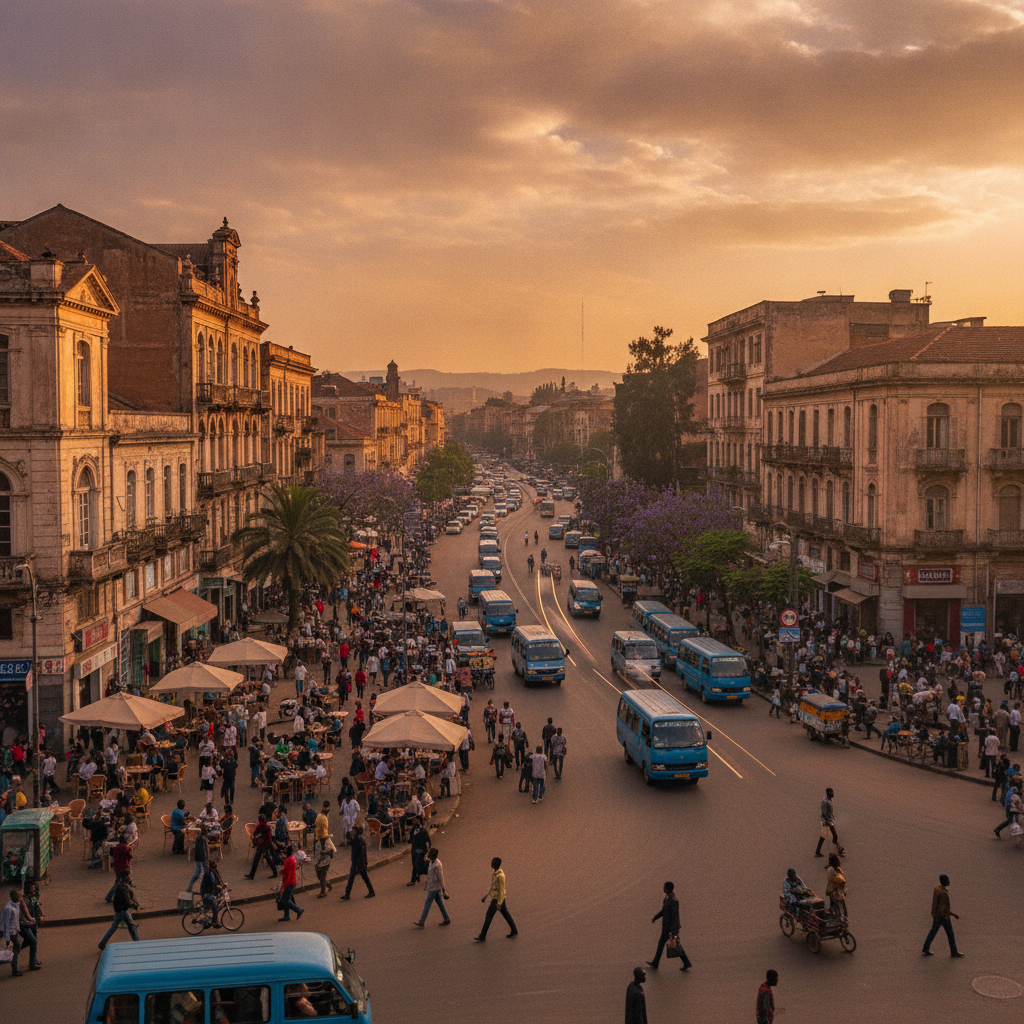
Addis Ababa Music and Culture: Ethio-Jazz, Azmari Music, the Piazza, and the City Nightlife
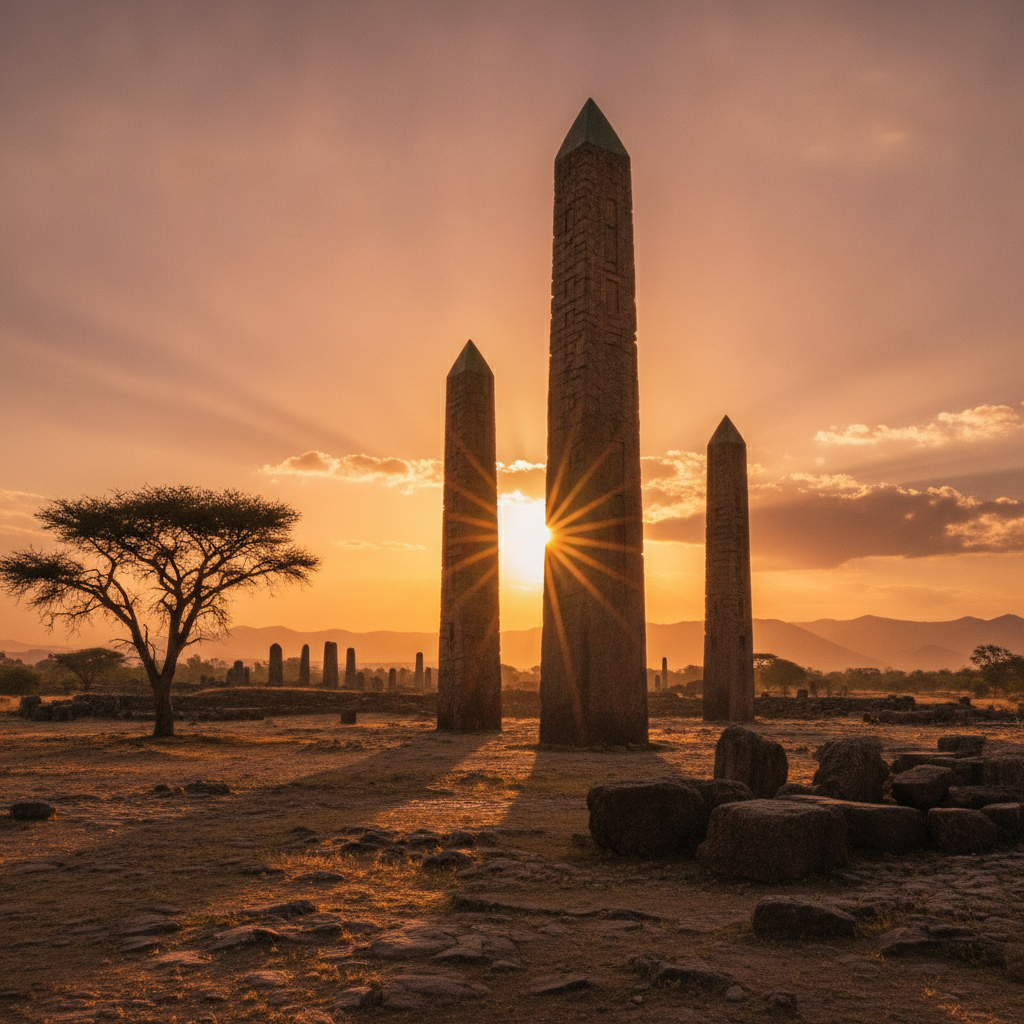
Addis Ababa History: Haile Selassie, Rastafari, and the Ancient Kingdom of Axum
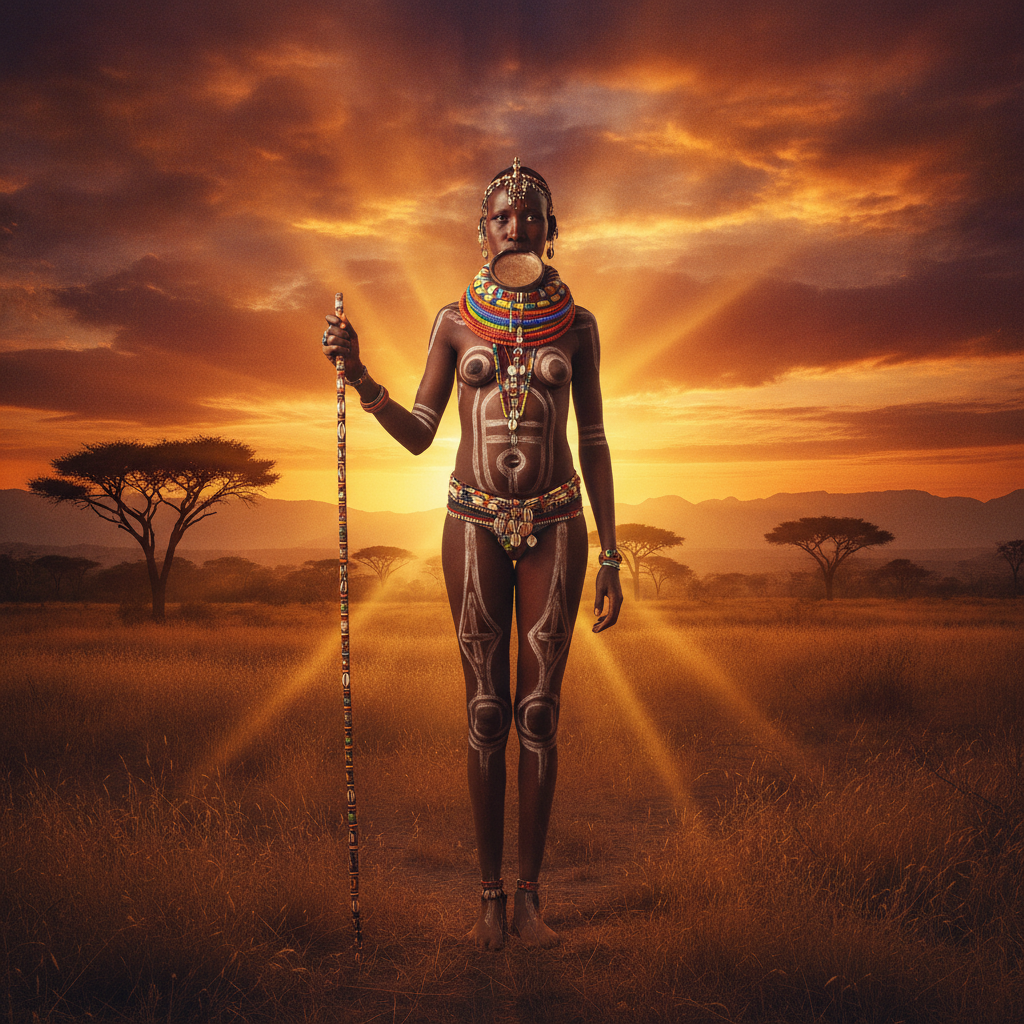
Addis Ababa Extended: Omo Valley Tribes, the Derg Regime, Bale Mountains, Addis vs Nairobi, and Final Legacy