Accra Culture: The Ga People, Ashanti Kingdom, Kente Cloth, Funerals, and Highlife Music
Ghanaian traditional culture: the Ga people and the Homowo festival, the Ashanti Kingdom and the Golden Stool, kente cloth weaving and its symbolism, the Ghanaian funeral celebration tradition and the Teshie fantasy coffins, highlife music, and the Black Star cultural identity.
- 1
The Ga People - The Indigenous People of Accra and the Homowo Festival
The Ga-Dangme people: the ethnic group indigenous to the Greater Accra Region, the founders of the settlements that became the modern capital. The Ga language is spoken by approximately 800,000-1,000,000 people. The Ga migrated to the Accra coastal area in approximately the 16th century; their original settlements (La, Osu, Labadi, Teshie, Nungua, Tema) are now absorbed into greater Accra. The Homowo festival (hooting at hunger): the most important Ga celebration, held annually in August-September, commemorating a historical famine the Ga survived. It involves preparation and sharing of palm nut soup with kpokpoi, drumming, dancing, libation pouring, and the return of Ga diaspora to their home communities. The Ga Mantse (the paramount chief of the Ga people) holds his palace in central Accra near Jamestown.
- 2
The Ashanti Kingdom - Gold, the Golden Stool, and the Most Powerful State in West Africa
The Ashanti Kingdom (the Asante Kingdom): founded approximately 1701 by Osei Tutu I and centered on Kumasi (250 km north of Accra). The Golden Stool (Sika Dwa Kofi): the sacred golden stool said to have descended from the sky and landed on the lap of Osei Tutu I; it represents the soul of the Ashanti nation and is never sat upon. The Anglo-Ashanti Wars (1823-1900): four wars in which the Ashanti defeated the British in the first two before being annexed in 1900. The Asantehene (Ashanti King) Otumfuo Osei Tutu II has reigned since 1999 and remains one of the most powerful traditional rulers in Africa. Kumasi: the Manhyia Palace, the Kumasi National Cultural Centre, and the Ashanti craft tradition (goldsmithing, kente weaving, adinkra cloth, woodcarving).
- 3
Kente Cloth - The Royal Fabric of Ghana and Symbol of African Heritage
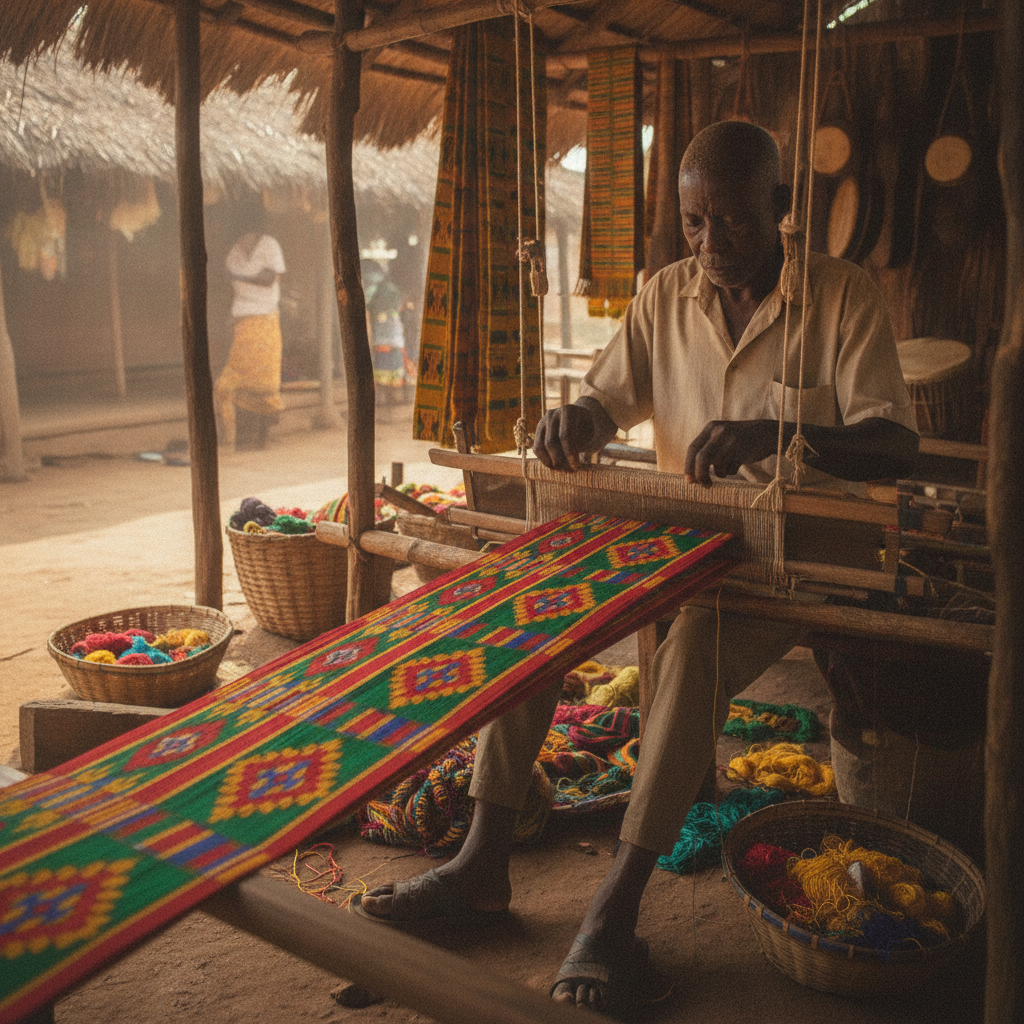
Kente cloth originated among the Ashanti people in the Bonwire village near Kumasi. Traditional Ashanti legend credits two men who learned weaving by observing a spider. The cloth is woven on a narrow-strip loom in strips approximately 4 inches (10 cm) wide, then sewn together into the full cloth. Color symbolism: gold (wealth, royalty), green (growth, renewal), red (political and spiritual power), black (maturation), white (purity). Each pattern has a name and meaning created by the color sequences of the weft threads. Originally reserved for Ashanti royalty, kente is now worn at graduations, weddings, funerals, and celebrations by Ghanaians and diaspora worldwide. The US Congressional Black Caucus wears kente cloth stoles at ceremonies.
- 4
Ghanaian Funerals and the Fantasy Coffins of Teshie
The Ghanaian funeral: not primarily a ceremony of mourning but a celebration of life. Ghanaian funerals involve brass bands, highlife bands, church choirs, dancing, elaborate food and drink, specially printed funeral cloths (batakari), and outdoor parties lasting many hours. The financial scale is enormous; social pressure to host a lavish funeral means the cost can equal months of income. Funerals are typically held on weekends, often months after the death, to allow preparation and for diaspora family members to travel home. The fantasy coffins of Teshie-Nungua: coffins made in the shape of an object related to the life of the deceased (a pilot in an airplane-shaped coffin, a fisherman in a fish-shaped coffin, a farmer in a cocoa-pod coffin). The tradition was originated by craftsman Seth Kane Kwei in the 1950s; examples are displayed in the British Museum and other major art museums worldwide.
- 5
Accra Highlife Music - The Sound of Urban Ghana
Highlife emerged in the colonial Gold Coast in the early 20th century: a fusion of Akan traditional music (pentatonic melodies and polyrhythmic percussion) with Western brass band instruments and American jazz. The name highlife described the music at high-life social events of the Gold Coast elite. The golden age (1950s-1970s): E.T. Mensah (the King of Highlife), the Ramblers International, and Osibisa (who achieved international success fusing highlife with rock music). The contemporary scene: Afrobeats as the dominant West African popular music globally since 2010s; Ghanaian contributors include Sarkodie (rapper), Stonebwoy, and Shatta Wale. Accra live music venues: Alliance Francaise, National Theatre, the bars of Osu.
- 6
Ghanaian Cultural Legacy - Adinkra Symbols, the Year of Return, and the Black Star Identity
Adinkra symbols: the visual symbols of the Akan people of Ghana, each with a specific meaning. The symbols are printed on cloth and carved into woodwork and goldwork. The primary symbols include Gye Nyame (except God), Sankofa (return to the past to move forward), Adinkrahene (greatness and charisma), and Dwennimmen (strength with humility). The Year of Return, 2019: the Ghanaian government designated 2019 as the Year of Return, marking 400 years since the arrival of enslaved Africans in the United States. Approximately 1 million visitors came to Ghana in 2019 (a record). The Beyond the Return program continues to encourage long-term diaspora engagement. The Black Star of Africa on the Ghanaian flag derives from Marcus Garvey Black Star Line shipping company (1919), symbolizing Pan-African unity and liberation.
Walk this route with audio
Stories play automatically as you reach each stop — no tapping needed.
More in accra
Accra: Black Star of Africa, Nkrumah, Jamestown, Labadi Beach, and the Ghana Guide
Accra Food and Nightlife: Osu, Chale Wote, Beach Clubs, Shopping, and the Ultimate Ghana Reference
Accra History and Politics: From the Gold Coast to Democratic Ghana, Rawlings, and the Modern Economy

Cape Coast and the Slave Forts: The Door of No Return and the Transatlantic Slave Trade Legacy