National Mosque, Cathedral & Abuja's Interfaith Architecture
Abuja was planned to reflect Nigeria's religious diversity — the National Mosque and the National Christian Centre face each other across the ceremonial axis, a deliberate act of plural architecture
- 1
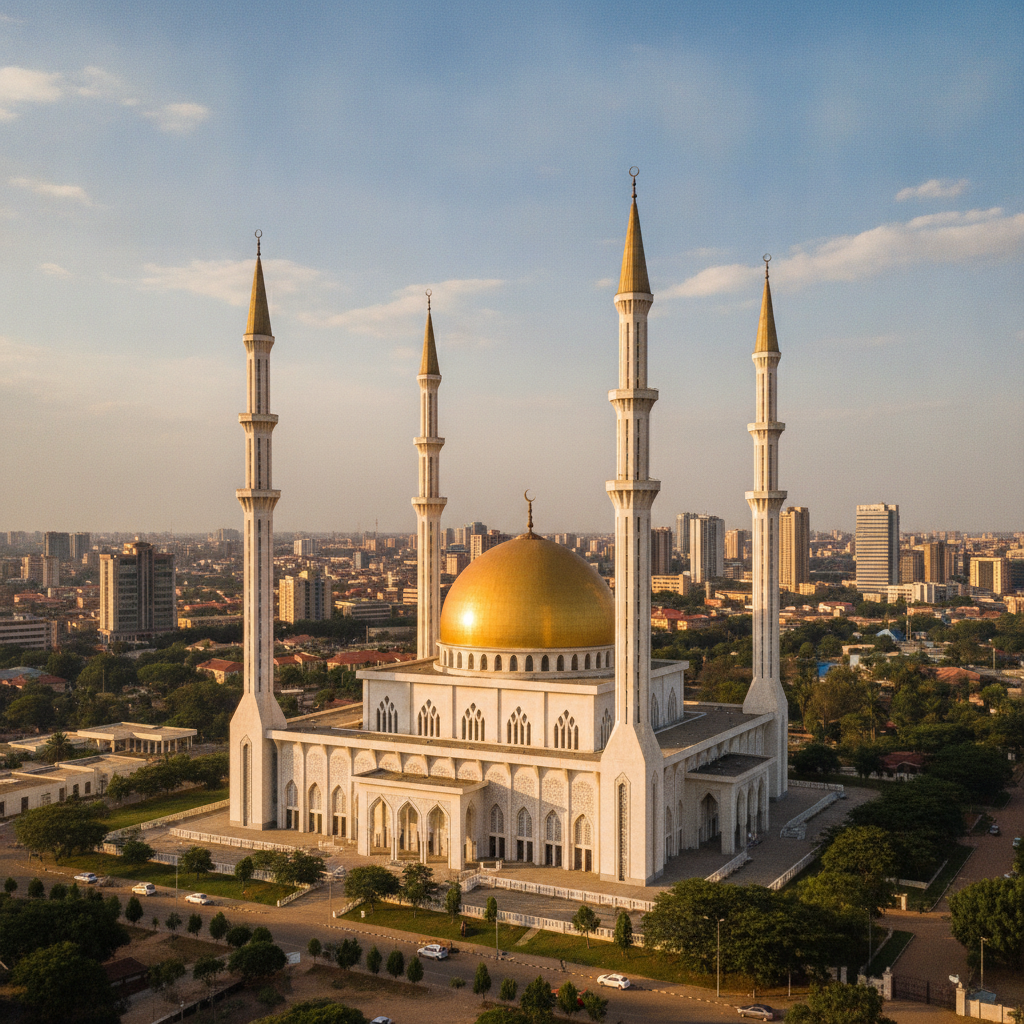
Nigerian National Mosque
The National Mosque seats 100,000 worshipers and is the largest in sub-Saharan Africa – its four white minarets and golden dome are Abuja's most photographed landmarks
- 2
National Christian Center
The huge basilica-inspired church faces the mosque across the central boulevard - a deliberate planning decision that made Abuja a symbol of Nigeria's religious coexistence
- 3
Central Business District Towers
Abuja's CBD has been acquired in glass towers, luxury hotels and corporate headquarters – a vertical city rising around the original planned boulevard on a scale not foreseen in 1980
- 4
Millennium Tower Construction
The unfinished Millennium Tower - intended to be the tallest in Africa - has been under construction for two decades, a monument to Nigerian political dysfunction as much as ambition
- 5
Wuse Market Religious Mix
The Wuse II area mixes Islamic prayer rooms, Pentecostal churches and traditional shrines within a few streets – Nigeria's true religious pluralism visible at the neighborhood level
- 6
Abuja Friday Prayers Crowd
The Jumu'ah Friday prayer at the National Mosque draws tens of thousands of worshipers – the scale of the crowd streaming through the ground is one of Abuja's most powerful sights
Walk this route with audio
Stories play automatically as you reach each stop — no tapping needed.
More in Abuja
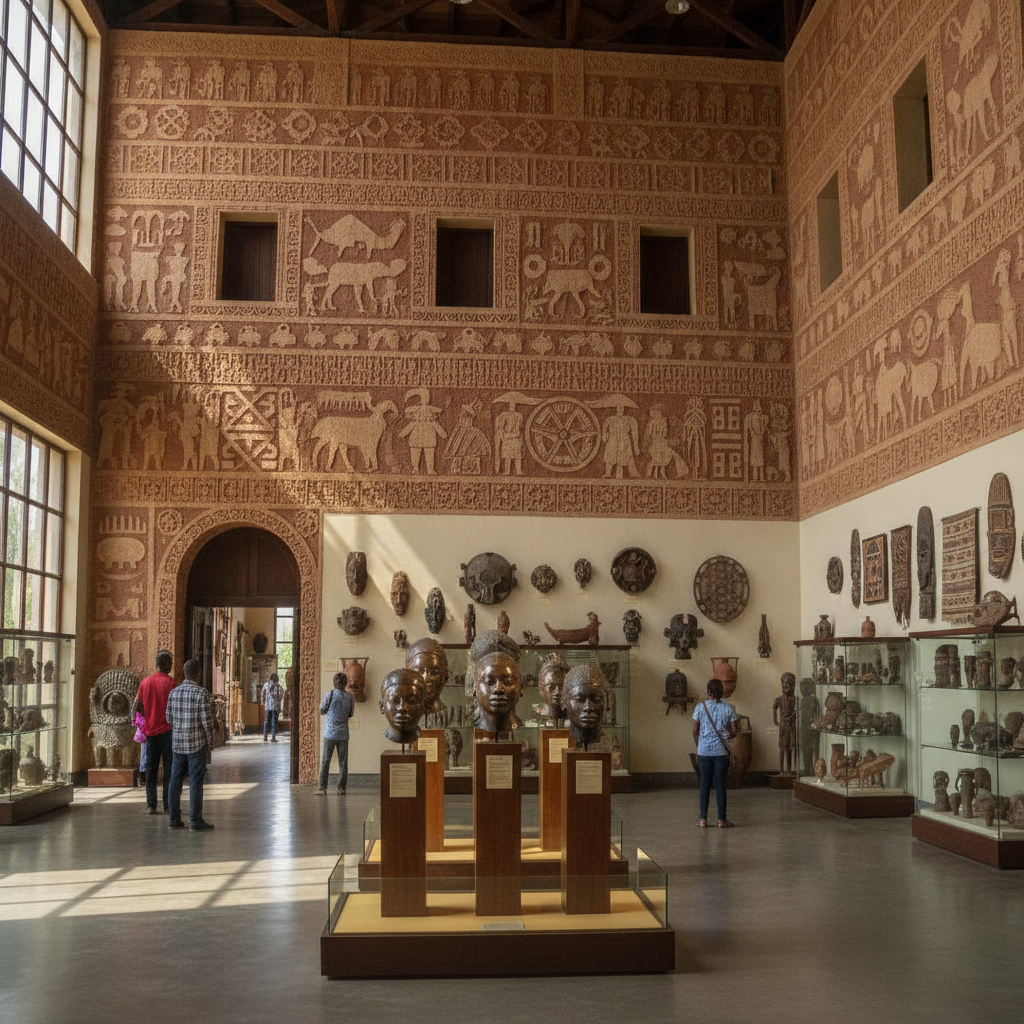
Abuja National Museum & Nigeria's Cultural Heritage
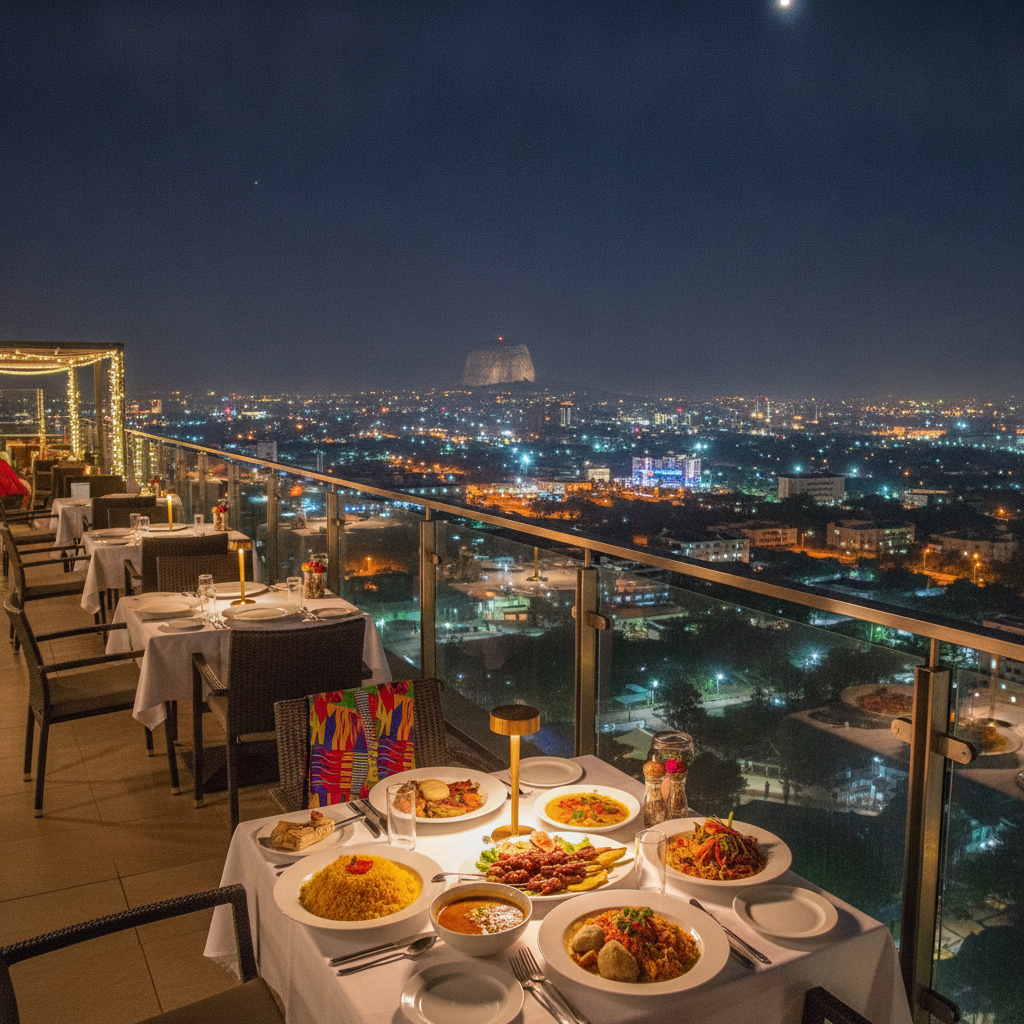
Abuja Dining & Nightlife: From Suya to Sophisticated Restaurants
Gurara Falls & Abuja's Natural Escapes

Yankari Game Reserve: Elephants at Wikki Warm Springs
Abuja Arts & Crafts Village: Nigerian Traditional Art Market