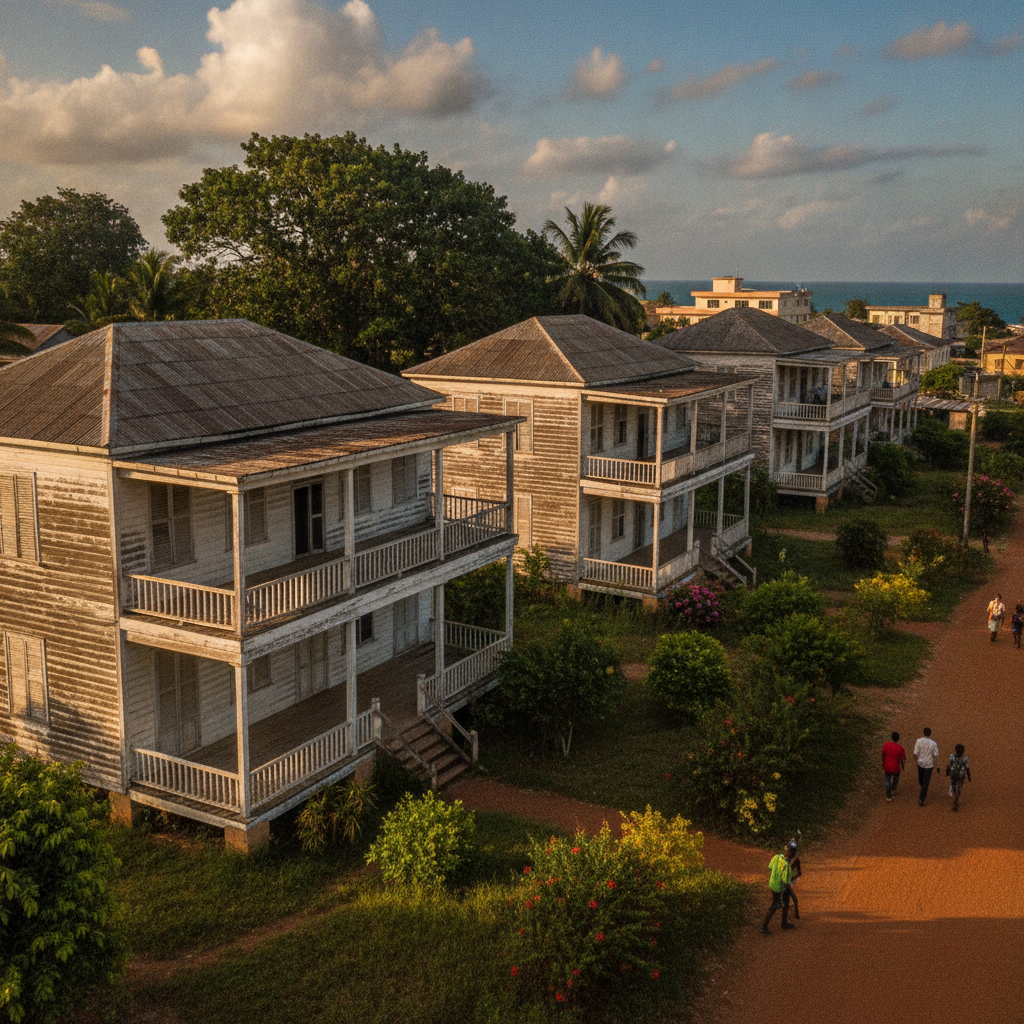


Americo-Liberian Heritage: Freed Slaves Who Built a Nation
Liberia's settler heritage is unique in Africa — freed American slaves who returned in 1822 built antebellum-style houses, founded universities, and created a republic that endured until 1980

Monrovia Beach: Atlantic Surf & Weekend Social Life
Monrovia's wide Atlantic beach is the city's social heart — surfers, families, and vendors all sharing the sand as the warm West African ocean rolls in on a coast with almost no tourist infrastructure

Sapo National Park: Pygmy Hippos & West Africa's Last Rainforest
A 4-hour drive from Monrovia, Sapo is Liberia's only national park — protecting West Africa's second-largest rainforest and one of the last wild populations of the elusive pygmy hippopotamus

Liberian Rubber Plantations: Firestone & the Forest Economy
Liberia's economy was shaped by rubber — the Firestone plantation established in 1926 was once the world's largest, and the rubber tree forests that cover the interior tell a complex colonial story

National Museum of Liberia: Poro Masks & Indigenous Heritage
The National Museum preserves the extraordinary artistic heritage of Liberia's 16 indigenous ethnic groups — Poro society masks, Sande helmet masks, and the material culture of forest peoples

Liberian Cuisine: Cassava Leaf, Palm Butter & Country Chop
Liberian food is built on cassava, palm oil, and Atlantic seafood — the 'country chop' tradition of forest foods cooked in palm butter represents one of West Africa's most distinct culinary traditions

Cape Mesurado: Monrovia's Historic Peninsula & Settler Heritage
Monrovia occupies a narrow peninsula at Cape Mesurado — the dramatic spot where freed American slaves landed in 1822 and founded a nation, creating one of Africa's most extraordinary origin stories

Waterside Market & Monrovia's Commercial Soul
The Waterside Market on the St. Paul River estuary is Monrovia's oldest trading hub — women in lappa cloth sell everything from palm butter to secondhand clothing in the city's most authentic market